Apple’s new iPad mini finally has an OLED screen, but it still refreshes at 60Hz, the same as every previous mini. Even the base iPhone 17 outdoes the $699 tablet on this spec. Asked about the omission, Apple hardware vice president Dave Pakula did not address 120Hz directly. He argued instead that OLED’s fast pixel response greatly reduces motion blur. The source article argues that this answers a related question rather than the one buyers are asking. Faster pixels make each frame sharper, but they do not add frames. Below is what Apple said, where the explanation holds up, and who is most likely to notice the 60Hz limit.
What you need to know
- The new iPad mini uses OLED but stays at 60Hz. ProMotion remains exclusive to iPad Pro, which varies its refresh rate from 10 to 120Hz.
- Apple VP Dave Pakula says OLED pixels respond much faster than LCD and greatly reduce motion blur. According to MacRumors, Apple puts the speed difference at more than an order of magnitude.
- The display grows from 8.3 to 8.5 inches, with 600 nits of standard brightness (up from 500), 1,200 nits in HDR, 2,000,000:1 contrast and an unchanged 326 ppi.
- The 128GB model costs $699, up from $599 for the previous model. In Germany, pricing starts at €749.
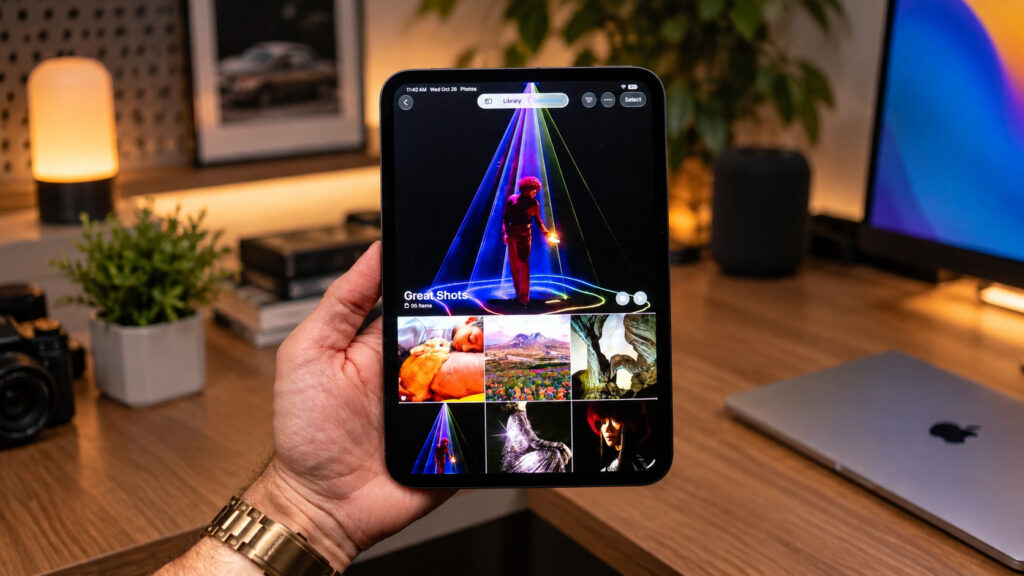
A hand holding the new iPad mini with an OLED display, with the Photos app open on screen
Apple’s VP points to pixel speed
Apple has invited creators to explain contentious design decisions before, and it did so again here. Dave Pakula, Apple’s vice president of hardware, addressed the refresh-rate question in an interview with YouTuber Christopher Lawley. He also gave an interview to Katarina Mogus, which 9to5Mac highlighted.
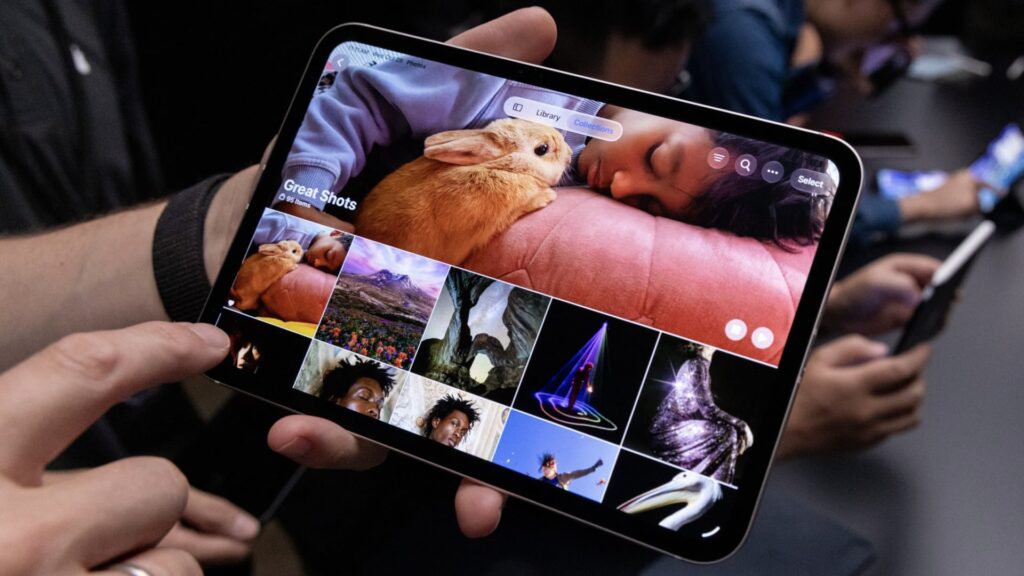
The new iPad mini held in hand, showing a collection of vivid photos in the Photos app
Pakula never addressed 120Hz directly. Instead, he suggested taking a broader view. In his words, the experience of a display is not defined by a single number on a spec sheet.
His main argument was that OLED has fast pixel response, so motion blur is significantly lower than on LCD. According to MacRumors, Apple estimates the speed difference at more than an order of magnitude. Pakula wrapped up by describing it, in the source’s paraphrase, as simply a killer display.
The panel’s other specifications are strong:
- Screen size grows from 8.3 to 8.5 inches.
- Contrast is rated at 2,000,000:1.
- Standard brightness rises from 500 to 600 nits, with up to 1,200 nits in HDR.
- Pixel density is unchanged at 326 ppi.
Independent measurements are not yet available. The source expects them around November 6, when the tablets are due to reach buyers.
Refresh rate and response time are different things
To judge Apple’s argument, it helps to separate two display parameters.
- Refresh rate is how many times per second the screen receives a new image. At 60Hz, a new frame arrives every 16.7 milliseconds. At 120Hz, one arrives every 8.3 milliseconds.
- Response time is how quickly a pixel changes color once a frame has arrived.
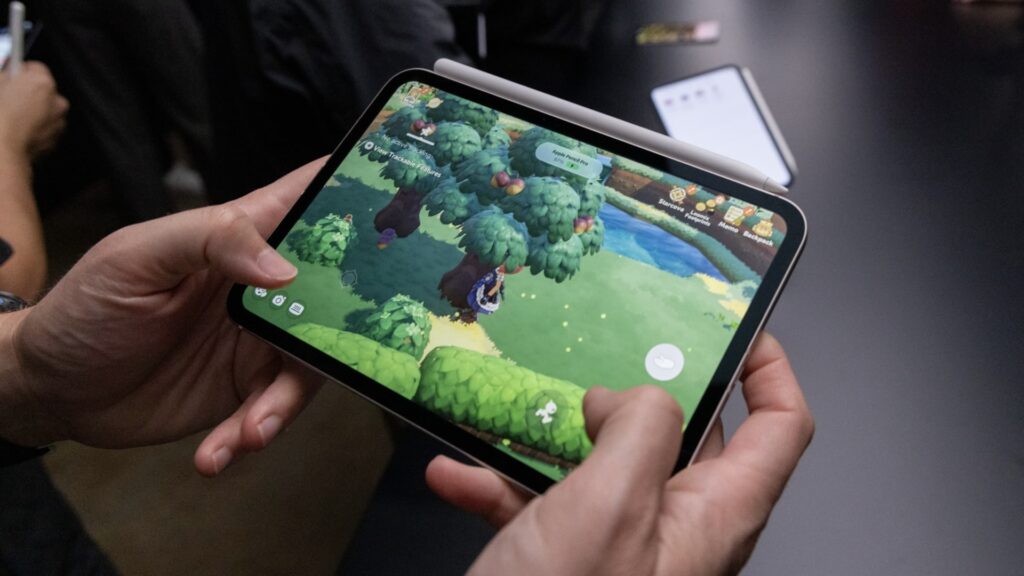
A person playing a game on the new iPad mini, with an Apple Pencil Pro magnetically attached to the top of the tablet
LCD pixels are slow. When you scroll, the image changes before the liquid crystals have finished realigning. The result is trailing behind lines of text and soft letter edges. iPad mini 6 owners also complained about “jelly scrolling,” where one half of the screen visibly lagged behind the other. OLED does remove that smearing and keeps each frame sharp. On this point, the source finds no fault with Pakula’s explanation.
However, there are still only 60 frames per second. A fast pixel cannot display an intermediate page position it was never sent. As a result, text on the new mini should look sharper than on the old LCD during fast scrolling, but it will still move in the same steps. The source argues that anyone used to a 120Hz iPhone will notice this within a couple of seconds.
The interviews also skipped another side of ProMotion. On iPad Pro, the refresh rate varies from 10 to 120Hz. While you are reading and nothing on screen is moving, the display slows down to save battery. The source notes that this would be a useful feature on a tablet that many people buy for reading.
The likely reason: Apple’s iPad lineup
Apple is generally reluctant to bring high refresh rates to its cheaper devices. The source cites recently leaked specifications for the iPhone 18e, which reportedly will again have a 60Hz display despite a powerful processor. Those details are unconfirmed. Among tablets, ProMotion remains exclusive to iPad Pro for now.
The source author offers a theory that Apple has not confirmed. A variable 10–120Hz refresh rate requires a more expensive LTPO panel. The new mini is only 5.4mm thick, so adding one would cost both money and internal space.
The tablet has already become more expensive. The 128GB version costs $699, compared with $599 for the previous model, and in Germany pricing starts at €749. In the author’s view, adding 120Hz on top would blur the distinction from iPad Pro almost entirely. For a company that carefully assigns features to price tiers, that would be a significant consideration.
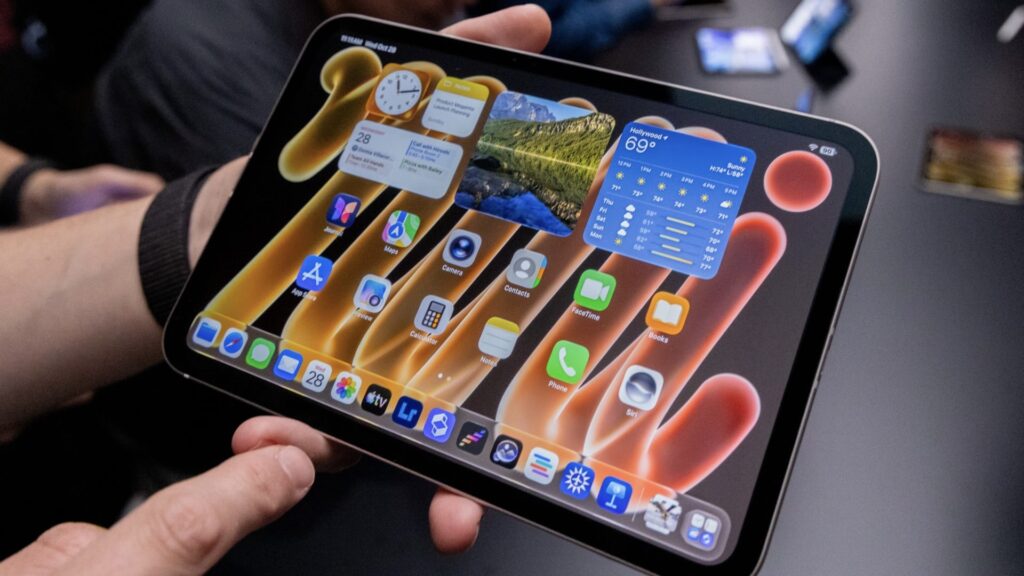
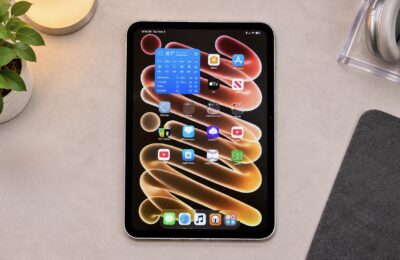
Home Screen with widgets and app icons on the new iPad mini display
Where Apple spent the budget instead
Apple put its resources into other features:
- Water resistance: the mini is the first iPad with IP67 protection.
- Sound through the display: audio now comes directly through the screen.
Pakula shared an unusual detail about the audio design. On a display of this size, the resonant frequency falls within the audible range. So Apple routes mid and low frequencies through the glass itself. It also hid two tweeters in the gaps between the glass and the aluminum. The source concludes that Apple decided a mini owner would value water resistance and bass more than smooth scrolling.
The author’s main objection is the price gap. The base iPhone 17 got ProMotion last year, yet a $699 tablet with the A20 Pro chip from the iPhone 18 Pro does without it. In the author’s words, Apple’s logic is understandable, but you don’t have to agree with it.
Fine for reading, a compromise for drawing
Whether 60Hz matters depends on how you use the tablet.
According to the source, the new OLED panel is more than enough for books, comics, web browsing and TV shows. Films already run at 24–30 frames per second, and the black levels and HDR brightness match more expensive screens. The source expects that anyone upgrading from the iPad mini 6 or the 2024 model with the A17 Pro will see a clearly better picture right away.
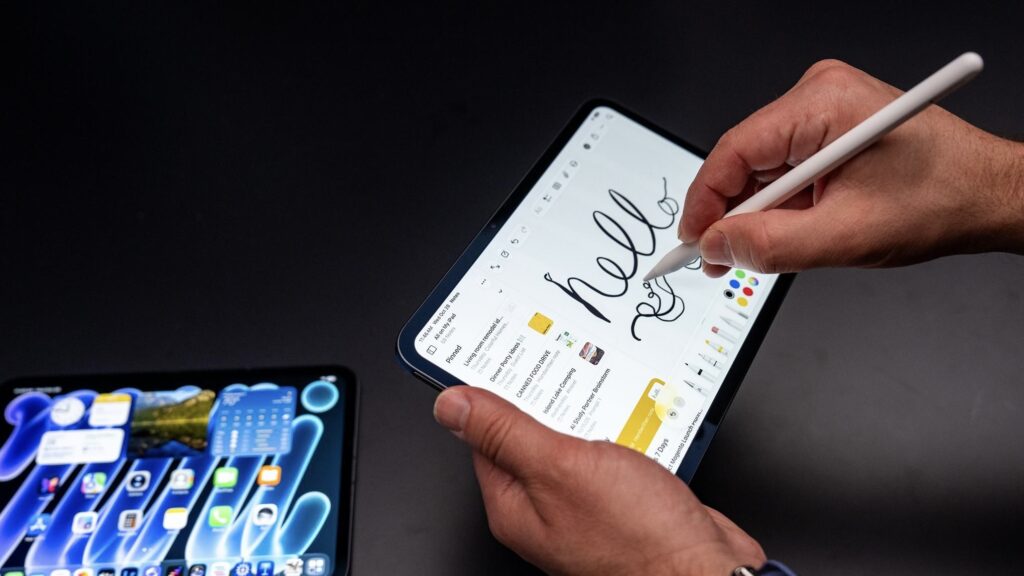
A person writing the word hello with an Apple Pencil in Notes on the new iPad mini
The Apple Pencil Pro and gaming are where the trade-off shows:
- Drawing and writing: Pakula himself calls the stylus one of the mini’s key creative accessories. Yet on screens without ProMotion, the line typically lags further behind the pen tip than on iPad Pro.
- Gaming: in games that can run at 120 frames per second, the A20 Pro will be capped by the display.
- Scrolling: people who carry a 120Hz iPhone will have to get used to the stepped scrolling again. The source suggests some may need a week to adjust.
So why does the iPad mini lack 120Hz? Apple’s official answer is that OLED’s fast pixels already eliminate motion blur. The source argues that this answers a neighboring question rather than the real one. Its conclusion, which Apple has not confirmed, is that the company is most likely reserving ProMotion for iPad Pro and for a future mini that will need its own headline upgrade.