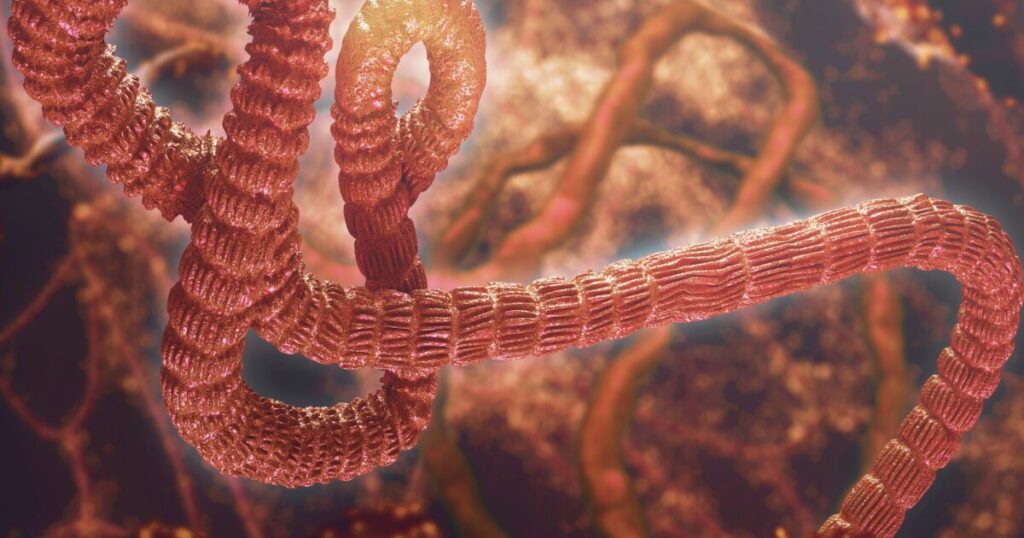
New Ebola strain spreads beyond Africa: what everyone needs to know
Ebola is back in the news, and this time the alarm has spread beyond Africa. The outbreak in the Democratic Republic of Congo has become the third largest in history — no surprise it has already been declared a global threat. By the end of May, 906 suspected cases and 223 deaths had been recorded there. And suspicious cases are already being investigated in Italy and Brazil. Let’s break down what this virus is, how it reaches other continents, and how real the threat is to the rest of the world.
What Is Ebola and How Is It Transmitted
Ebola is a rare but potentially fatal virus, one of the most dangerous viruses in history. It spreads mainly through direct contact with the bodily fluids of an infected person: blood, vomit, feces. This means it’s not the kind of infection that spreads through the air like the flu or COVID. Infection requires fairly close contact, which is why the virus is especially dangerous for healthcare workers and the patient’s relatives.
Early symptoms resemble a common cold or flu: sore throat, headache, fever, weakness, body aches. That’s exactly why the disease is so hard to identify in its early stages. In severe cases, a rash, shortness of breath, vomiting, diarrhea, abdominal pain, and seizures may also develop.
The virus was first identified in humans in 1976. Since then, more than 40 outbreaks have occurred, almost all in African countries. The current outbreak is special: it was caused by the rare Bundibugyo strain, and this is only the third time in history that this particular strain has been responsible.
How the New Ebola Strain Differs from Previous Ones
Ebola has several variants, and they differ significantly in lethality. Most past outbreaks were caused by the Zaire strain — the most terrifying of all, killing up to 90% of those infected. The current Bundibugyo strain is more dangerous than a typical infection, but still milder: its fatality rate reaches 34%.
That’s still extremely high by infectious disease standards. But the difference is fundamental: the lower the mortality rate, the greater the chance that patients can be treated and the outbreak contained. Additionally, international organizations are now urgently developing vaccines specifically targeting this strain.
Why the Ebola Outbreak Is Spreading Rapidly in Congo
According to epidemiologists, the current outbreak is fueled by the same factors that once led to the catastrophe in West Africa in 2014–2016, when more than 11,000 people died. It was an unfortunate combination:
- the virus circulated for several months before the outbreak was officially declared — the early symptoms were too vague;
- infections spread in densely populated cities, where breaking the chain of contacts is much harder;
- some cases involved infections directly in hospitals, among staff and patients;
- political instability and distrust of doctors: in Congo, mobs set hospital tents on fire, and some patients escaped from isolation wards;
- traditional funeral rites, where people touch the bodies of the deceased, also accelerate the spread.
The last point is especially insidious: the body of someone who died from Ebola remains extremely contagious, and farewell rituals involving touch are part of the culture.
How Ebola Cases Appeared Beyond Africa
The virus is leaving Africa in the most ordinary way — with travelers. Nine cases and one death have already been recorded in Uganda, which borders Congo.
One American contracted Ebola while working in Congo — he is currently being treated in Germany, and his condition is stable. In the Italian city of Cagliari, a traveler who recently returned from Congo is under observation. In Brazil, two people are being tested: one flew from Congo to São Paulo, and the other from Uganda to Rio de Janeiro.
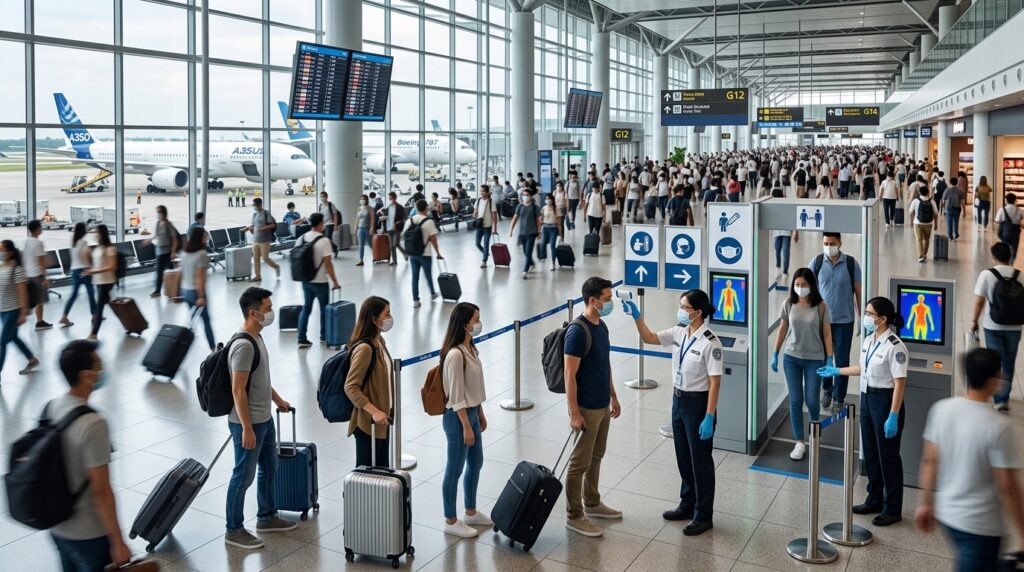
The main route for the virus beyond Africa is air travel, so airport controls have been tightened
Both Brazilian patients ultimately turned out to have other diseases: one was diagnosed with severe meningitis, and the other with malaria, while the Ebola test came back negative. As of now, no Ebola case has been confirmed in Brazil. But the alarm itself forced the country to activate all safety protocols: patient isolation, laboratory tests, and epidemiological investigations.
What Measures Are Countries Implementing Due to the Ebola Outbreak
Many countries have already taken precautions. The US and Canada have temporarily restricted entry for travelers from Congo, Uganda, and South Sudan. The US, India, and Mexico have stepped up airport controls — screening arrivals and monitoring for signs of illness. Some countries have introduced a 21-day quarantine for their citizens returning from Congo.
But for now, this is still an outbreak, not a pandemic, and it’s important not to confuse the terms. Epidemiologists describe three possible scenarios:
- Without strict measures, the number of cases will rise sharply in the coming months, and models suggest the real number of cases may exceed official statistics.
- In the best-case scenario, a strong healthcare response, rapid vaccine development, and cooperation with local communities will help bring the outbreak under control.
- The most realistic outcome is somewhere in between: cases will increase, but the outbreak will eventually be contained.
The good news is that the world has responded much faster than it did to the West African catastrophe ten years ago. More than 86 million Australian dollars have already been allocated for the accelerated development of three vaccines against the Bundibugyo strain. Science already has experience: previously, one of the experimental Ebola vaccines showed very strong results. It is precisely the speed of the response that could prevent a repeat of the 2014–2016 scenario.
Is There a Risk of Ebola Infection in Russia
For residents of Russia, as for most countries outside Africa, the direct risk is currently very low. Ebola is not airborne and doesn’t spread through coughing in a shopping mall — infection requires close contact with a sick person’s bodily fluids. This fundamentally distinguishes it from the respiratory infections we’ve grown accustomed to since the pandemic.
The only real risk factor is traveling to countries affected by the outbreak and having contact with patients there. If you’re planning a trip to the region, it’s best to check the recommendations of health authorities in advance and postpone the trip unless absolutely necessary.
The bottom line is simple: the current outbreak is dangerous, but there’s no reason to imagine another COVID. The virus type is less lethal than the most severe Ebola variant, and the international response this time is noticeably faster. It’s worth monitoring how events unfold, but there’s no reason to panic.