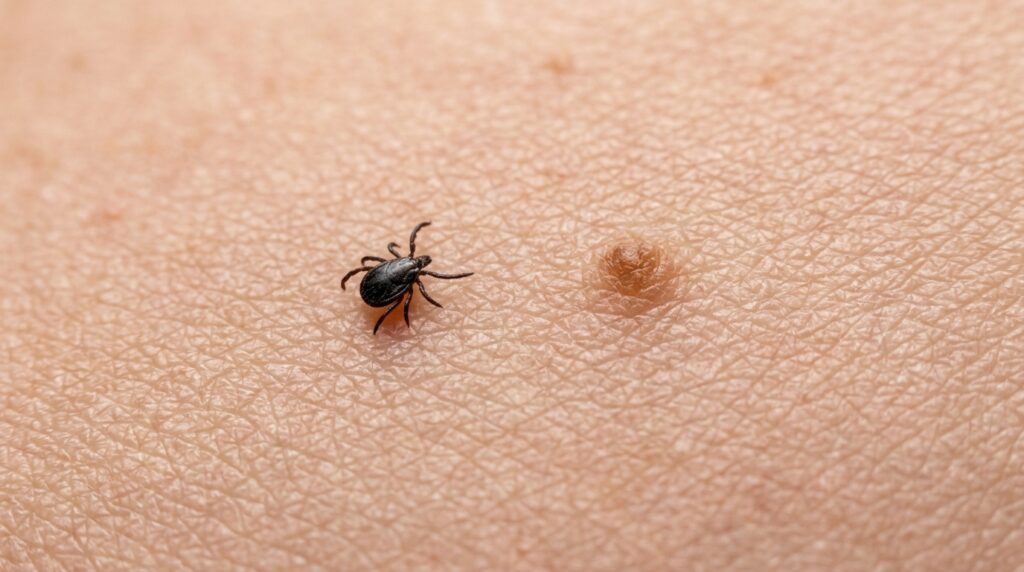
People are panicking about nanoticks, but they have existed for a long time
On social media and in messaging apps, information has been actively spreading about the appearance of a completely new type of parasite in Russia — nanoticks. Because these microscopic ticks are nearly invisible on the human body, outdoor enthusiasts have started to panic. It’s the perfect time to figure out whether a mutation has actually occurred, where this threat came from, and how to protect yourself from an invisible danger.
Where Did Nanoticks in Russia Come From
The panic surrounding unknown blood-sucking organisms prompted specialists from Rospotrebnadzor (Russia’s consumer protection agency) to issue an official clarification. Experts from the agency completely debunked the rumors about the appearance of any new biological species in the country.
It turned out that the frightening nanoticks are simply nymphs. In biology, this is the term for juvenile specimens of the most common Ixodes ticks that we regularly encounter every warm season.
During its development, this parasite goes through several stages: it hatches from an egg as a larva, then transforms into a nymph, and only then becomes an adult (imago). It was precisely these nymphs that internet users, due to their modest size, dubbed with the flashy prefix “nano.” So this is not some new species — just young tick specimens that have always existed.
Why Young Ticks Attack More Aggressively Than Adults
The size of such a young specimen is only 1 to 2 millimeters. Visually, it resembles a tiny grain of sand or a minuscule freckle, which is why the parasite remains unnoticed on the body for a long time. You can return from a forest walk, change clothes, take a shower, and not even suspect that you’ve already become a victim of a bite.
The main danger lies in the feeding behavior of nymphs. At this young age, ticks have a vital need to feed very intensively in order to trigger the molting process and transition to the next, adult stage of development. Because of this constant hunger, young specimens are extremely aggressive and seek potential victims much more actively than their larger counterparts.

A tiny tick is hard to notice. Image source: Shot Telegram channel
What Diseases Do Young Ticks Carry
Despite their tiny size, tick nymphs are no less dangerous than adult bloodsuckers. They are fully capable and effective carriers of a whole range of serious infectious diseases.
According to epidemiologists, the most dangerous pathogens are transmitted through the bite of such a millimeter-sized creature. First and foremost, nymphs can transmit the tick-borne encephalitis virus, as well as the agents of Lyme disease (borreliosis) and anaplasmosis. It is a mistake to think that a small larva contains less venom or virus, because the concentration of the pathogen in its saliva is quite sufficient to deal a severe blow to the human immune system.
How to Protect Yourself From Ticks
Since we are dealing with ordinary, albeit very small, Ixodes ticks, the protection methods remain standard but require maximum concentration and attentiveness. When heading outdoors, it’s important to follow several basic recommendations:
- Wear light-colored, solid-colored clothing with long sleeves and pant legs — it is much easier to spot a dark dot the size of a millimeter on such fabric;
- Always tuck your pants into your socks to block parasites’ access to exposed leg skin;
- Use chemical repellents with acaricidal action, applying them to footwear and the lower part of clothing;
- After returning home, conduct a thorough inspection of your entire body, paying special attention to skin folds, the area behind the ears, and the scalp.
If you like driving to the forest by car, don’t forget to check the interior after the trip, as ticks can detach from clothing and remain on the seats.

Light-colored clothing helps you spot even the smallest tick in time
If you do find an attached tick, do not try to crush it with your fingers or douse it with vegetable oil. To avoid triggering a release of infected saliva into the bloodstream, the tick should be carefully removed using a special plastic tick remover or tweezers, then placed in a small container and taken to the nearest laboratory for testing.
In the end, the nanotick story turned out to be a classic example of how fear of the unknown creates urban legends. No new parasite species have appeared, but microscopic nymphs do indeed require the most serious attention. Understanding how ticks develop proves that the size of the threat doesn’t matter, and neglecting safety measures during tick activity season is absolutely unacceptable.