The July 2026 full moon — traditionally called the Buck Moon — reaches its peak on Wednesday, July 29, at 14:36 UTC. At that moment the Moon will be positioned in the constellation Capricornus, fully illuminated as it sits opposite the Sun from Earth’s perspective. The good news for casual observers: the Moon appears full to the naked eye for roughly three nights, so July 28, 29, and 30 all offer excellent viewing.
What you need to know
- Peak full moon occurs on July 29, 2026 at 14:36 UTC; the Moon will be in the constellation Capricornus.
- This is not a supermoon — the next supermoon is expected on November 24, 2026.
- The name “Buck Moon” comes from the fact that young male deer are actively growing new antlers in midsummer.
- The next full moon after this one falls on August 28, 2026 (the Sturgeon Moon), which will coincide with a deep partial lunar eclipse.
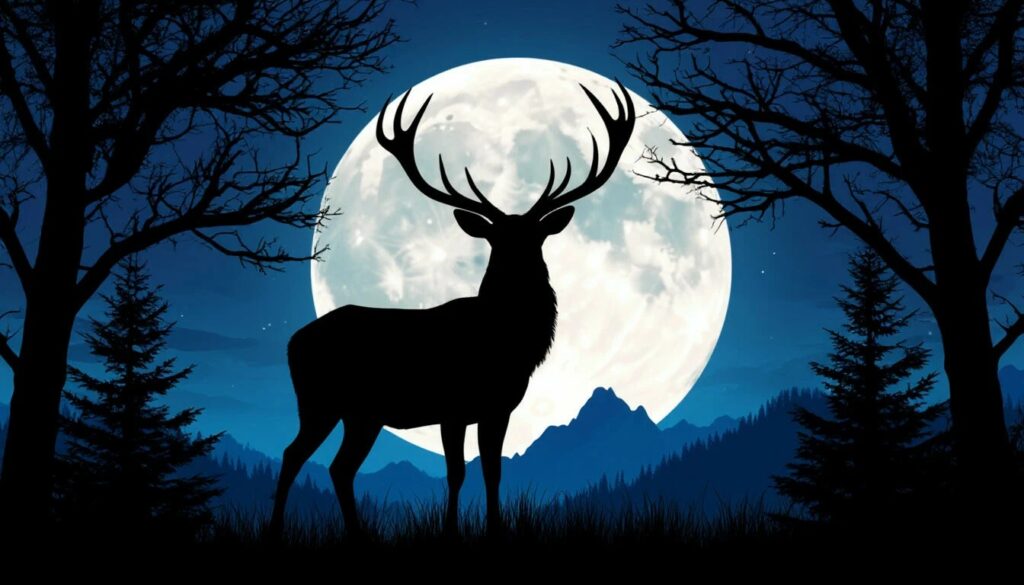
The Buck Moon in July 2026. Image source: shedevrum.ai
Best time to observe the July full moon
A full moon is not an all-night event but a precise instant when the Sun, Earth, and Moon align with the lunar disk fully lit. However, the difference is imperceptible to the eye for about a day and a half on either side of the peak, so there is no need to catch the exact second.
The most rewarding moment for observation is the evening of July 29, just after moonrise. At that point the Moon climbs above the eastern horizon already nearly fully illuminated, appearing large and warm-toned. To enjoy the view, find a location with a clear sightline to the east — a waterfront, hilltop, or east-facing window works well.
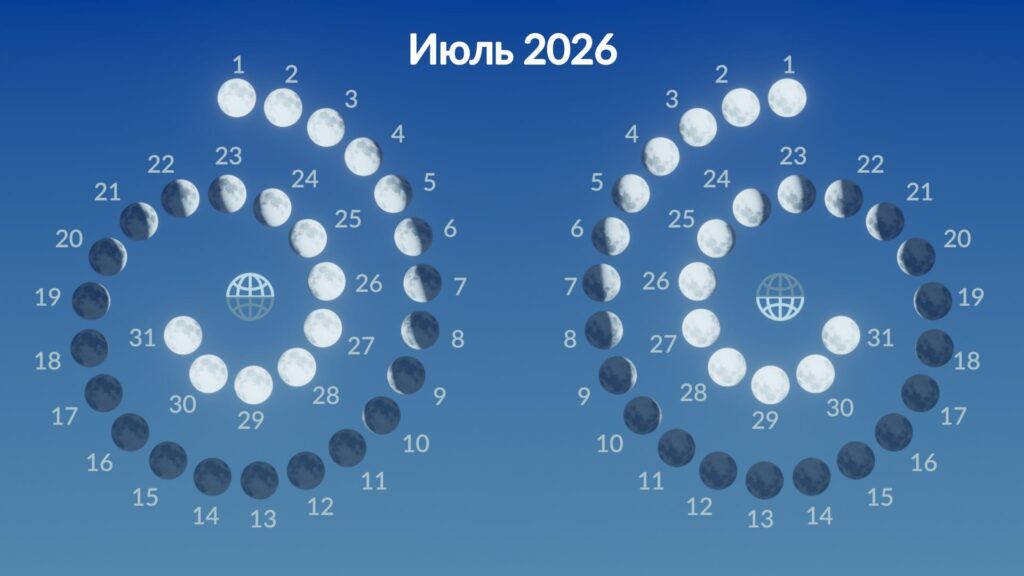
How the Moon appears in July 2026 in the Northern and Southern Hemispheres. Image source: starwalk.space
Why the Moon looks enormous near the horizon
If the rising Moon appears impossibly large, that is neither a supermoon nor an optical defect — it is the well-known Moon illusion. The actual angular size of the lunar disk does not change; instead, the brain compares it with buildings, trees, and hills near the horizon and interprets it as bigger. Once the Moon climbs higher and those reference objects disappear, it looks its usual size again.
A simple test: look at the “giant” Moon through a sheet of paper rolled into a tube, then repeat an hour later when it is higher. The disk will measure the same, even though your eyes insist otherwise.
The warm yellow, orange, or reddish color of a low Moon is a separate, real phenomenon. Moonlight near the horizon passes through a thicker layer of atmosphere, which scatters shorter blue wavelengths and lets warmer tones through — the same mechanism that produces red sunsets.
Why it is called the Buck Moon
The name has nothing to do with mysticism. In midsummer, young male deer (bucks) are actively growing new antlers. Early in the season the antlers are covered in soft, blood-vessel-rich skin called velvet; by late July they are nearly full-sized and beginning to harden. The full moon was named after this conspicuous seasonal marker.
The July full moon carries many other traditional names, most rooted in what different cultures observed in nature at this time of year:
- Thunder Moon — for the frequent summer thunderstorms
- Salmon Moon — marking the salmon spawning season
- Hay Moon — the time to mow and dry hay
- Berry Moon / Raspberry Moon — the berry-ripening season
- Mead Moon — associated with honey harvesting and mead-making
An interesting detail: in the Southern Hemisphere, where July falls in winter, the same full moon may be called the Wolf Moon or Ice Moon — seasonal names are shifted by six months.
Not a supermoon
The July 2026 full moon is not a supermoon. A supermoon occurs when a full moon coincides with perigee — the closest point in the Moon’s orbit to Earth — making the disk appear slightly larger than average. The nearest supermoon is not expected until November 24, 2026.
There is a related observational note for Northern Hemisphere viewers: the July full moon tracks low across the sky. Because the full moon is always opposite the Sun, and the summer Sun rides high, the Moon follows a low, “winter-like” arc. The upside is that a low Moon spends more time near the horizon, enhancing both the warm color effect and the Moon illusion.
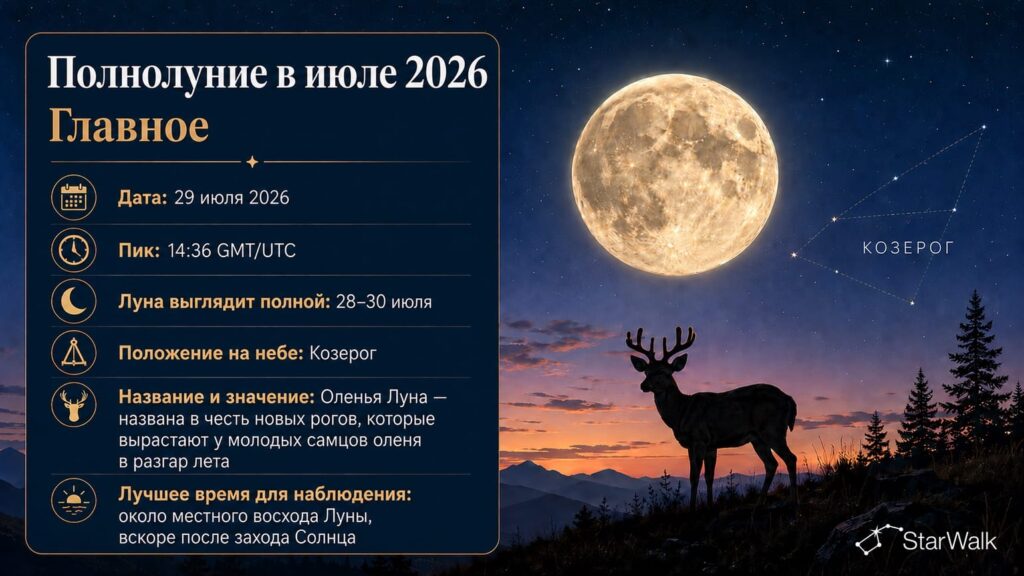
Summary of the July 2026 full moon. Image source: starwalk.space
What comes next
The next full moon after the Buck Moon arrives on August 28, 2026. Known as the Sturgeon Moon, it will coincide with a deep partial lunar eclipse — potentially an even more dramatic spectacle. The next Buck Moon after that is expected on July 18, 2027.