
Ibuprofen: the popular painkiller is killing you, and doctors are silent
When your knee, back, or shoulder hurts, ibuprofen seems like the easiest solution. The pill is cheap, available without a prescription, and quickly relieves pain, so many people keep it at home “just in case.” But there’s an unpleasant trap with such medications: if you take them not for a couple of days but for weeks, the risk of side effects increases significantly. Let’s look at what happens to the body with long-term ibuprofen use, why it only masks joint pain rather than treating it, and what knee health after 30 has to do with it.
How Ibuprofen Works and Why It Doesn’t Treat Joints
Ibuprofen belongs to nonsteroidal anti-inflammatory drugs (NSAIDs) — a group of medications that reduce inflammation, swelling, and pain. During arthritis flare-ups, it genuinely helps: the joint hurts less, and moving becomes easier. Studies confirm that NSAIDs provide moderate short-term relief for arthritis, especially during painful periods.
But here’s an important point that people forget: ibuprofen treats the symptom but doesn’t address the cause. With arthritis, cartilage gradually breaks down, bones change, the joint becomes inflamed — and the pill has no effect on these processes. It simply masks the pain while the destruction continues on its own.
This leads to the main trap: a person gets used to suppressing pain with pills and doesn’t try what actually works in the long run — movement, weight loss, exercise. The pain goes away, everything seems fine, and there’s no desire to change anything.
Why Long-Term Ibuprofen Use Is Dangerous for Your Health
The main danger of regular use is the stomach. Ibuprofen damages the stomach lining and increases the risk of ulcers and internal bleeding. Some people develop heartburn or abdominal pain, while others feel nothing at all — until a serious bleed occurs.
The risk increases in several situations:
- high doses, especially 2400 mg per day or more
- taking it for weeks and months without a break
- age over 65
The second target is the kidneys. They function through normal blood flow, and NSAIDs reduce that blood flow to the kidneys. The medication blocks natural substances that keep kidney blood vessels open. This is especially dangerous during dehydration, chronic kidney disease, or heart problems.
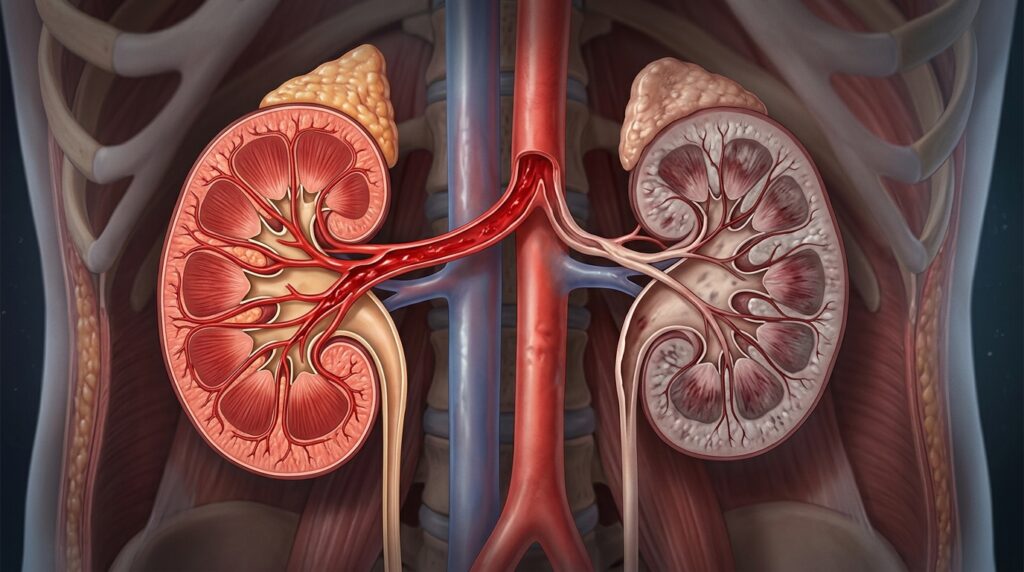
Ibuprofen reduces blood flow to the kidneys, which is especially dangerous during dehydration
There’s also strain on the heart. Long-term NSAID use is associated with increased blood pressure, fluid retention, and the risk of cardiac complications in some people. A separate issue is asthma: some asthma patients tolerate ibuprofen poorly — they may develop wheezing and difficulty breathing because the medication affects substances that keep airways open.
Who Is Most at Risk When Taking Ibuprofen
Osteoarthritis is a disease that becomes more common with age. This means that most regular ibuprofen users are elderly people — those who are most vulnerable to its side effects.
Additionally, elderly people usually take several medications at once. And ibuprofen interacts poorly with other medications:
- blood pressure medications,
- blood thinners,
- antidepressants,
- some diabetes medications.
In such combinations, the risk of complications increases, or other medications may become less effective.
This doesn’t mean that ibuprofen is a poison that should never be touched. Short-term use at the minimum effective dose genuinely helps many people. Problems begin when a person takes it regularly and for extended periods without consulting anyone.
What to Use Instead of Ibuprofen for Chronic Joint Pain
Good news: pills are far from the only option. Some approaches have an even stronger evidence base than painkillers.
It sounds paradoxical, but movement helps with osteoarthritis. It may sound strange, but with osteoarthritis, what often helps is not rest but properly chosen movement. When the muscles around the affected joint become stronger, they can take on part of the load themselves. The joint no longer has to work alone, so walking, getting up from a chair, or climbing stairs becomes easier over time. Suitable activities include:
- walking,
- cycling,
- swimming,
- strength exercises.
Properly selected joint exercises often work better than an inexperienced person might think.

Swimming and walking strengthen muscles around joints and reduce pain
A few more effective strategies:
- weight management: especially important for knees and hips, as extra weight increases load and inflammation in joints
- physical therapy and working with a specialist who can teach you to move safely and manage flare-ups (don’t rely on a standard clinic — look for one yourself, as they often just prescribe loads of injections and pills)
- pacing activities: breaking tasks into short intervals with breaks
- heat: a heating pad helps relax muscles and relieve stiffness, but it’s important to understand when a heating pad helps and when it’s better not to apply heat to a sore area
- comfortable supportive footwear
- anti-inflammatory gels applied to the skin: they act locally and cause fewer side effects than pills
This doesn’t mean you should give up ibuprofen entirely. For many people, it remains a useful aid alongside these measures. It’s just that pain is rarely cured by one magic pill — it usually requires a balance between quick relief and long-term health care.
The key takeaway: ibuprofen is helpful for short-term pain, but with frequent and prolonged use without consulting a doctor, it damages the stomach, kidneys, and heart. And if you’re reaching for it every day — that’s a signal not to increase the dose, but to talk to a doctor and reconsider your approach.