Many people brew tea incorrectly, which is why they don’t like it
Brewing tea seems like the simplest task: add leaves, pour boiling water, and wait. But it’s precisely this automatic approach that most often robs the drink of its flavor. Tea turns out too astringent, cloudy, or completely lacking in aroma — not because of poor leaf quality. Additionally, improperly brewed tea loses its beneficial properties. The secret lies in the physics and chemistry of the process, and to understand how to brew tea correctly, you need to consider water temperature, steeping time, and even storage.
Why Tea Tastes Bad and Turns Bitter
The main mistake almost everyone makes is pouring boiling water over any type of tea. While hot water is still acceptable for fermented black varieties, lighter teas literally burn from it. Excessively high water temperature destroys delicate aromas and begins to actively extract tannins from the leaves.
This is precisely why the answer to the question why tea turns bitter always comes down to it being brewed too aggressively and steeped too long. The longer the leaves remain in hot water, the more astringent compounds transfer into the infusion. In moderate amounts, they give the drink body, but in excess, they make it harsh and mouth-puckering.
What Water Is Needed for Delicious Tea
Water quality affects the final result no less than the variety of the leaves themselves. It’s best to use fresh, clean water without any foreign odors. If tap water is too hard, the drink may turn out cloudy and less aromatic. This is especially noticeable with the delicate flavors of green and white varieties.
For home use, regular filtered water works perfectly. There’s absolutely no need to buy expensive bottled water — running it through a pitcher filter is sufficient. It’s also worth remembering that tea brews worse in hard water, so to achieve a soft taste, it’s important to remove excess minerals and chlorine.
How Much Tea to Put in a Teapot
The universal tea-to-water ratio for home brewing is 2–3 g of tea per 250 ml of water. Visually, this is approximately one full teaspoon. However, the exact amount always depends on the leaf size, because large rolled leaves take up more volume, while fine ones take up less.
If the finished infusion seems too weak, the correct solution is to add a bit more leaf rather than increasing the steeping time. Prolonged steeping rarely adds depth to the aroma but is guaranteed to bring unpleasant bitterness.
At What Temperature to Brew Different Types of Tea
Here the golden rule applies: the more delicate and lighter the tea leaf, the cooler the water should be. Experts emphasize that green and white tea should be brewed with water no hotter than 75–80 degrees Celsius.
At what temperature to brew different teas:
- Black tea: approximately 90–95 degrees, 3–5 minutes;
- Green and white tea: 75–80 degrees, 1–3 minutes;
- Oolong: 80–95 degrees, 2–5 minutes or short infusions;
- Pu-erh: 90–100 degrees, short infusions or 3–5 minutes;
- Herbal tea: 95–100 degrees, 5–10 minutes.
How to Properly Brew Black Tea
Black tea forgives many mistakes because it tolerates hot water better. But even it can be ruined if you forget to remove the leaves in time. To achieve the ideal taste, follow this simple algorithm.
How to brew black tea correctly:
- Boil a fresh portion of water;
- Let it settle slightly so the temperature drops to 90–95 degrees;
- Add 2–3 g of tea per standard 250 ml cup;
- Steep for 3 to 5 minutes;
- Be sure to remove the leaves or tea bag from the water.
How to Brew Green Tea Without Bitterness
Green tea varieties suffer most often from improper handling. Sometimes we’re afraid to experiment and continue out of habit pouring boiling water over any type of leaves. If the drink smells like hay or cooked grass, the water was too hot.
To understand how to brew green tea correctly, it’s enough to open the kettle lid after boiling and wait a few minutes. When the temperature drops to 80 degrees, you can pour the water over the leaves. The key is not to steep for longer than three minutes and to immediately remove the leaves from the cup.
Should You Preheat the Teapot Before Brewing
This is a small but very important detail. If you pour hot water into cold ceramic or glass, the temperature drops sharply, and extraction won’t go as planned. This especially affects oolongs, pu-erhs, and dense black varieties.
Simply pour a little boiling water into the vessel, wait about 30 seconds, and pour it out. This helps preheat the teapot with hot water and creates a stable temperature for the proper unfolding of the tea leaf.
Why You Shouldn’t Leave Tea Steeping in Your Cup
The release of substances from tea leaves doesn’t stop on its own. As long as the leaves are floating in your cup, they continue releasing compounds into the infusion. First, the tea flavor simply becomes rich, then astringency appears, which quickly transitions into harsh bitterness.
This is exactly why it’s so important to use a strainer, filter bags, or pour the finished infusion into a separate pitcher (chahai). Stopping the brewing process is the main secret to consistent flavor without an astringent effect.
Loose Leaf Tea or Tea Bags — Which Tastes Better
Whole leaf always produces a more complex, multifaceted, and deep aroma, as it has room to unfurl. However, tea bags are by no means garbage. Experts note that they are filled with a fine fraction of the same tea. Due to the fine grind, water colors more quickly when brewing bagged tea.
Therefore, tea bags are perfectly suited for quick tea breaks. But the rules are the same: steep for 3–5 minutes and discard. Leaving them in the cup until the end of your tea session is a surefire way to ruin the drink.
How to Properly Store Tea at Home
Even premium tea varieties will lose their properties if stored incorrectly. Tea leaves easily absorb foreign odors and are sensitive to sunlight, moisture, and heat. Storing them near the stove or in a transparent jar on the counter will quickly destroy the drink’s aroma. Specialists recommend keeping tea in a dark, dry place.
Can You Drink Yesterday’s Brewed Tea
The short answer is no. Old tea infusion becomes cloudy, loses all its aroma, and acquires an unpleasant bitterness. But the main problem is not the ruined taste — it’s safety.
Experts warn that prolonged storage of wet tea leaves at room temperature creates a health risk due to bacterial growth. Tea should be consumed exclusively fresh.
How to Make Delicious Iced Tea
If you want a cold drink, don’t simply cool yesterday’s brew. It’s better to use the cold brew method, where leaves are steeped in cold water over an extended period.
During this prolonged contact with cold water, tannins are released minimally. As a result, the delicious tea turns out slightly sweet, refreshing, and completely free of bitterness. Simply add 2–3 spoonfuls of leaves to a liter of filtered water, place it in the refrigerator for 8–24 hours, then strain.
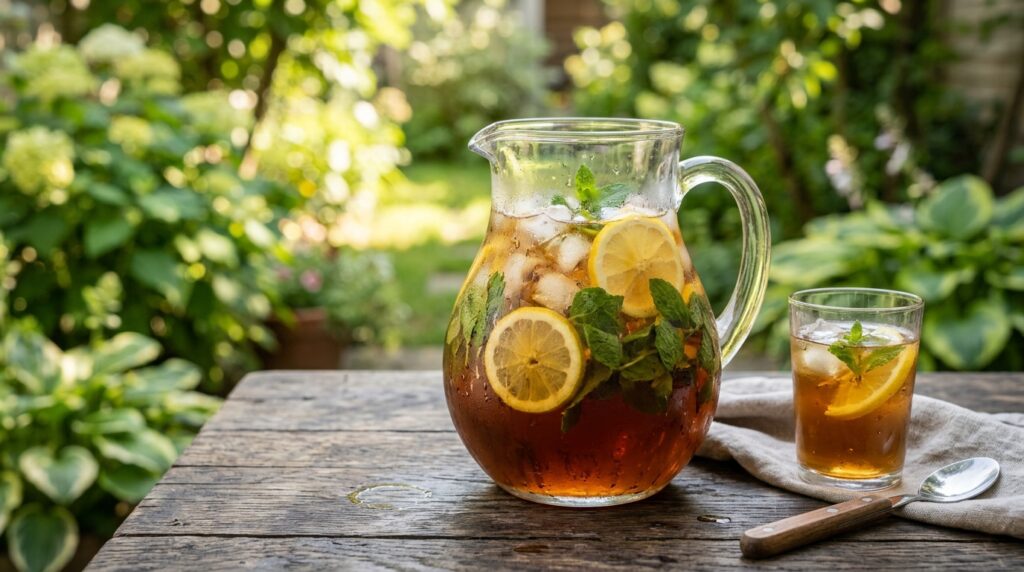
Cold brew tea turns out softer
What to Add to Tea for Flavor and Aroma
A well-brewed quality leaf is wonderful on its own. But if you want variety, the flavor can be gently enhanced. Lemon, ginger, and milk pair excellently with black varieties. Mint goes well with green tea, and for cozy winter evenings, you can use cloves and cardamom.
It’s important to remember that tea additives won’t fix an over-steeped brew. If the infusion has already turned bitter from boiling water, honey or sugar will only mask the mistake but won’t restore the lost aroma.
Step-by-Step Guide to Making Delicious Tea at Home
In summary, several basic rules can be highlighted. This simple recipe for delicious tea works for most popular varieties.
How to brew delicious tea in five steps:
- Always use fresh filtered water;
- Don’t pour boiling water over green and white varieties;
- Follow the ratio — approximately 2–3 g per 250 ml of water;
- Always remove the leaves or tea bag after 3–5 minutes of steeping;
- Store dry leaves in a dark place in a tightly sealed container.