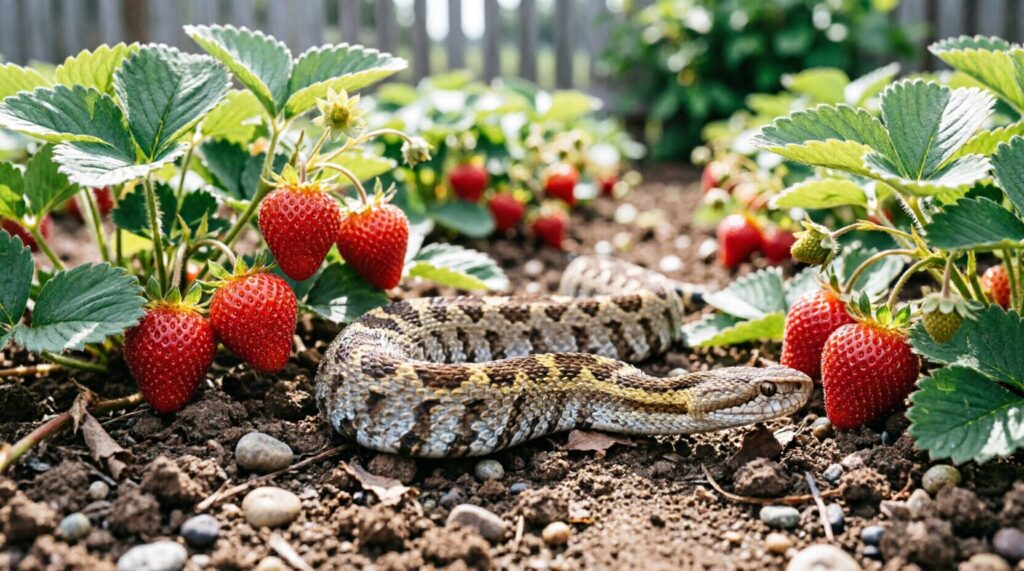
How to drive a snake away from your garden plot?
Finding a snake in your garden bed is not exactly a pleasant experience. Even if it’s harmless, your time at the dacha turns into constant vigilance afterward: every rustle in the grass makes you flinch. But here’s the good news: you can drive a snake off your property without risk. Not through a one-time act of heroism, but through smart property management. Here’s what to do and what definitely not to do.
Why You Should Never Try to Catch a Snake Yourself
The first impulse is to grab a shovel and deal with it. That’s exactly what leads to bites. You should never catch a snake with your hands or improvised tools: even if you’re sure it’s non-venomous, it’s easy to make a mistake, and the consequences are serious. If a snake has clearly taken up residence on your property, it’s wiser to call wildlife removal specialists — they have safe traps.
Here’s a list of things you definitely should not do:
- Don’t flood burrows with water. A snake forced to flee may launch an attack.
- Don’t shout, wave your arms, or make sudden movements — this reduces the chances of provoking an attack.
- Forget folk remedies like kerosene, diesel fuel, and toxic chemicals — they’re dangerous both for you and for the surrounding nature.
The most underrated advice is simply not to panic. Most often, the snake will slither away on its own if you don’t create comfortable conditions for it and don’t corner it. Still, it’s worth knowing in advance what to do in case of a snakebite — just in case.
What Makes a Garden Plot Attractive to Snakes
A snake comes where there are three things: shelter, food, and quiet. Tall grass, piles of junk, and mouse trails are literally an invitation. So the fight against snakes begins not with repellents, but with cleaning up.
The main rule is simple: the fewer hiding spots and prey on your property, the less interesting it is to a snake. Remove what it comes for, and the problem will resolve itself — without any chemicals or chasing with a shovel.
Eight Steps to Keep Snakes Away from Your Property
Here’s a step-by-step plan recommended by a veterinarian. It’s not about a one-time action, but about making your territory unattractive for the long term.
- Mow the tall grass. This is the key condition: reptiles find it easiest to hide in overgrown vegetation.
- Remove trash and debris. Piles of boards, slate, rocks, and old tires make ideal shelters.
- Relocate the compost pile. Snakes often settle in compost, so keep it away from the house and recreational areas.
- Seal up gaps. Check the foundations of buildings, the space under porches, and the woodshed — this will block entry into the house and outbuildings.
- Deal with rodents. Mice and rats are the main food source for snakes. If you don’t have them, the snake has no reason to visit you.
- Regularly inspect the property. If there’s a forest or abandoned neighboring plots nearby, discuss the situation with your neighbors: snakes migrate easily.
- Install vibration repellers. Snakes are highly sensitive to ground vibrations.
- Use aromatic remedies selectively. Naphthalene, mustard powder, mixtures with essential oils.
The last two points need some caveats, and we’ll discuss them separately, because this is exactly where gardeners most often waste money.
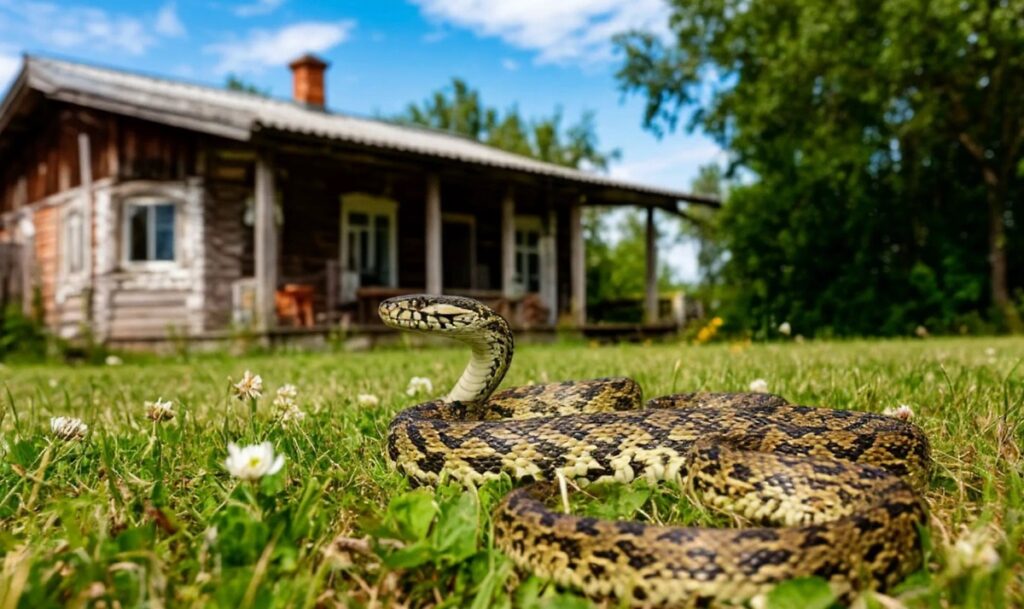
Mowed grass deprives a snake of shelter — this is the first and most important step
Why Ultrasonic Repellers Are Often Useless Against Snakes
Vibration repellers do work: snakes sense ground vibrations and try to avoid them. But there are nuances. It’s better to place them along the perimeter of the property and change their position periodically — otherwise the snake will get used to them and stop reacting.
However, ultrasonic devices are often ineffective: the sound wave is dampened by the soil. And here’s another popular myth: bells on branches don’t scare snakes — they’re more likely to scare away birds. A running lawn mower or generator is more useful in this regard than any decorative “repeller.”
How to Properly Use Scents Against Snakes
Repellents — naphthalene, mustard powder, mixtures with essential oils — sometimes help, but it’s important not to overdo it. First, strong odors dissipate quickly, so the effect is short-lived.
Second, some of these products are toxic — to people, pets, and plants. So they should be placed selectively, in spots where the snake is likely to appear, rather than scattered across the entire property.
The main takeaway is simple: you don’t need to defeat a snake in open combat — just remove its reasons for coming. And if nothing helps and the snake has clearly decided to settle in for the long haul, call wildlife removal specialists and don’t risk your health.