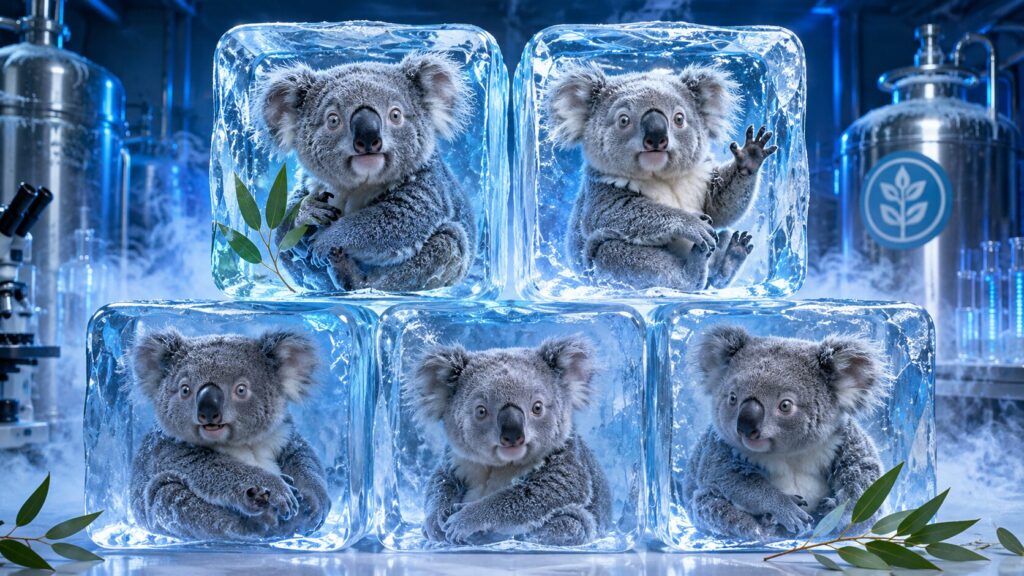
Scientists are creating a frozen reserve of koalas to save the species.
Scientists don’t plan to save koalas by freezing the animals themselves, but by preserving their reproductive cells. Researchers are creating a genetic reserve of koalas by placing egg cells and sperm in liquid nitrogen at minus 196 degrees Celsius. Such samples can be stored for decades. In the future, they plan to use them for artificial insemination and IVF — similar technologies are even being discussed in projects to resurrect extinct animals. However, for now, this is about creating a reserve, not a ready-made technology guaranteed to save koalas from extinction.
Why Koalas Need a Genetic Reserve
When animal populations decline sharply, a bottleneck effect occurs: along with individual animals, gene variants disappear that could help the population resist diseases and adapt to changing conditions.
Loss of genetic diversity is similar to destroying books in a library: the total number of volumes decreases, but more importantly, some knowledge is lost forever. Even if population numbers are later restored, recovering lost genetic variants will be much more difficult.
In certain areas of Queensland and New South Wales, koala populations have declined by as much as 80% since the late 1990s. The causes include:
- logging and habitat destruction;
- wildfires;
- droughts;
- infectious diseases.
In 2022, Australian authorities changed the conservation status of koalas in the eastern part of their range from vulnerable to endangered. Meanwhile, in southern Australia, the opposite problem exists: in some areas there are so many koalas that they strip and kill the trees they depend on. Therefore, the situation of the species varies greatly across different regions.
A genetic bank is needed not only in case of complete koala extinction. Preserved cells could be useful for breeding programs if individual populations become too small and lose a significant portion of their diversity.
How Koala Reproductive Cells Are Frozen
Scientists plan to use cryopreservation in liquid nitrogen. Its temperature is approximately minus 196 degrees Celsius, so biological processes in the cells virtually stop. With proper preparation, cells survive prolonged freezing, so samples can be stored for decades and then thawed for further work.
Simply put, cells are put on a very long pause. They don’t develop or age in the usual way, but they preserve the DNA they contain until specialists need it.
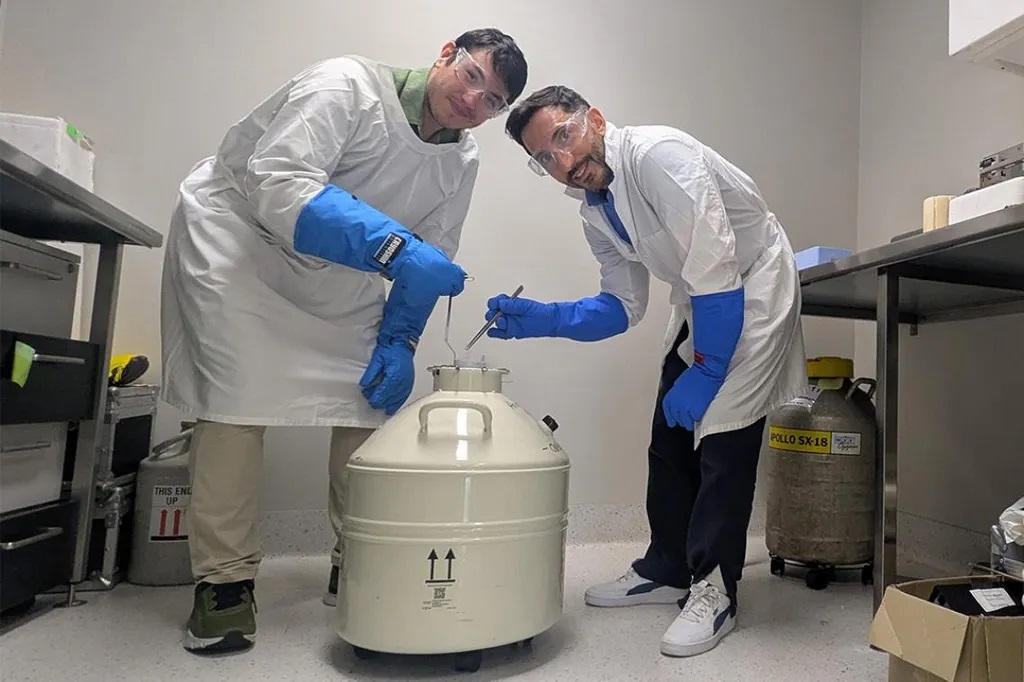
Andres Gambini and PhD student Patricio Dendy Palacios, who participated in the project, want to preserve koala reproductive cells in liquid nitrogen.
Material will be obtained with the help of wildlife veterinary hospitals. Every year, koalas with diseases and injuries are brought there, and not all can be saved. Reproductive cells will be extracted from deceased animals, as well as from koalas that can no longer reproduce due to illness or injuries.
Each preserved sample may contain rare genetic variants not found in other animals. Therefore, it is important for researchers to collect material from as many unrelated koalas as possible, although the exact number of required egg cells and sperm is not yet known. The more populations decline, the harder it becomes to maintain the previous level of genetic diversity.
How Koala Cells Will Be Cleaned of Infection Before Storage
One of the reasons koalas risk becoming functionally extinct is the bacterium Chlamydia pecorum. It causes a severe infection, the consequences of which can include:
- painful urinary tract lesions;
- gastrointestinal tract disorders;
- conjunctivitis and vision loss;
- infertility in females.
In the most affected populations of Queensland and New South Wales, nearly 90% of koalas are infected. Infertility is particularly dangerous: even if adult animals survive, fewer and fewer offspring are born.
Therefore, before cryopreservation, researchers will test cells for chlamydia. According to project participants, existing technologies can remove infection from contaminated samples. This is necessary so that future breeding programs don’t spread the dangerous bacterium along with valuable genetic material.
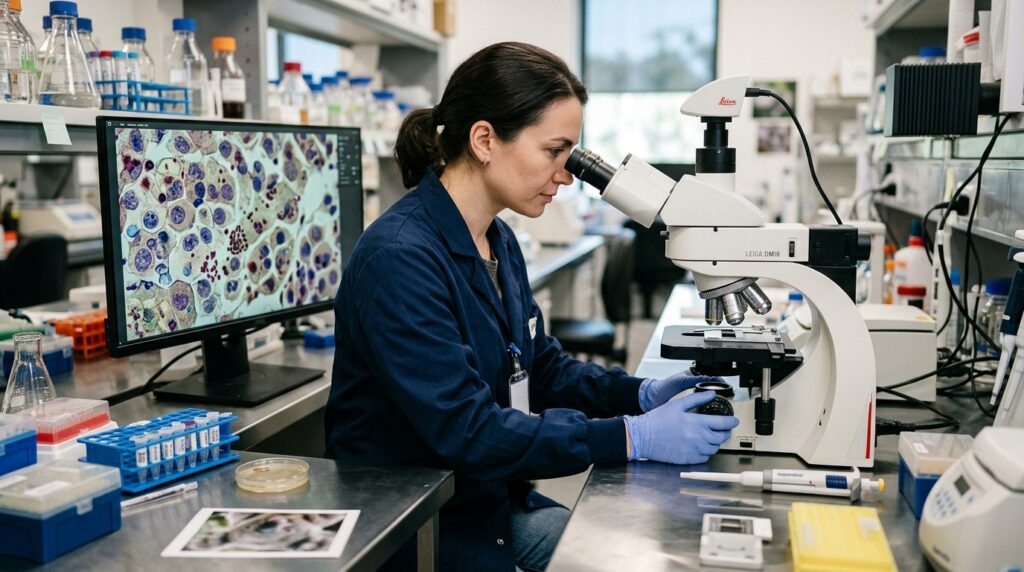
A specialist tests koala cells for infection
However, cleaning samples does not solve the disease problem among wild animals. It only allows for safer preservation of reproductive cells for future use.
Can Freezing Cells Save Koalas
The project has a scientific basis, but there is no guarantee of success yet. In 1998, specialists at the University of Queensland already produced the first koala joey born after artificial insemination. The technology has also yielded live offspring in other mammals: for example, in the US, a dog was raised from a frozen embryo. Additionally, in 2025, a team led by reproductive biologist Andres Gambini created the first kangaroo embryos using IVF.
But these kangaroo embryos did not result in live births. This means the full technology is not yet ready: scientists still need to learn how to consistently produce viable embryos and successfully transfer them to females.
The principle of long-term cell storage in liquid nitrogen itself works. Evolutionary biologist Vincent Lynch, who is not involved in the project, reported that he has managed to restore cells after several decades of freezing. However, this does not mean that any preserved koala sample will necessarily produce a healthy joey.
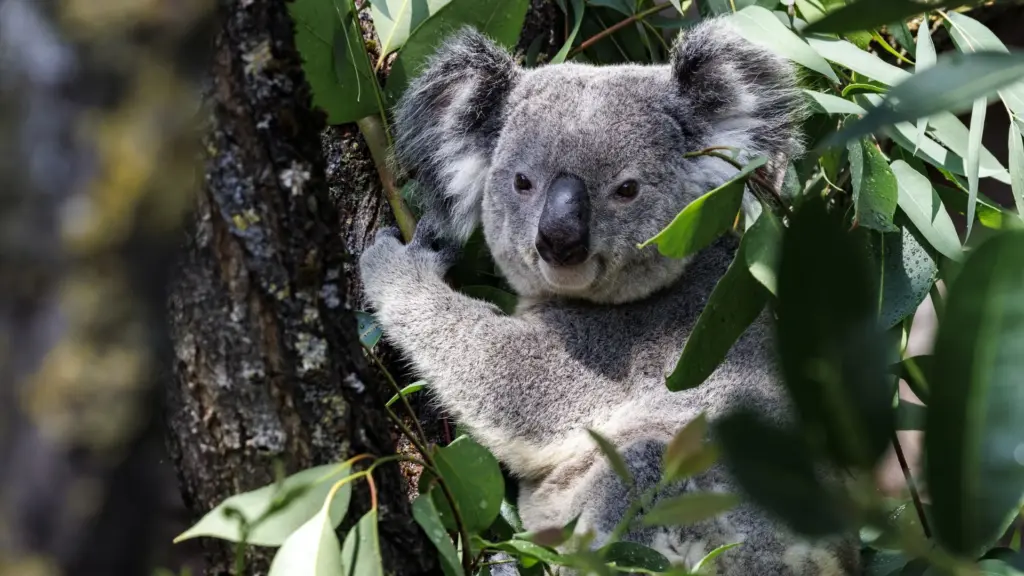
Koalas face numerous threats, including habitat loss and disease.
It is also unknown how many samples will be needed to maintain a healthy population. Researchers need to preserve not just a large number of cells, but material from animals with a sufficiently diverse set of genes.
Cryopreservation does not replace koala conservation. If animals have no suitable eucalyptus forests left, there will be nowhere to release raised koalas. Therefore, a genetic reserve can only work in combination with habitat protection, disease control, and population management.
Frozen cells give specialists additional time and preserve genetic variants that might otherwise disappear. The value of the project will become clear later — when scientists determine how effectively healthy offspring can be obtained from these samples and used to restore declining populations.