Whales speaking like humans: scientists recorded the incredible for the first time
Marine mammal researchers recorded for the first time how an orca mimics human speech — including individual words and, among other things, a sound very similar to a fart. This doesn’t mean the whale understood what it was saying, but the fact itself is impressive: an animal with a completely different vocal apparatus managed to reproduce what a human was saying. The story sounds almost comical, but behind it lies a serious scientific question: how exactly do animals learn to copy others’ sounds, and why is this ability so important for our own language. Let’s break it down step by step.
Who Besides Parrots and Ravens Can Mimic Human Speech
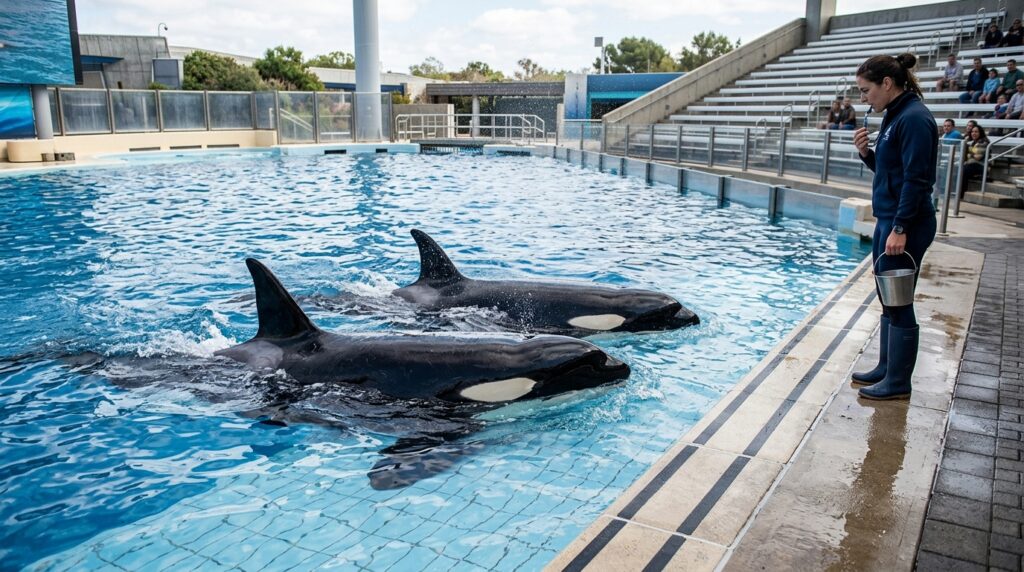
It is well known that parrots and ravens are the best at mimicking human speech. However, an experiment conducted by an international team with participation from the Animal and Human Behavior Study Group (GECAH) at the Complutense University of Madrid yielded completely unexpected results. First, a three-year-old male orca named Moana was taught on command to produce five new sounds, specifically selected to differ as much as possible from his natural “repertoire.”
Then came the main part. A 14-year-old female named Wikie attempted to reproduce these sounds after Moana — and did so easily, regardless of whether she heard them directly from her conspecific or from a speaker. Then the team raised the difficulty: six human sounds and phrases, a door creaking, elephant sounds, and a rather undignified sound resembling a fart were added to the set.
As a result, the orca pronounced words such as “hello,” “bye bye,” “one, two, three,” and “ah ha.” But it’s important to understand the motivation: the scientists were not interested in training for spectacle but in the phenomenon of vocal imitation in animals.
Vocal Imitation in Animals
The ability to copy the sounds of conspecifics is a much rarer thing in nature than it seems. Among primates, the ability to imitate sounds is virtually unique to humans, and only a few distantly related groups of birds — such as ravens and parrots — and mammals have independently developed the same ability.
This is what makes the result interesting. Orcas belong precisely to those rare animals capable of imitation. They even have documented group vocal dialects, which researchers call traditions or cultures — and these dialects, according to the hypothesis, are transmitted not through genes but through learning. Roughly speaking, different orca “families” speak with different “accents,” and calves adopt them from elders rather than inheriting them.
How Scientists Evaluated the Accuracy of the Orca’s Word Imitation
A logical question: what if the researchers just imagined the whale was “speaking”? To eliminate subjectivity, the team verified the result in two ways.
- They compared the sound wave shape of the orca’s sounds with the original samples — that is, they conducted an objective acoustic analysis.
- They gave the recordings to six independent judges who knew nothing about the experiment details and asked them to evaluate whether the whale’s sounds matched the originals.
The result was convincing. The copies were recognizable both to blind independent observers and according to acoustic analysis data, although not perfect. The authors themselves emphasized: such accuracy is particularly remarkable considering that the orca’s sound production system is entirely unlike a human’s.
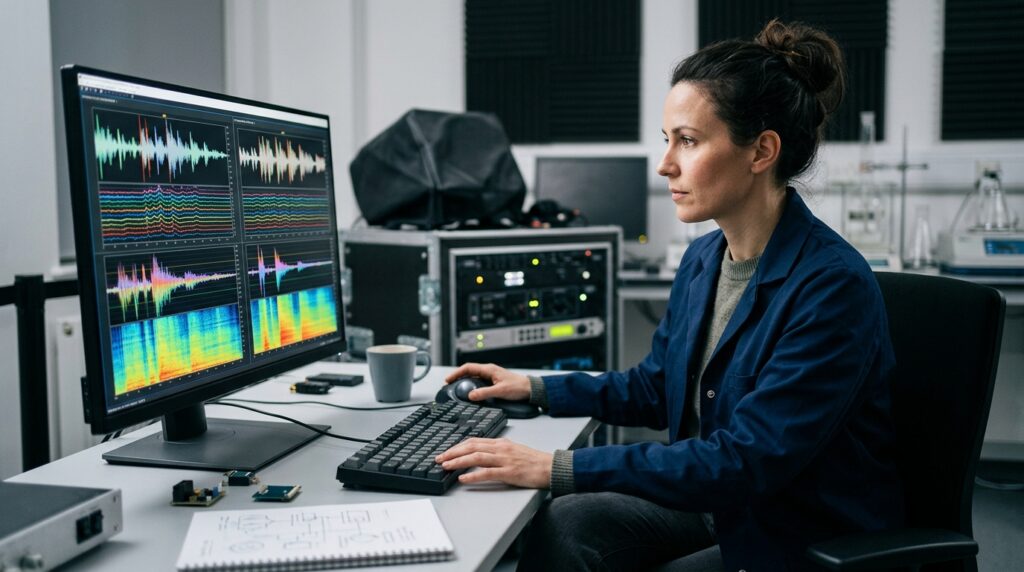
The orca’s sounds were compared with originals using sound wave analysis
This is where the main peculiarity lies. We have lips, a tongue, and flexible vocal cords. In an orca, sound is produced entirely differently, closer to nasal passages and respiratory structures. The fact that different “instruments” produce sounds resembling words is in itself a remarkable fact.
What the Experiment with Orca Wikie Does NOT Prove About Speech
Here it’s important to stop and not let imagination run ahead. This is not a conversation between a whale and a human, nor comprehension of language. Nothing in the study indicates that the orca was aware of the meaning of the sounds it produced — it simply repeated them, albeit beautifully.
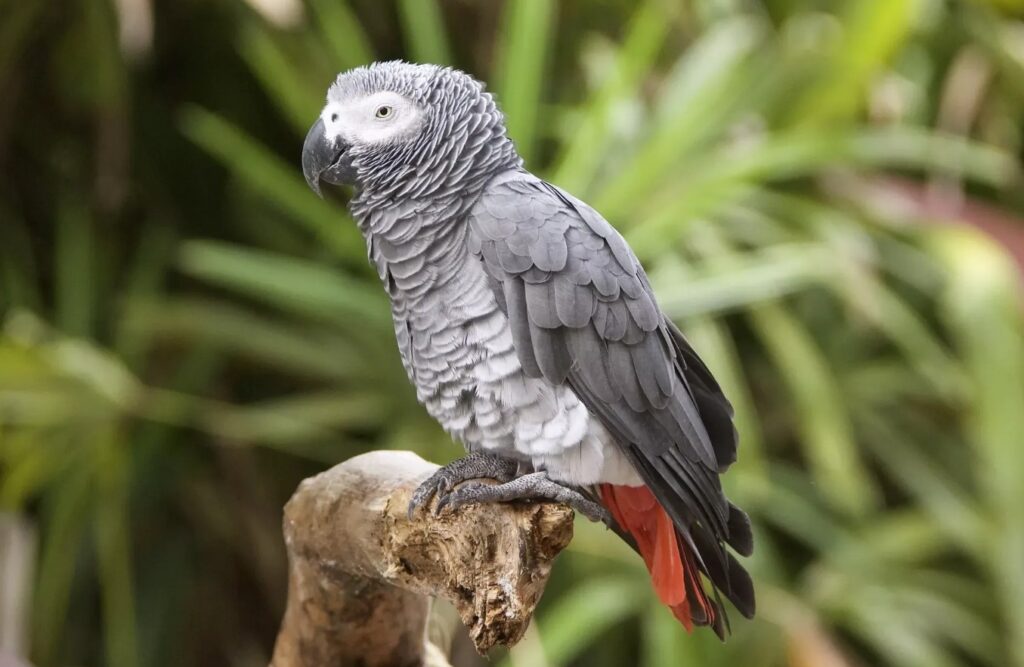
The African grey parrot is one of the most talkative parrots. Image source: bigenc.ru
A good analogy is a parrot that clearly says “hello” but has no idea it’s a greeting. The orca did the same thing: it accurately copied the acoustic pattern without putting meaning into it. So don’t expect whales to start working in call centers or performing plays based on “Moby Dick” anytime soon.
Also interesting is the authors’ cautious hypothesis about where this ability came from. According to their data, the sensory-perceptual and cognitive skills involved in imitating sounds in air may be ancient traits dating back to the terrestrial ancestors of cetaceans. Recall that whale ancestors once lived on land — and possibly some of their “skills” remained from those times.
How the Experiments with Orca Wikie Connect to Whale Language Research Today
This 2018 experiment fits well into a broader picture. Whale language has turned out to be more complex than previously thought. The Cetacean Translation Initiative (CETI) project discovered vowels and even diphthongs in sperm whales — a speech feature previously considered unique to humans.
According to CETI founder and president David Gruber, this opens a new chapter in understanding sperm whale communication: it turned out they have structures similar to vowels and diphthongs, and that they developed a completely independent way of producing them. CETI’s ultimate goal is ambitious — to study whale communication deeply enough to eventually “respond” to them.
The main value of the orca story is not in the entertaining video but in the fact that it carefully outlines the boundary between imitation and understanding. An orca can copy our sounds — that has been proven. Whether it understands them and whether whales have something resembling a real language is a question that science is only beginning to answer. And that is exactly what’s worth watching next.