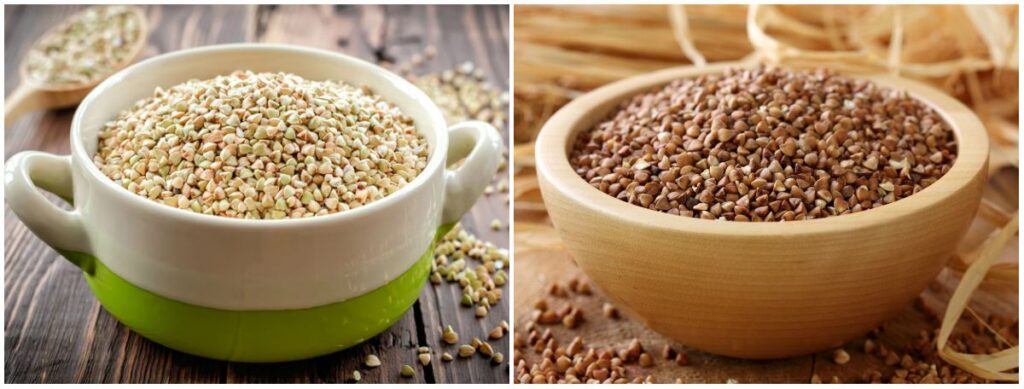
How green buckwheat differs from brown and whether it’s worth eating. Image source: es.pinterest.com
The familiar brown buckwheat is not the “original” — it’s not the grain’s natural form but rather a grain that has been roasted during production. Green buckwheat is the same buckwheat plant, only without thermal processing, so it retains the living grain and more nutrients. A biochemist and evidence-based nutritionist explained how it differs and how to eat it properly.
Why the Familiar Buckwheat Is Brown
What we call buckwheat is a roasted grain. The brown color, familiar aroma, and crumbly texture after boiling are all the result of thermal processing at the factory. Green groats are the same buckwheat, only raw, so they retain the living germ and can sprout when soaked — a sure sign that the grain is biologically active.
Why is it almost always brown on store shelves? Mass roasting of buckwheat in the country began in the mid-20th century — it’s simply easier: roasting extends shelf life and speeds up production. Green groats are more finicky to transport and lose their appearance faster, so logistics and economics together pushed them off the shelves for decades. Not because they’re worse, but because they’re harder to deal with.
What the Grain Loses During Roasting
Roasting means heating to 150–180 degrees Celsius and above. And that’s where a chain of losses begins. B vitamins are the first to suffer, especially thiamine (B1) — one of the most heat-sensitive. Food chemistry research has shown that during hydrothermal processing, thiamine losses in buckwheat amount to approximately 5.65 to 8.5%, and during subsequent cooking of raw grain, they reach 16–19% depending on the variety.
Antioxidants also take a hit. At high temperatures, both the content of phenolic compounds and the antioxidant activity of the grain decline. In one experiment, even mild roasting at 80 degrees for 5 minutes reduced protein content by 3–18%, flavonoids by 6–18%, and rutin by 1.7–7.5%.
An interesting nuance: along with beneficial substances, roasting also reduces anti-nutrients — phytic acid, tannins, and oxalates (compounds that interfere with mineral absorption). So roasting isn’t an unequivocal evil. It simply reshuffles the product’s composition, and not always in your favor.
Rutin — Green Buckwheat’s Main Advantage
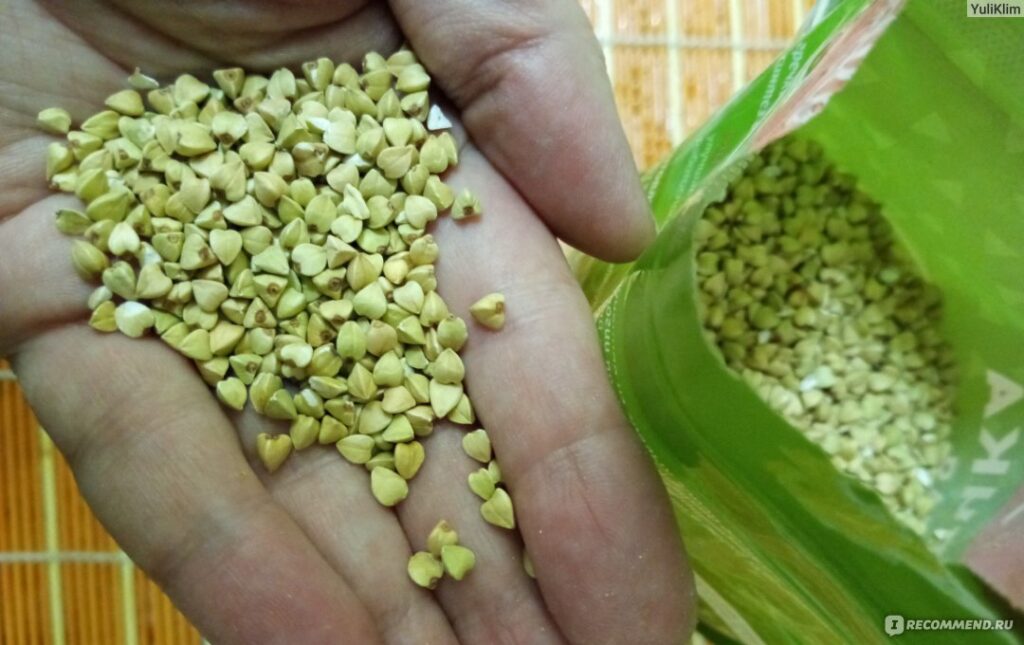
Green buckwheat. Image source: irecommend.ru
If green buckwheat has a star ingredient, it’s rutin. Rutin is a flavonoid that buckwheat contains in greater abundance than most other grains. It has proven antioxidant, anti-inflammatory, and vasoprotective (vessel-protecting) properties. Common buckwheat grain contains between 0.05 and 1.35 g per 100 g of dry matter.
Rutin is considered one of the most heat-resistant polyphenols in buckwheat, but only up to a certain threshold. According to research, at 130 and 150 degrees the flavonoid content remains relatively stable, but at 170 degrees a sharp decline is recorded. And industrial roasting heats the grain to 160 degrees and above — meaning it inevitably shifts the balance against the consumer.
Why Soak and Sprout Green Buckwheat
Green buckwheat has a property that brown buckwheat completely lacks: it sprouts. And this isn’t just a trick — sprouting triggers an entire cascade of biochemical reactions inside the grain.
A Korean study examined what happens to sprouted buckwheat during digestion. By the fifth day of sprouting, antioxidant activity exceeded that of regular grain by 5.3 times, phenolic compound content doubled, and flavonoid content tripled. At the same time, levels of gamma-aminobutyric acid (GABA) — an inhibitory neurotransmitter that reduces anxiety and normalizes blood pressure — also increased.
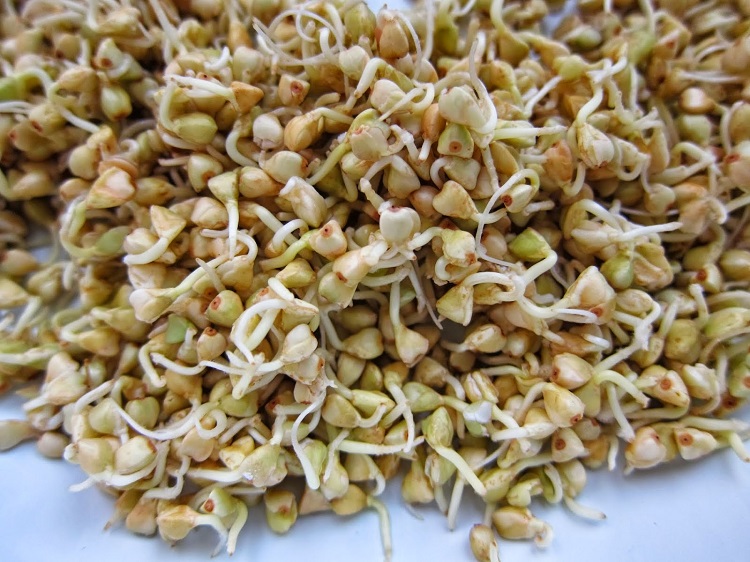
Sprouted green buckwheat — a living grain that brown groats cannot replicate. Image source: pro-rostki.ru
There’s also a more down-to-earth benefit. Soaking green buckwheat for 6–8 hours neutralizes some of the phytic acid — an anti-nutrient that interferes with the absorption of iron, zinc, and magnesium. This is especially important for those prone to iron deficiency. Fermented foods work in a similar way: they also contain reduced amounts of phytic acid. And it’s better not to combine coffee with buckwheat: polyphenols in the beverage also impair the absorption of plant-based iron.
How to Properly Eat Green Buckwheat
Frying green buckwheat is pointless — you’d simply be turning it back into brown and losing everything you paid for. To avoid overheating the groats and preserve the maximum amount of nutrients, do the following:
- soak green buckwheat in cold water overnight at a 1:2 ratio;
- rinse thoroughly in the morning;
- consume without thermal processing or with minimal heating;
- as a compromise — pour boiling water over it and cover for 10–15 minutes.
This preserves the maximum amount of bioactive substances while simultaneously neutralizing some anti-nutrients. All of this was explained by biochemist and evidence-based nutritionist Anna Divinskaya to the Doctor Piter portal.
Who Should Consider Green Buckwheat
Green buckwheat is a sensible choice for those who monitor their nutrition quality without fanaticism or radical diets. It’s worth considering if you have insulin resistance, since the glycemic index of unprocessed grain is lower than that of cooked grain, as well as if you’re prone to inflammatory processes and high oxidative stress. But it’s important to understand: this is not a panacea and not a replacement for a varied diet.
The only noticeable downside is the taste. After decades of brown buckwheat, it seems unfamiliar: more neutral, slightly grassy. But adaptation usually occurs within 1–2 weeks of regular consumption.
So it turns out that roasting is more convenient for stores and storage but partially depletes the composition; raw grain is more finicky but retains rutin, vitamins, and the ability to sprout. If you want to get the most benefit from buckwheat, it’s worth trying the green variety and simply soaking it overnight.