
It takes scientists several months to name a new animal
Every year, scientists discover thousands of new species of animals, plants, and fungi. But before a new creature appears in scientific catalogs, it needs to be given a name. It might seem like a simple formality, but in reality the process follows strict rules, takes months, and sometimes leads to scandals. How do biologists choose names, and why is it harder than it seems?
What Scientific Names of Animals Consist Of
The world of taxonomy harbors many non-obvious rules and historical traditions. When scientists discover a previously unknown animal or plant, they cannot simply pick any word they like. Every new name is recorded in scientific registries so that researchers from different countries can understand exactly which organism is being discussed.
Each species receives a unique binomial Latin name, where the first word denotes the genus and the second denotes the specific species. This strict rule helps avoid confusion in the international scientific community. At the same time, within academic standards, there remains plenty of room for creativity.
After Whom New Animal Species Are Named
According to experts, approaches to choosing names can vary widely. Sometimes biologists give animals majestic or outright funny nicknames, and sometimes they choose deliberately simple options. In practice, modern researchers rely on several traditions:
- Geographic reference. A species often receives its name in honor of the region, mountain range, or formation where its first remains were found;
- Tribute to indigenous peoples. Names may include words from the languages of local tribes on whose historical territory the discovery was made;
- Dedication to celebrities. Some organisms are named after popular figures to draw public attention to science;
- Recognition of colleagues’ contributions. Very often, new species are named after outstanding scientists who have made significant contributions to the development of a particular discipline.
An Example of How a New Animal Species Got Its Name
To understand how this system works in practice, science journalist Rachel Funnell met with Professor Paul Barrett. He works as a paleontologist at London’s Natural History Museum and knows the procedure from both sides. The professor not only regularly comes up with names for new species but has himself become part of biological nomenclature.
Recently, colleagues named a new species of ankylosaur after him — an armored dinosaur that lived about 140 million years ago and was found on the Isle of Wight. The prehistoric reptile received the official name Vectipelta barretti. According to colleagues, they deliberately chose a “slow-moving and spike-covered organism” to humorously thank the professor for years of mentorship and his enormous contribution to paleontology.
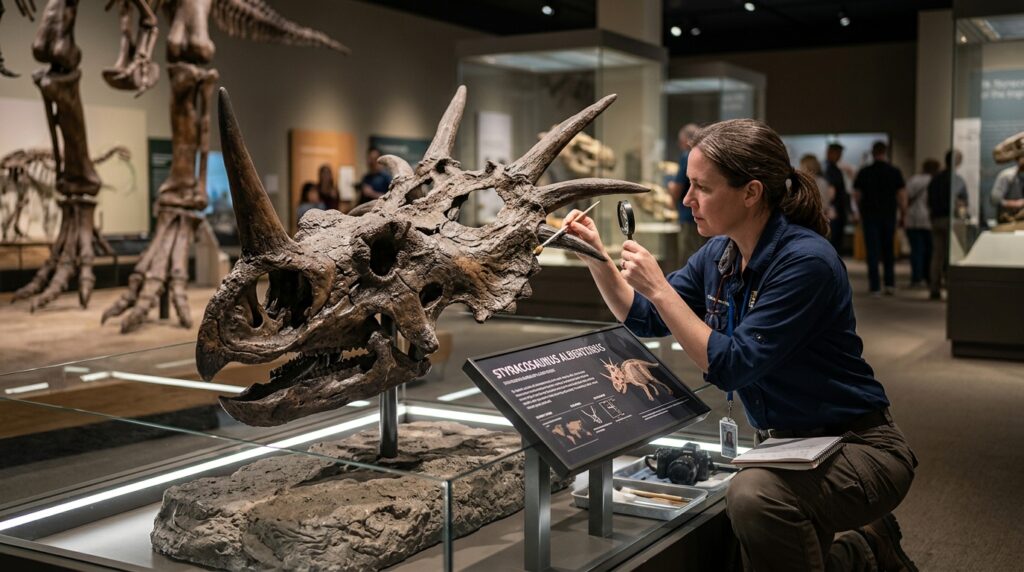
Some prehistoric animals receive their names in recognition of outstanding scientists’ contributions
How a New Animal Species Name Is Registered
Although names can be humorous or dedicated to specific people, the registration procedure itself remains extremely strict. For a name to be officially recognized, scientists are required to publish a detailed anatomical description in a peer-reviewed journal.
They must prove that the specimen found truly differs from all previously known species by comparing it with museum specimens worldwide. This ensures that future generations of researchers can rely on this data to verify hypotheses and ensure scientific reproducibility.
Ultimately, the way researchers name new species of organisms reflects respect for geography, cultural heritage, and human labor, forever inscribing the history of discoveries into the global evolutionary tree.