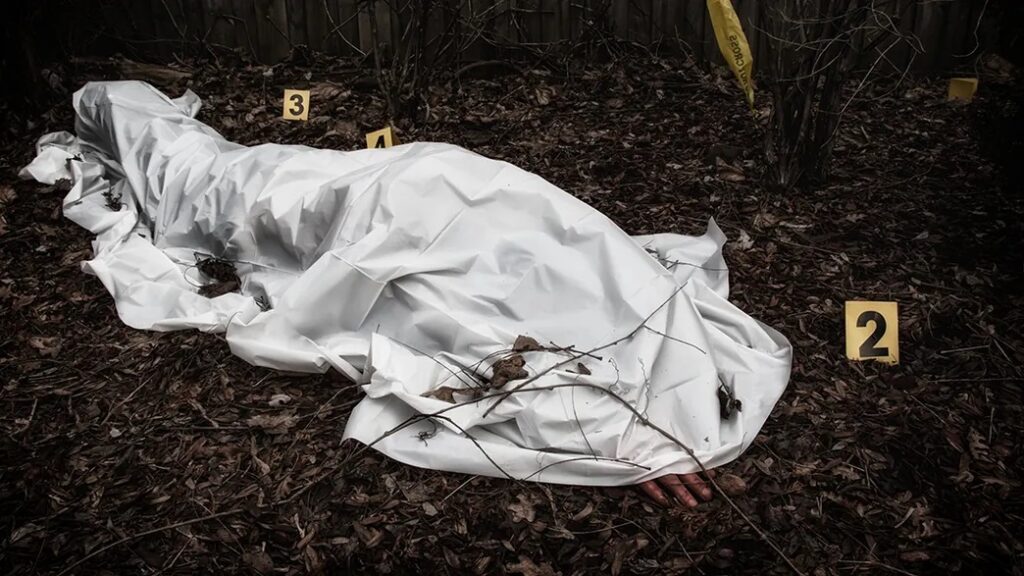
A 1,600-year-old body was found in a bog — and it helped solve a real murder.
The head of an unknown woman from a peat bog made a man confess to the murder of his missing wife, even though the remains turned out to be about 1,600 years old. The story became known as the “Lindow Woman” and is one of Britain’s strangest criminal cases: an ancient corpse helped put a real killer behind bars. All because under certain conditions, the human body can be preserved for an astonishingly long time.
How it all began: a two-day courtship and a wife’s disappearance
In 1959, artist and avid traveler Malika de Fernandez met Peter Reyn-Bardt, an airline employee. Their romance was absurdly swift: he proposed two hours after they met, and two days later they were married.
The happiness didn’t last long. Just a few months later, Fernandez set off traveling the world again — this time with discounted tickets that came with her husband’s job at the airline. Reyn-Bardt himself stayed behind in his cottage in Cheshire.

Their romance was short-lived, and the marriage lasted only a few months. And there were reasons for that.
Two years later, no one could find the woman. Naturally, the husband became the prime suspect. Police thoroughly searched his home and even dug up the garden looking for remains, but found neither a body nor a single piece of evidence. The case went cold for decades, until parts of a human body surfaced in a peat bog near the cottage.
Why peat bogs turn corpses into “yesterday’s dead”
To appreciate the full irony of this story, you need to understand how peat bogs work. Peat forms from the decomposition of plant matter, primarily moss. When sphagnum moss accumulates in marshy areas, the layers of peat release acids that remarkably well preserve bodies. A vivid example is the Windover Bog and its 180 ancient corpses.
The result is eerie: a person who died many centuries ago can look as if they fell into the bog yesterday. The acidic, oxygen-free environment halts decomposition, tans the skin, and preserves facial features, even though under normal conditions bacteria, fungi, and insects quickly take over the decomposition of a human body. That’s why the famous “bog bodies” (like Tollund Man in Denmark, who is about 2,400 years old) are so strikingly well preserved.
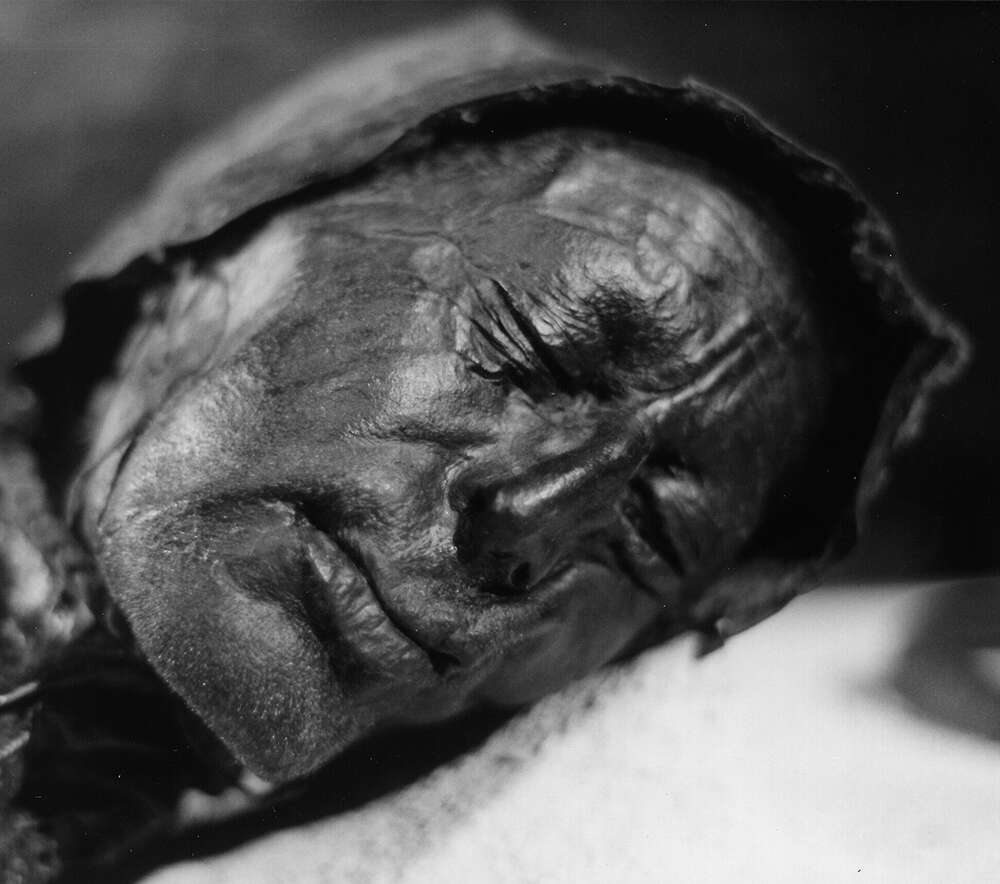
The head of Tollund Man, found in a bog near Tollund, Silkeborg, Denmark. Despite being remarkably well preserved, he is believed to have died around 375–210 BC.
If Reyn-Bardt had known about this property of peat bogs, he most likely wouldn’t have rushed to confess. But he didn’t — and it worked against him.
The husband’s confession that cracked a cold 1983 murder case
When the head of an unknown woman was found in Lindow Moss bog, experts initially estimated that the remains were only 30–50 years old — so well were they preserved. Under normal conditions, entirely different indicators help determine the time of death, but the peat bog confused nearly everything. Police presented the find to Reyn-Bardt, believing it was connected to the long-ago disappearance of his wife.
And that’s when he broke. “It’s been so long, I thought they’d never find me out,” he said during questioning. According to him, Fernandez returned to the cottage sometime in 1960 or 1961 and began threatening him: if he didn’t give her money, she would reveal that he was gay. In England at that time, this was still prosecuted by law (until 1967). He had no money, and an argument ensued.
He described how he grabbed his wife and began shaking her, and when he stopped, he realized she was dead. What followed was worse: he dismembered the body with an axe, tried to burn it, and when that failed — carried the remains to the nearby bog and threw them in. A cold case spanning two decades appeared to be solved: there was a body and a confession from a longtime suspect.

A peat bog is nature’s preservative: the acidic, oxygen-free environment halts decomposition
How one detective kept the murder case of Molly Newport from being closed
It seemed the case could be closed. But Detective Inspector George Abbott was troubled by one detail: no other body parts were found near the head. Something didn’t add up.
Abbott sent the skull for additional analysis at the University of Oxford. There, they performed radiocarbon dating — a method that determines the age of organic material by measuring the decay of carbon-14. It turned out the skull dated to the Roman era. Thus the name “Lindow Woman” was born.
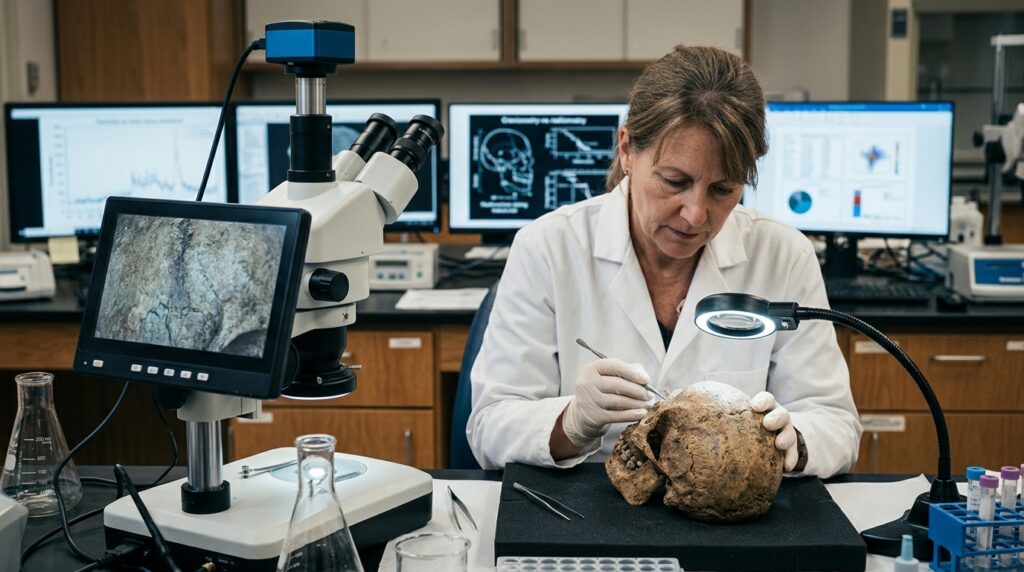
Radiocarbon analysis at Oxford showed: the skull was about sixteen centuries old.
At the trial in December 1983, prosecutor Martin Thomas summed up the case: the skull had lain in the peat for more than sixteen centuries and had nothing to do with Malika, but its discovery led to the arrest of the accused and his detailed confession. Reyn-Bardt tried to retract his confession, but it was too late. The jury took just three hours to find him guilty of murder. He spent the rest of his life in prison. Fernandez’s body was never found.
Lindow Man: the second bog mystery from the same site
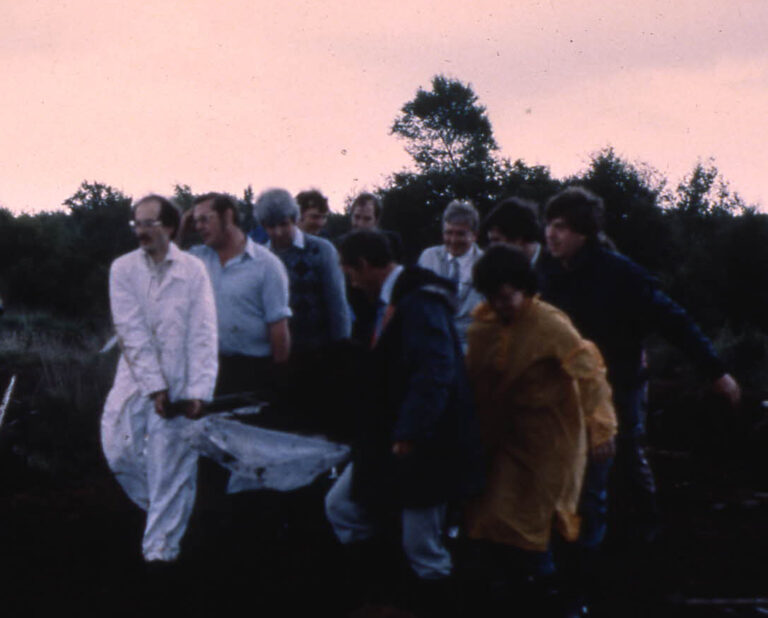
Workers extracting the remains of Lindow Man from Lindow Moss, 1984.
And that’s not the end of the story. In 1984, another body was discovered in the same peat bog during peat extraction — “Lindow Man.” His death occurred approximately 2,000 years ago, and no one was arrested, of course.
However, scientists learned a great deal about his fate. It appears that the man’s throat had been cut, after which he was placed face-down in the bog. One theory suggests it was a ritual sacrifice: mistletoe pollen was found in his stomach, which was used in druidic ceremonies, and an excess of copper pigment was found on his torso — possibly also part of a ritual.