There are several reasons for hiccups after alcohol
Hiccups during a party usually bring a smile, but for our body it’s no joke — it’s a serious disruption in breathing. When a person hiccups after alcohol, the diaphragm begins involuntary and sharp contractions due to nervous system overload. The vagus nerve, which is considered the longest nerve in the human body, plays a major role in this.
Why Drunk People Hiccup
Many have noticed that people often wonder why a person hiccups after drinking gatherings. There is a clear physiological explanation for this, consisting of several factors.
First, alcohol directly irritates the mucous membrane of the stomach and esophagus. The vagus nerve runs nearby and directly controls hiccup reflexes. When this nerve receives an irritating signal, the diaphragm begins to contract in jerks.
Second, drinking gatherings are often accompanied by temperature changes. A person might drink an ice-cold cocktail, eat a hot appetizer, and then wash it down with something cold again. Such temperature shifts in the esophagus cause additional irritation of the nervous system.
Third, while drinking in company, we talk, laugh, and often swallow excess air. In medicine, this is called aerophagia. Air accumulates in the stomach, stretches its walls, and presses on the diaphragm from below, triggering a spasm.
Why Hiccups Occur After Beer
A small shot of a strong drink may pass without a trace, but hiccups after beer are a classic occurrence at any bar. The thing is that beer combines all possible triggers at once.
Beer contains carbon dioxide, which instantly expands the stomach from the inside. If you add the cold temperature of the drink, the irritating effect of ethyl alcohol, and large gulps, the diaphragm simply can’t withstand the pressure. The situation only gets worse if you snack on something spicy, fatty, or very salty.
Are Hiccups After Alcohol Dangerous?
Short-term hiccups after alcohol by themselves do not pose a threat to life. Usually an episode lasts a few minutes and subsides on its own without any medical intervention.
But the real danger lies in the person’s overall condition. If the drinking has gone too far, alcohol can provoke vomiting while simultaneously suppressing the gag reflex. If a heavily intoxicated person falls asleep or loses consciousness on their back, they risk choking. Aspiration of stomach contents into the airways leads to a life-threatening respiratory arrest.
Usually a hiccup episode passes on its own in a couple of minutes and doesn’t require treatment
How to Get Rid of Hiccups Quickly
If you’re looking for a way to get rid of hiccups, the first and most important rule is to immediately put aside alcohol and carbonated drinks. As long as the irritant continues entering the stomach, the reflex won’t go away.
Try performing a few simple actions:
- Sit up straight and don’t lie on your back to reduce the pressure of the stomach on the diaphragm;
- Drink a little cold water in small sips — this stimulates the vagus nerve and helps break the reflex;
- Calmly inhale, hold your breath for 10–15 seconds, and slowly exhale. Important: don’t do this if you feel unwell or are short of breath;
- Eat half a teaspoon of sugar or a slice of lemon, as a sharp taste can reset the reflex arc;
- Sit down, pull your knees to your chest, and lean slightly forward.
What Not to Do During Hiccups
There are many folk myths surrounding this problem that can only cause harm. Under no circumstances try to scare the person, because in a state of intoxication they can easily lose their balance, fall, and get injured.
You also shouldn’t suggest drinking more beer to relax. Another serving of a carbonated drink will only increase stomach irritation. Don’t force a hiccupping person to eat against their will, especially if they feel slightly nauseous.
It is forbidden to send a heavily intoxicated friend into a cold shower or deliberately induce vomiting with fingers. And of course, don’t independently take serious hiccup medications.
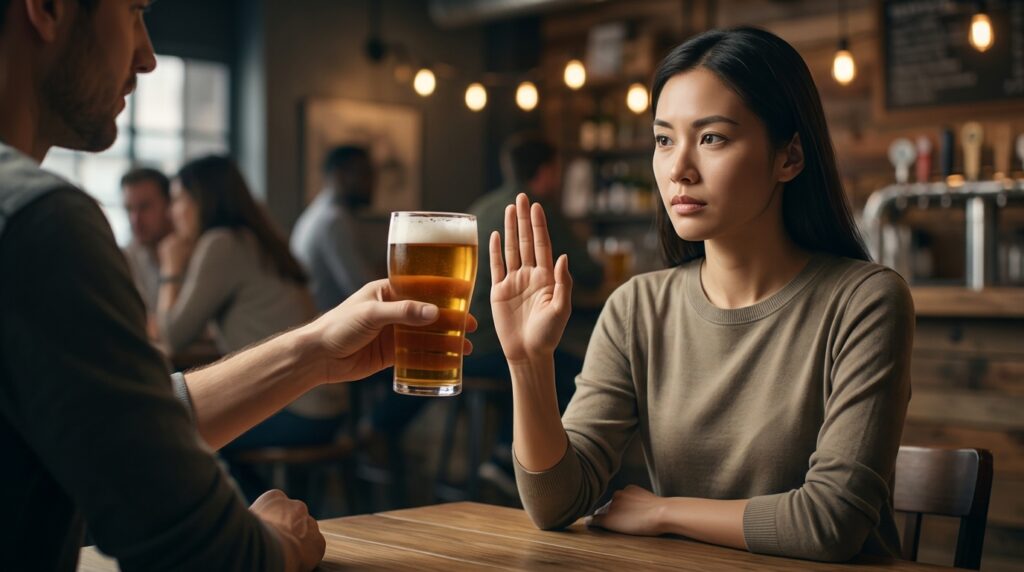
Offering another round of alcohol to relieve spasms is the worst possible idea
How to Drink Alcohol Without Getting Hiccups
The best hiccup prevention is a mindful approach to drinking. If you know you’re prone to hiccups, try to drink much more slowly and don’t mix alcohol with carbonated beverages.
Make sure to eat before the party, but don’t overeat. Don’t wash down hot dishes with ice-cold drinks and try not to smoke while eating and drinking. Perhaps certain types of beverages simply don’t suit you, and it’s worth trying to give up champagne and beer for a while.
When Hiccups Are a Warning Sign
Sometimes hiccups indicate more serious disorders. If hiccups last a long time or keep returning even when sober, this is a clear reason to schedule an appointment with a doctor.
Prolonged episodes that interfere with normal eating, drinking, and sleeping may indicate gastritis, gastroesophageal reflux disease (GERD), metabolic disorders, or nervous system pathologies. In such cases, a doctor will conduct a thorough examination and find the true cause of the problem.
In conclusion, hiccups after vodka or other alcohol are the result of a distended stomach and temperature changes. Now it’s clear that this amusing reflex serves as a kind of stop signal from the body. The main thing is to notice it in time, put down the glass of carbonated drink, and let your nervous system return to normal.