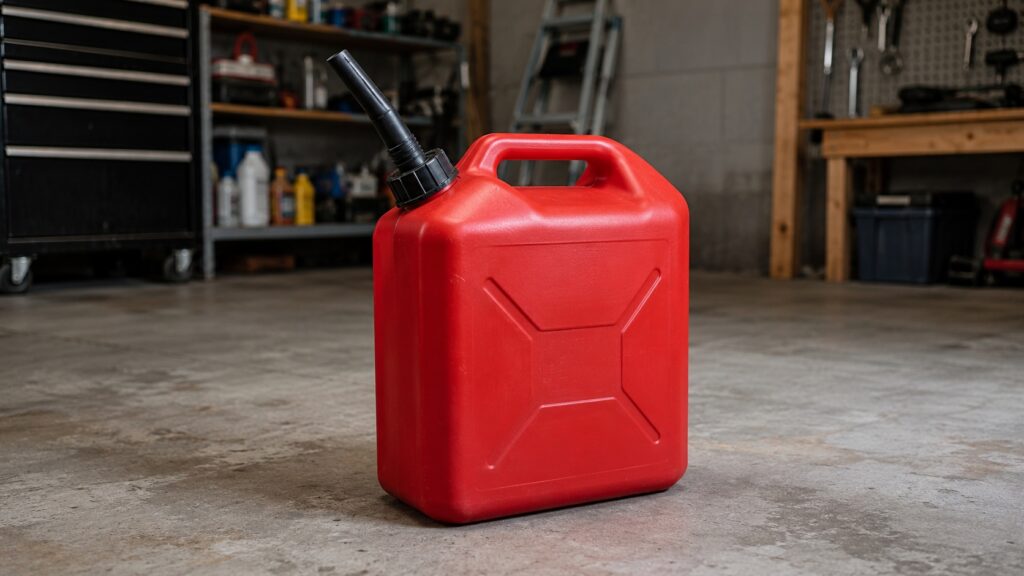
Gasoline has a shelf life, and it depends on storage conditions
The price of gasoline is breaking records right now. In June 2026, the average price per liter nationwide exceeded 72 rubles, and in some regions AI-92 is already being sold for 100 rubles and above. It’s no surprise that many drivers have started stockpiling fuel, filling up canisters for a rainy day. And the most desperate are even searching online for instructions on how to make gasoline at home. But what actually happens to gasoline if it sits in a canister in a garage for months?
Why You Shouldn’t Store Gasoline for a Long Time
Modern automotive fuel is a complex mixture of hydrocarbons and various additives. If you understand how gasoline is produced and what happens to it during prolonged contact with air, it becomes clear why it loses its effectiveness.
The main problem with long-term storage is that volatile fractions quickly evaporate from the liquid. These light components are precisely what help the engine start easily, especially in cold weather. If the container is not tightly sealed or sits in the heat, the fuel goes stale. As a result, what was nominally AI-95 starts behaving like a low-octane substitute — the engine runs rough, and starting the vehicle becomes difficult.
What Causes Gasoline to Go Bad
The second serious threat to fuel is ordinary oxygen. When a canister is only half full, a lot of air remains inside. Gasoline inevitably comes into contact with it, and oxidation produces sticky resins that settle inside the fuel system.
These resins clog filters, injectors, and carburetors. An excess of such deposits disrupts fuel delivery, reduces power, and in the long run can cause serious engine problems and expensive repairs.
Equally dangerous is water, which enters gasoline as condensation during temperature fluctuations. Water causes corrosion of canister walls and fuel system components. Additionally, modern additives lose their effectiveness over time and can precipitate out, turning the liquid into a cloudy suspension.
Actual Shelf Life of Gasoline and Fuel Mixtures
Officially, according to GOST 32513—2023, the guaranteed shelf life of gasoline is one year from the date of manufacture. But this rule only applies under ideal conditions — not when the container is sitting in a scorching metal garage.
How long gasoline can be stored:
- 1 to 3 months — the ideal period during which fuel won’t lose its properties;
- up to 6 months — an acceptable timeframe when stored in a cool place;
- 6 to 12 months — a gamble that requires perfect containers and stable temperatures.
For two-stroke engines (chainsaws, trimmers, and outboard motors), the rules are even stricter. A ready-made gasoline-oil mixture should absolutely not be stored for months. The oil quickly separates and degrades, so the lifespan of such a mixture is only two to four weeks.
What Canister to Use for Storing Gasoline
The quality of the container directly affects how long your supply will last. Fire safety regulations and common sense agree on one thing: hermetically sealed metal canisters made of steel or aluminum are the best choice. They block light, are impact-resistant, and don’t accumulate static electricity.
If you prefer lightweight plastic, it must be certified for petroleum products. Such a canister will have special markings confirming its fuel resistance.
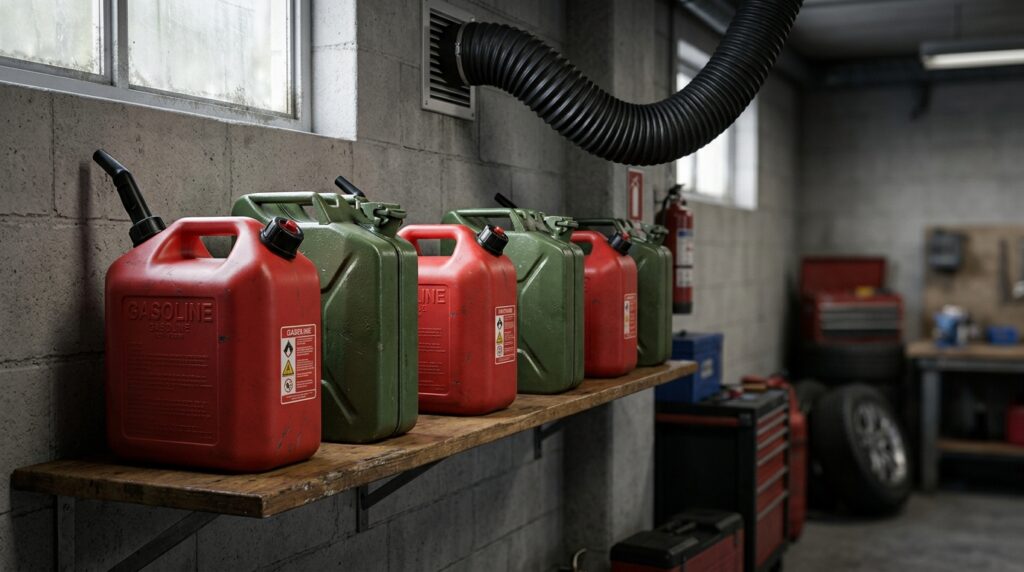
Certified containers for safe fuel storage
Using regular plastic bottles is prohibited by fire safety regulations. Food-grade PET or water bottles can break down from chemicals, accumulate static electricity and produce a spark, while glass can easily shatter.
Fuel should be stored in a cool, dark, non-residential area with good ventilation. Keeping gasoline in an apartment, on a balcony, in a storage closet, or in a shared basement is a direct violation of the law (Article 20.4 of the Russian Administrative Code) and can lead to a fire due to the accumulation of explosive vapors. Fuel should not be filled to the very top — leave a small air gap to allow for expansion when heated.
Signs of Spoiled Gasoline
It’s impossible to detect a loss of octane rating by sight alone, but if the fuel has deteriorated significantly, it will be noticeable. Fresh gasoline is always clear and clean.
What spoiled gasoline looks like:
- the liquid has noticeably darkened or become cloudy;
- a sharp chemical smell of old paint, varnish, or solvent has appeared;
- drops of water, rust, sand, or sediment flakes are floating at the bottom.
Many people hope to save the situation with special chemicals. However, adding a stabilizer won’t restore old fuel. It only works as a preventive measure: stabilizers should be added to completely fresh gasoline before long-term storage — for example, when winterizing a lawn mower. If the supply is more than a year old, it’s better not to pour it into modern sensitive equipment and instead dispose of it as hazardous waste.
When stockpiling gasoline, try to buy only as much as you’ll use in the coming months, and regularly rotate your fuel. A canister in the garage is always a temporary solution, not a strategic reserve storage facility.