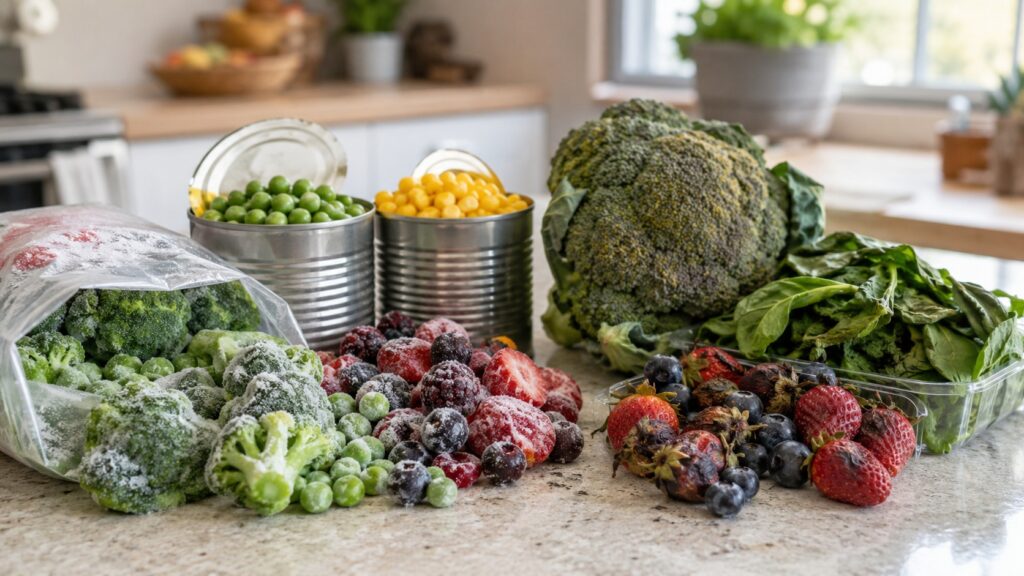
Frozen vegetables can be healthier than fresh ones, and there are a couple of proofs for this
We are used to thinking that only vegetables and fruits straight from the garden bring maximum benefits. However, recent studies show that frozen and canned products are just as good as fresh ones, provided the latter have sat on a supermarket shelf or in a home refrigerator for at least a week. I personally love vegetables, so let’s figure out how clever food preservation methods affect their cellular structure, in which cases a can of peas is healthier than fresh ones, and what you absolutely need to pay attention to when choosing products at the store.
Why Frozen Vegetables Are Healthier Than Fresh Ones
Every day, an adult should eat at least two servings of fruit and five servings of vegetables to maintain health and reduce the risk of cardiovascular diseases. But fresh produce is expensive and spoils quickly.
In this case, bags from the frozen foods section come to the rescue. The main secret of frozen vegetables lies in speed: the harvest is picked at peak ripeness and frozen almost immediately. It turns out that the nutritional value of frozen products is equivalent to fresh fruits and vegetables that have simply been sitting in your refrigerator for an entire week.
Sometimes the cold preservation method even increases the original benefits of the produce. For example, during the preparation of apricots, additional vitamin C is used for protection against spoilage, which is why frozen fruits contain it in much greater amounts than fresh ones. A full daily serving of vegetables can easily be just half a regular cup of frozen broccoli.
The Downside of Frozen Vegetables
Modern industrial freezers use ultra-low temperatures to instantly stop food from spoiling. This technology effectively preserves the natural color and vitamins inside products without the use of aggressive chemicals.
But this process has one vulnerable point, and that is temperature fluctuation. If products thaw on the way from the store to your home and then end up back in the freezer, large ice crystals begin to form inside. They literally tear apart the delicate structure of vegetables from the inside, which is why they turn into a shapeless mush when cooked and lose some of their beneficial substances.
Additionally, bacteria like listeria can survive on frozen mixes, potentially causing food poisoning. Fortunately, heat treatment completely eliminates the risk of infection. It’s enough to toss the vegetables onto a pan or into boiling soup for a few minutes before serving.
Harmful Additives in Canned Foods
Almost every family makes pickles and preserves for winter, so we know that canning requires heating jars to high temperatures. This is necessary to kill microbes so that food can be safely stored for months right in a kitchen cabinet. The main downside of this method is that intense heat destroys water-soluble vitamins, especially vitamin C.
Manufacturers are constantly improving their technologies, and today sterilization is faster, which helps preserve more nutrients. The real problem with canned foods lies in what they are filled with at the factory. To make food tastier and extend its shelf life, preservatives are generously added to the cans:
- Vegetable mixes and beans often contain excess salt, so before eating them, you should drain them in a colander and rinse them thoroughly;
- Fruits are often packed in thick sweet syrup, which sharply increases calorie content and turns a healthy product into a dessert;
- Ready-made beans in thick tomato sauce contain a huge amount of sugar.
Nutritionists advise reading labels carefully. It’s best to look for labels saying “no added sugar” or to choose fruit preserves where the pieces float in their own juice rather than in sweet syrup.
What’s Interesting About Dried Beans and Dried Fruits
Cans and frozen bags are great for quickly making lunch more filling and substantial. For example, a handful of frozen edamame beans can easily complement any Asian-style dish, and canned lentils add protein to a light vegetable salad.
In addition, dried beans remain an excellent source of plant-based protein and fiber. They are cheaper than all other alternatives and can be stored in the pantry for years, but they require lengthy preparation. Most varieties of lentils and beans need to be soaked for several hours before cooking.
However, dried fruits, despite their innocent appearance, cannot be considered a full replacement for fresh apples or canned peaches. During the drying process, water evaporates from them, causing a strong concentration of natural sugar in a very small volume. They are best treated as an occasional treat rather than a foundation of a healthy diet.
It turns out that giving up fresh vegetables in favor of cans or frozen bags is not a compromise or a blow to your body at all. On the contrary, it’s a smart way to save money, reduce the amount of spoiled food thrown away, and guarantee that you get the necessary vitamins year-round. The main thing is to carefully study the ingredients on the label, not go overboard with salty brines, and remember that any form of vegetables in your diet is always better than none at all.