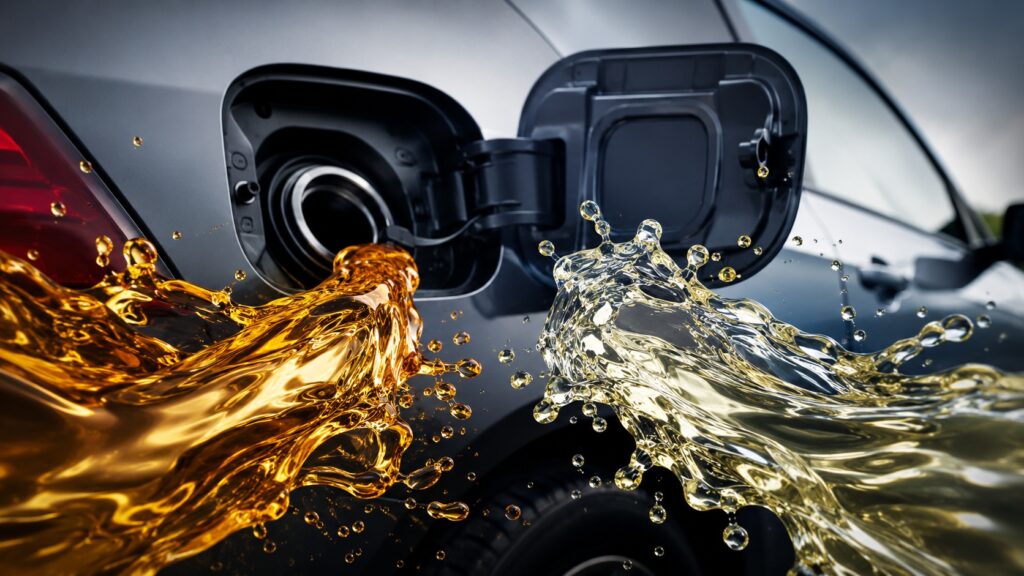
There are enough differences between gasoline and diesel, so you definitely shouldn’t mix them up
Every driver has at least once wondered what would happen if they accidentally mixed up the gasoline and diesel pumps at the gas station. It seems like the car would simply sputter and stall, but in reality, the consequences of the mistake directly depend on the engine type and your actions in the first few minutes. And the most surprising thing is that putting heavy truck fuel into a passenger car is far from the worst possible scenario.
What’s the Difference Between Gasoline and Diesel
Gasoline and diesel engines were originally designed to operate on completely different physical principles. If you look at how gasoline is produced, it becomes clear that it is a light, volatile liquid that evaporates well and requires an external ignition source. That’s why a gasoline engine needs a spark from a spark plug to ignite the air-fuel mixture.
Diesel works differently because it is a thicker, oily liquid that ignites on its own from high compression and rapid heating inside the cylinder. In addition to the combustion process, diesel fuel acts as a natural lubricant for the complex and expensive fuel system components of the vehicle. Gasoline, on the other hand, has the properties of a powerful solvent.
What Happens If You Put Diesel in a Gasoline Car
If you put heavy fuel in a passenger car’s tank, the best outcome is noticing the mistake while still at the pump. In that case, the engine isn’t in any danger yet — the liquid is just sitting in the tank. But if you started the engine, the car will first drive smoothly for some distance on the remaining normal gasoline in the fuel lines, and then the real trouble begins.
The thick diesel fuel enters the cylinders, where it evaporates poorly and burns badly in a gasoline engine. The engine starts misfiring, jerking, losing power, and thick dark smoke with a characteristic burning smell pours from the exhaust pipe. The spark plugs quickly become coated with heavy carbon deposits and stop producing a proper spark.
The main danger is that unburned fuel travels further into the vehicle’s exhaust system. There it can severely overheat and literally melt the catalytic converter, which costs a fortune to replace, as well as damage the oxygen sensors. Additionally, the thick liquid clogs fuel filters and the fine nozzles of the injectors.
Why Putting Gasoline in a Diesel Engine Is Much More Dangerous
It seems logical that lighter gasoline shouldn’t harm a heavy diesel engine, but in practice, this is a recipe for a real catastrophe. Modern diesel systems, especially the popular Common Rail type, operate under enormous pressure, and the clearances in their mechanisms are measured in microns.
As we’ve already established, diesel fuel lubricates these parts. When gasoline enters the tank, it acts as an aggressive degreaser for the high-pressure pump. The components start grinding against each other without lubrication. As a result, the pump begins producing fine metal shavings that spread throughout the entire system within minutes — from the tank to the expensive injectors, clogging them completely.
The second problem is improper combustion. Gasoline resists compression, and when it finally explodes from the pressure in the cylinder, extremely powerful detonation occurs. The engine starts running very harshly, overheats, and the shock waves can damage the pistons. As a result, the bill for restoring the fuel system and engine can look truly terrifying.
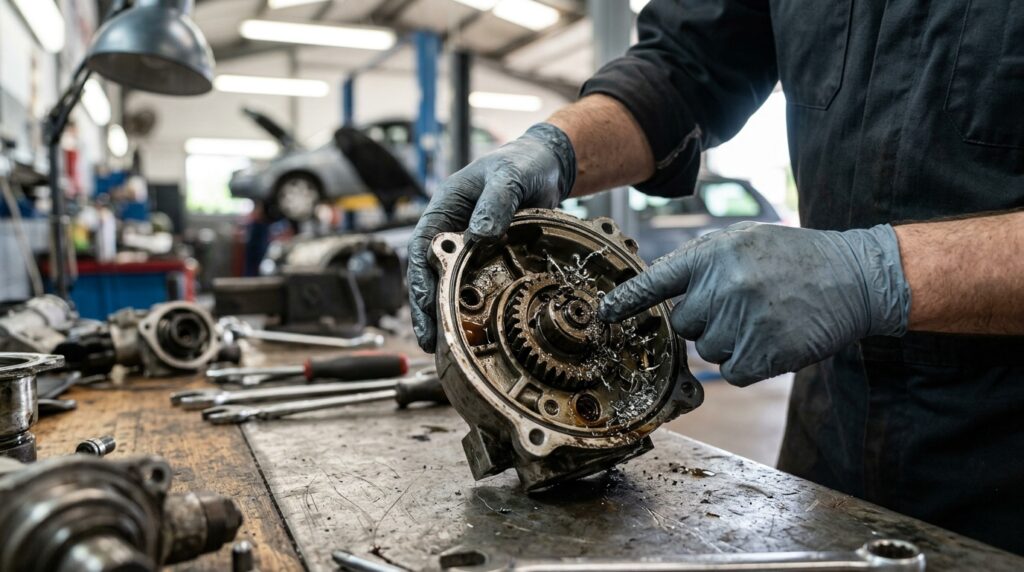
Metal shavings from the pump running dry quickly clog expensive diesel injectors and fuel lines
What to Do If You Mixed Up Fuel at the Gas Station
The most important rule, if you realized your mistake while still at the gas station, is to never start the engine. You shouldn’t even press buttons to turn on the radio or lower a window, because the smart electronics of modern cars may preemptively activate the fuel pump, and the wrong liquid will immediately flow through the lines.
What to do if you put in the wrong fuel:
- Immediately stop fueling and do not turn on the ignition;
- Put the transmission in neutral and push the car away from the pump manually;
- Call a tow truck or a special mobile fuel draining service;
- If the mistake was made by the station attendant, record everything on video, take a photo of the receipt, and demand that an incident report be drawn up at the gas station.
At the auto service shop, mechanics will need to remove the tank, drain the dangerous mixture, and flush the entire fuel line of the vehicle. The fuel filter will also need to be replaced, but this is incomparably cheaper than a major engine overhaul.
Can You Dilute the Wrong Fuel
A common piece of advice found on the internet says that if you only put in a couple of liters of the wrong fuel, you should simply fill the tank with the correct fuel to the brim, and the engine will handle the mixture. Indeed, older naturally aspirated engines with simple designs could survive such an ordeal without visible consequences.
However, diluting the fuel in modern turbocharged engines is an unjustifiable risk. Even a tiny proportion of gasoline in diesel irreversibly changes the lubricating properties. You might make it home safely, but the process of fuel pump wear will already be underway. Saving a couple of thousand rubles on a tow truck can easily turn into bills of many thousands for replacing the entire fuel system.
In the end, a mistake at the gas station is quite an unpleasant event, but it’s not fatal for the car if you stop in time. Understanding everything that happens under the hood saves not only your nerves but also your family budget.