Elon Musk becomes a trillionaire: how an astronomical fortune is changing our planet
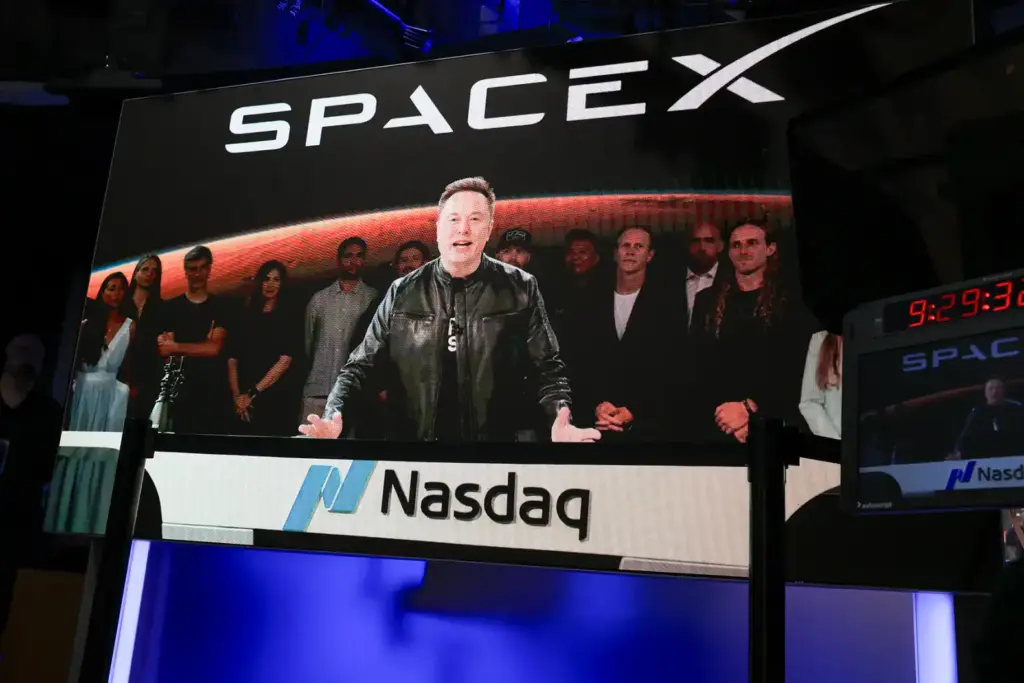
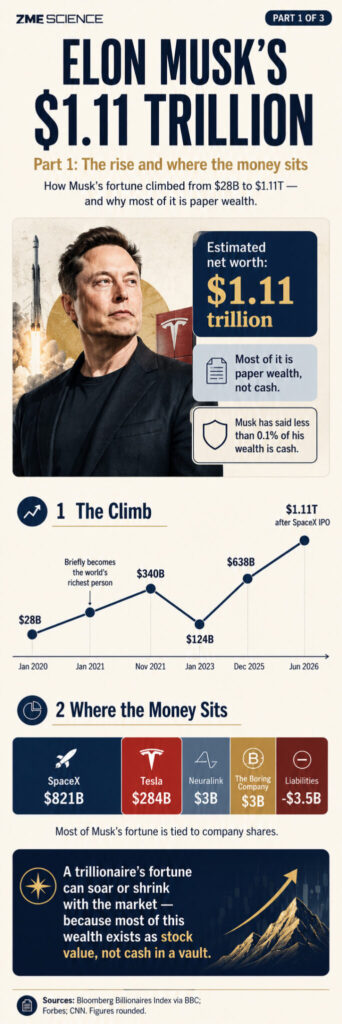
Elon Musk’s net worth has crossed the trillion-dollar mark for the first time in history. The catalyst was SpaceX’s debut on the Nasdaq exchange: the company’s shares surged 19%, and its market capitalization exceeded 2 trillion dollars. But behind this cosmic figure lies a far more interesting story than it might seem at first glance.
Why Musk’s Trillion Is Not Money in the Bank
The first thing to understand: this is not cash stacked in a vault. Musk’s wealth consists mainly of stocks, options, and investors’ faith in the future of his companies and projects. The bulk of his fortune now comes from SpaceX alone, where the entrepreneur’s stake is valued by the market at roughly 866 billion dollars.
If Musk tried to sell all his holdings, he wouldn’t come close to a trillion — the market would simply crash under such a sell-off. Renaissance Capital strategist Matt Kennedy put it bluntly: “SpaceX is a bet on Elon Musk.”
There’s also a second important nuance. SpaceX remains an unprofitable company, even despite the largest IPO in history. Its revenue is only a fraction of what tech giants with similar market caps earn. In other words, the market is paying not for today’s results but for expectations of the future. It’s precisely in this gap that such fortunes are born.
How Much Is a Trillion Dollars

Money doesn’t smell. And Musk now understands that better than anyone in the world
To somehow grasp the scale, let’s round Musk’s fortune from 1.1 trillion down to an even trillion. Even after this “discount,” the figure remains almost comically enormous. Here are a few ways to feel it:
- By U.S. households. In 2025, the country had about 134.79 million households. If you divided a trillion among them all, each would receive approximately $7,419.
- Medical debt. Americans owe at least $220 billion in medical bills. A trillion could pay off that amount roughly 4.5 times over.
- Pentagon budget. The U.S. Department of Defense budget request for 2026 is $961 billion. So a trillion is slightly more than the entire annual military budget of the country.
- An entire country’s economy. According to the IMF, Poland’s GDP in 2026 will be about $1.13 trillion, and Switzerland’s about $1.15 trillion. Musk’s fortune is comparable to the economy of a developed nation.
This is not “rich person money” in the usual sense. This is a sum the size of an entire country, and that’s exactly why it’s so hard to wrap your head around.
How Many Houses, Cars, and Gallons of Milk Can You Buy With Musk’s Trillion
If you translate the abstract number into purchases, the picture becomes even more vivid. With a trillion dollars you could buy:
- about 24 million Tesla Model Y crossovers at the starting price of $41,630;
- roughly 2.37 million new homes at the median price of $422,500;
- about 237 billion gallons of milk (at $4.20 per gallon);
- more than 243 billion gallons of gasoline — that’s more than all of America uses in a year;
- education for 8.1 million full four-year programs at public universities.
With a trillion dollars you could build more than two million new homes
There’s also a truly sobering example. The 50 most valuable sports teams in the world are collectively worth $353 billion — with a trillion you could buy them all nearly three times over. And if you tried to simply spend money at a rate of one million dollars per hour, without breaks for sleep or food, a trillion would last more than 114 years.
What Musk’s Fortune Says About the Stock Market
The most interesting thing here is not the billionaire himself but how the modern market works. In the same week that Musk crossed the symbolic threshold, SpaceX became the sixth most valuable company in the U.S. — surpassing firms with far stronger current performance. The gap between actual business and investor expectations is the very soil on which such fortunes grow.
Part of this faith is openly personal. JPMorgan Chase CEO Jamie Dimon recently called Musk “the Edison of our time.” Whether this turns out to be a prophecy or an exaggeration — only time will tell, but the phrase accurately captures the essence: the trillion-dollar milestone is concentrated faith in one person and his ability to bend markets to his ambitions.
Space has always been good at producing enormous numbers — whether it’s the age of stars and planets or the market capitalization of rocket companies. But in SpaceX’s case, it’s not about physics — it’s about investor psychology.
Why Musk’s Trillion-Dollar Fortune Matters to All of Us
This milestone is not just a fun statistic. It marks a tipping point in the global economy, which is becoming increasingly unequal in almost every country. When one person’s fortune is comparable to the economy of an entire nation, it changes the very conversation about how wealth is distributed.
It’s important to keep both caveats in mind: that Musk’s trillion is paper value, not real money, and that the company it rests on is still unprofitable. We live in times of market euphoria, and it’s worth staying alert — just in case we hear the telltale “pop” of a bursting bubble somewhere.