Earth’s Plants Have 2 Billion Years Left: When the Planet Will Become Hostile
The last survivor on Earth won’t be humans or even animals, but photosynthesis itself. A new three-dimensional climate study has pushed the estimated end of the plant biosphere forward by approximately 1.8 billion years — hundreds of millions of years further than previous models predicted. Cacti, certain algae, and aquatic plants are built to survive in far harsher conditions than nearly all life faces today. This discovery gives our planet a longer biological future than expected and also changes our perspective on the search for life in space: on planets orbiting aging and brightening stars, life may persist long after they stop looking habitable.
Why the Sun Is Becoming the Enemy of Plants
The main problem of the future is the Sun itself. Over time, it grows brighter, increasing its energy output by roughly 10% every billion years. Long before the Sun swells into a red giant and engulfs Earth, the additional heat will begin to overwhelm the planet’s climate. At some point, billions of years from now, life will become unbearable.
But heat is only half the problem. The other half is linked to carbon dioxide, which acts as Earth’s thermostat on a geological scale. Rainwater reacts with silicate rocks, pulling CO2 from the air and ultimately locking it away as carbonates on the ocean floor — a process known as silicate weathering. Over time, volcanoes return some of that carbon to the atmosphere, closing the slow geological cycle.
For billions of years, this thermostat kept temperatures in a comfortable range. But in the distant future, it could become a trap. The brighter the Sun, the stronger the weathering — and therefore, the more CO2 leaves the atmosphere. This cools the planet but simultaneously deprives plants of the raw material for photosynthesis. If weathering turns out to be weak, more carbon dioxide remains, but temperatures rise to levels plants can no longer endure.
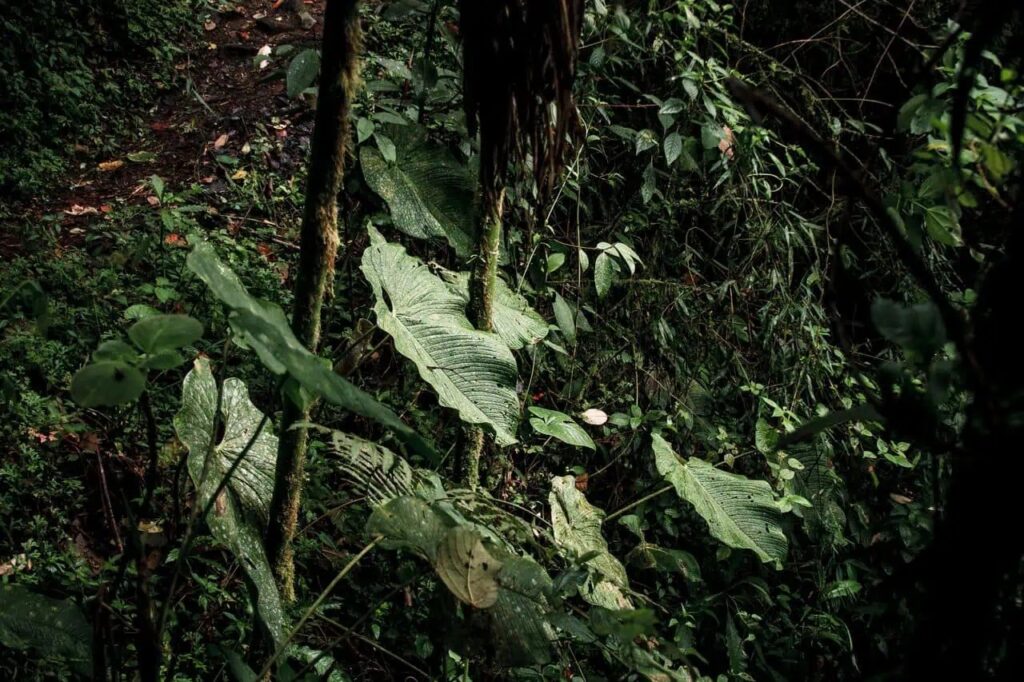
A planet with a surviving photosynthetic biosphere won’t look like today’s forests, farms, or coral reefs.
Two Scenarios for the Death of the Plant Biosphere
This is precisely why Earth’s future greenery is squeezed from both sides: too much heat on one side and too little carbon dioxide on the other. Researchers Jacob Haqq-Misra and Eric Wolf revisited older calculations using a three-dimensional climate model that accounts for what simpler models miss: clouds, precipitation, ice, and regional temperature differences.
Previously, calculations often placed the end of the large photosynthetic biosphere within roughly one billion years or even sooner. According to the new calculations, plants could exist for another 1.35 to 1.86 billion years. The timeframe depends on how much weathering accelerates with warming and how much CO2 the most resilient organisms need to survive.
The scientists examined two extreme future scenarios:
- Weak weathering. CO2 levels remain close to modern values, but the planet heats up significantly. According to the model, most land plants cross the dangerous heat threshold in about 1.68 billion years, while the hardiest species hold on for up to 1.87 billion years.
- Strong weathering. Earth avoids the worst heat because rocks actively pull CO2 from the air. But another threat arises — plants simply run out of enough carbon dioxide for photosynthesis.
In the strong weathering scenario, the threshold of 10 parts per million CO2 — below which even resilient plants like corn and sugarcane can no longer sustain a large biosphere — is reached in approximately 1.35 billion years.
How Cacti and Algae Extend the Life of Photosynthesis
Beyond that point, the most adapted organisms enter the game. CAM plants — cacti, pineapple, agave — are remarkably efficient at collecting carbon and can conserve water during droughts, while some aquatic plants and algae can use dissolved bicarbonate from water. This gives photosynthesis a resilience margin where ordinary greenery would have already given up.
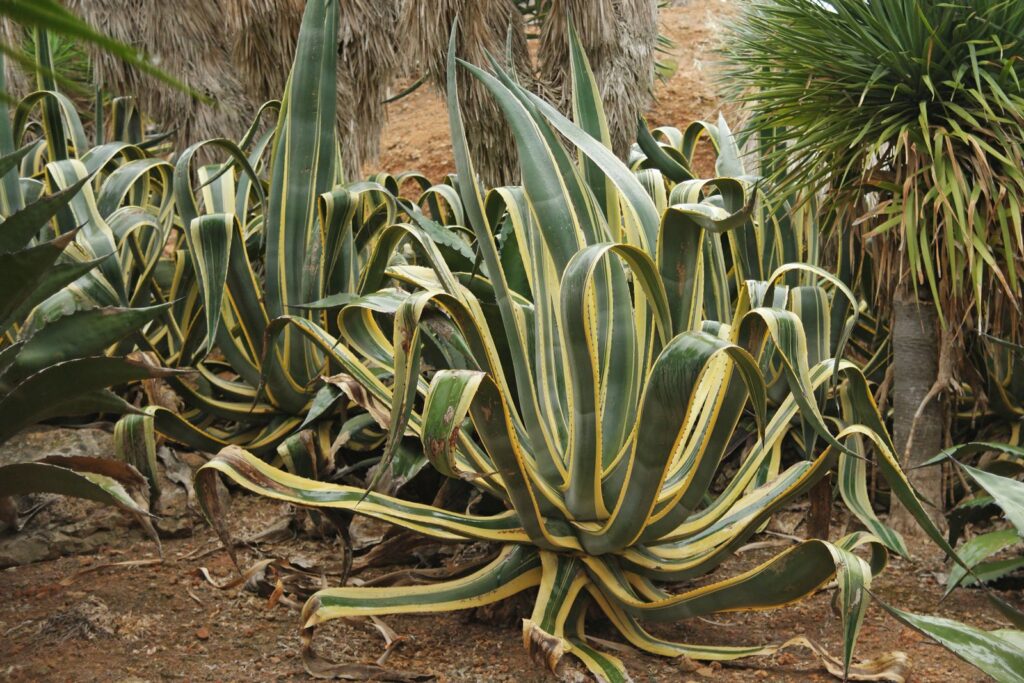
Agave. CAM plants like cacti, pineapples, and agave are best adapted to heat and CO2 scarcity.
If the survival threshold is lowered to 1 part per million CO2, the model allows a reduced photosynthetic biosphere to persist until approximately 1.84 billion years in the future. As Haqq-Misra noted, life on Earth is incredibly adaptive: even in a hot environment with low CO2 levels, plants and the animals that depend on them can hold on for a very long time.
But this is no longer about the familiar green planet. It won’t be an Earth with forests, fields, and coral reefs. As temperatures rise or CO2 drops, familiar ecosystems will vanish. The last pockets of life will most likely survive where conditions remain tolerable the longest: near the poles, in water, in deserts, or possibly in protected environments created by a future civilization.
What the Death of Earth’s Plants Means for the Search for Life on Other Planets
The main significance of this work extends far beyond Earth. Astronomers often evaluate distant planets by how long they can remain habitable as their stars age. If photosynthesis can persist on our planet for nearly 2 billion years, then planets around older stars deserve closer attention — some of them may have already passed their prime but could still harbor life.
This is practically important for future telescopes searching for signs of life through the atmospheric composition of distant worlds. For example, this is exactly how astronomers plan to determine whether life exists on exoplanets: by what gases remain in their atmospheres.
It’s worth remembering that this is still a model of the distant future, not a precise forecast. The results depend on how strongly weathering responds to warming and at what minimum CO2 level plants can still survive — values with considerable uncertainty. The study was published in the Journal of Geophysical Research: Atmospheres.
What Awaits Earth After Plants Disappear
In the end, the Sun will consume Earth regardless, and all calculations become meaningless. But this new work demonstrates something important: the fundamental engine of photosynthesis can run longer than previously thought, almost until the moment the planet begins to lose its oceans. Life won’t vanish suddenly — it will slowly retreat into the last habitable corners.
For us here and now, this is no cause for alarm: we’re talking about timescales measured in billions of years. However, it changes the logic of searching for life in the universe and reminds us how resilient photosynthesis can be. In this distant picture, there’s an almost paradoxical finale: the last habitable world in the Solar System may turn out to be not Earth, but Pluto.