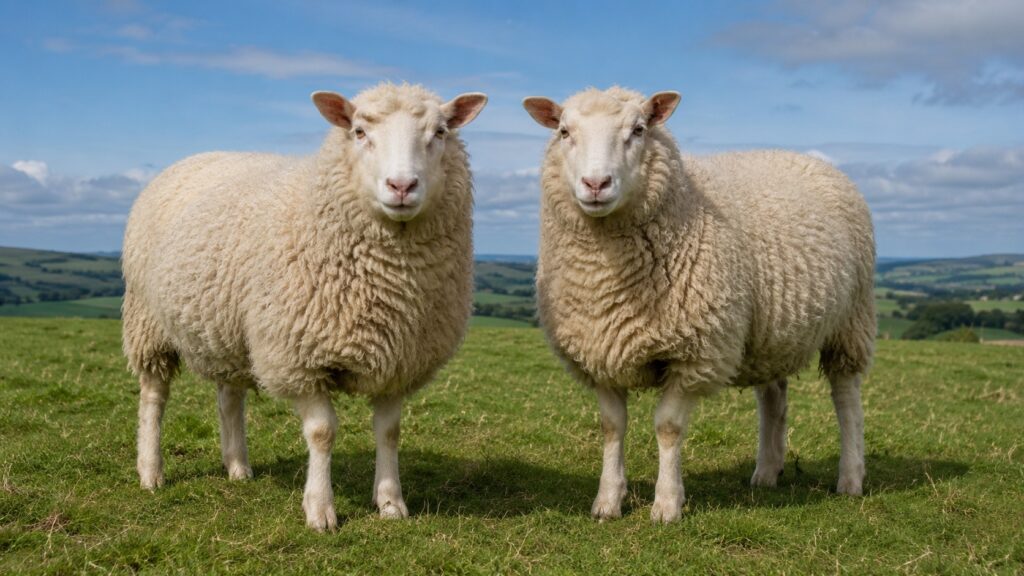
Dolly the sheep was born on July 5, 1996, at the Roslin Institute, United Kingdom
In 1996, Dolly the sheep was born, and she was the first cloned mammal in human history. At the time, many began talking about how human clones would soon appear and mammoths would be cloned and resurrected. Thirty years have passed since then, and neither has happened. So why hasn’t cloning technology followed the most obvious path, and what prevents us from cloning humans or ancient animals?
How Dolly the Sheep Was Cloned
In most cases, biologists use a method called somatic cell nuclear transfer. To obtain an exact genetic copy — that is, a clone of a living creature — researchers don’t need sperm or egg cells from the donor itself.
Cloning using this principle consists of several basic steps:
- A regular non-reproductive cell is taken from the donor animal (in Dolly’s case, it was a mammary gland cell), and the nucleus containing the DNA is extracted from it;
- An unfertilized egg cell is taken from another animal, and its own nucleus is removed;
- Using an electrical impulse, the donor’s DNA is placed into the empty egg cell, causing them to fuse into a single entity;
- Once the resulting embryo begins to develop, it is transferred into the uterus of a surrogate mother.
As a result of a successful pregnancy, an animal is born whose DNA is almost completely identical to the original donor.
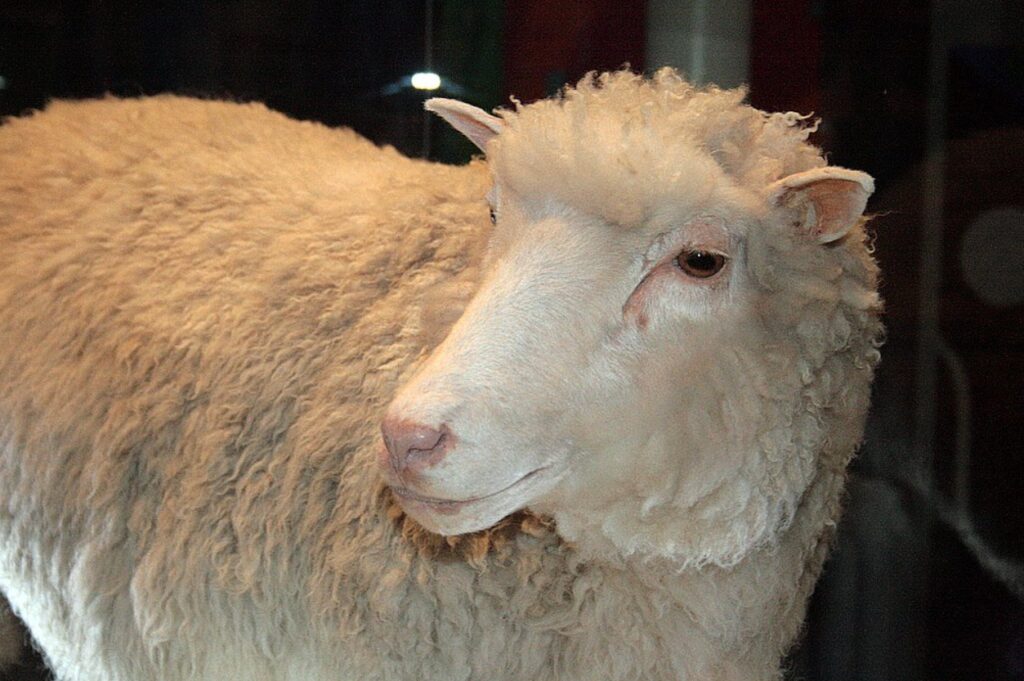
Stuffed Dolly the sheep. Image source: wikimedia.org
Why Cloning Animals Is So Difficult
Despite decades of research, creating animal clones remains extremely inefficient. For every successful result, there are dozens and hundreds of embryos that stop developing. For example, to produce one Dolly, scientists needed 277 attempts. The process requires expensive equipment, enormous amounts of donor material, and surrogate mothers, making it difficult to scale.
The main problem lies not in copying DNA itself. Genes are just part of what makes an organism unique. How an animal grows and behaves is greatly influenced by environment, development, and life experience. The most difficult thing in the laboratory is making an adult cell “forget its profession” and start behaving like a blank slate again — that is, a fertilized embryo.
This process is called epigenetic reprogramming. The egg cell must reset the chemical settings that indicate which genes need to be turned on or off. Often, the genetic settings reset is incomplete, which is why many cloned embryos develop with severe abnormalities.
However, it was precisely the attempts to overcome this barrier that led to another breakthrough. Scientists realized that adult cells can be reprogrammed into induced pluripotent stem cells. These behave like embryonic cells, but they are used not to create an entire organism, but to grow any needed tissues. This discovery made it possible to test new drugs on cultured cells and gave a powerful boost to regenerative medicine. For example, in 2025, scientists grew a beating human heart in the body of a pig.
How Cloning Is Used Today
Today, DNA copying technologies are actively used in agriculture. Livestock breeders don’t replace traditional breeding with clones but use them to reproduce animals with outstanding characteristics such as strong genetics, high productivity, or disease resistance. In some countries, like Australia, commercial cloning of sport horses is already possible, and some of them successfully compete in world competitions.
There is also a market for pet owners. In China and the USA, companies offer commercial services for creating copies of deceased cats and dogs. Famous singer Barbra Streisand cloned her beloved dog Samantha, getting two new puppies. However, owners are often disappointed because the personalities of cloned pets differ from the original, since they inherit only genes, not memories and habits.
According to Nature.com, in 2024 Chinese researchers successfully cloned a rhesus macaque for the first time. The physiological similarity of primates to humans should accelerate drug testing, although animal rights advocates rightly raise questions about the ethics of such experiments given such a low success rate and the suffering of surrogate animals.
Perhaps the greatest benefit the technology brings is in wildlife conservation. According to ABC.net, in 2020 scientists cloned a black-footed ferret using genetic material from an animal that had died several decades earlier. This allowed them to restore lost genetic diversity to a rapidly disappearing population in the United States.
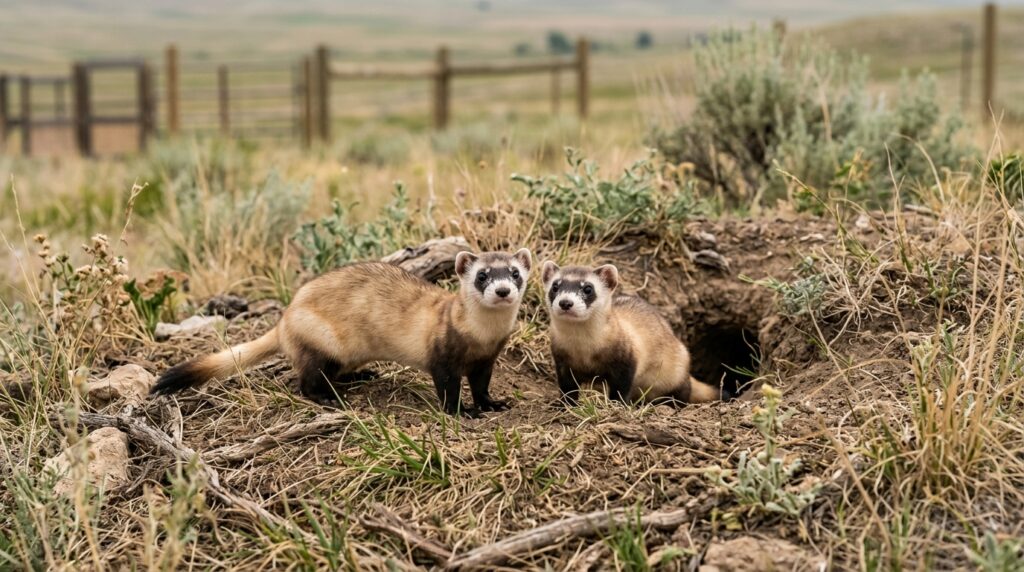
Cloning helps restore populations of rare animal species
Why Scientists Can’t Resurrect the Mammoth
The idea of bringing long-extinct species back to life is firmly embedded in popular culture, but scientific reality is far harsher. To produce a true clone, a complete and undamaged genome is required, as well as a suitable egg cell and a surrogate mother of a closely related species.
In the case of mammoths, which disappeared thousands of years ago, this is physically impossible because ancient DNA is too heavily degraded by time and environmental conditions.
Instead of direct copying, researchers use gene editing technologies such as CRISPR molecular scissors. They study the genome of Asian elephants and attempt to selectively introduce individual mammoth traits into it, such as thick fur or frost-resistant fat. If this project succeeds, what will be born is not a real prehistoric beast, but a genetically modified elephant.
Scientists also hasten to warn that bringing back an animal does not automatically mean restoring its ecological role. Nature works as a complex system, and the landscapes where ice age giants once roamed have long ceased to exist in their original form.
Why Scientists Don’t Clone Humans
Despite decades of effort, creating a human clone remains an absolute taboo. The main barrier is safety. Given the enormous failure rate when working with animals, applying this technology to humans would create unacceptable risks for surrogate mothers and the children themselves, who would be born with severe pathologies.
Beyond medical risks, there are serious ethical conflicts related to identity, consent, and the potential exploitation of human tissues. Because of these irreconcilable contradictions, reproductive human cloning is strictly prohibited by law in the vast majority of developed countries.
In the end, it turns out that in the 30 years since Dolly’s birth, science has made great strides forward. And although we haven’t gotten a world full of perfect clones of humans and animals, the knowledge gained has forever changed biology, our understanding of diseases, and our approach to preserving wildlife on our planet.