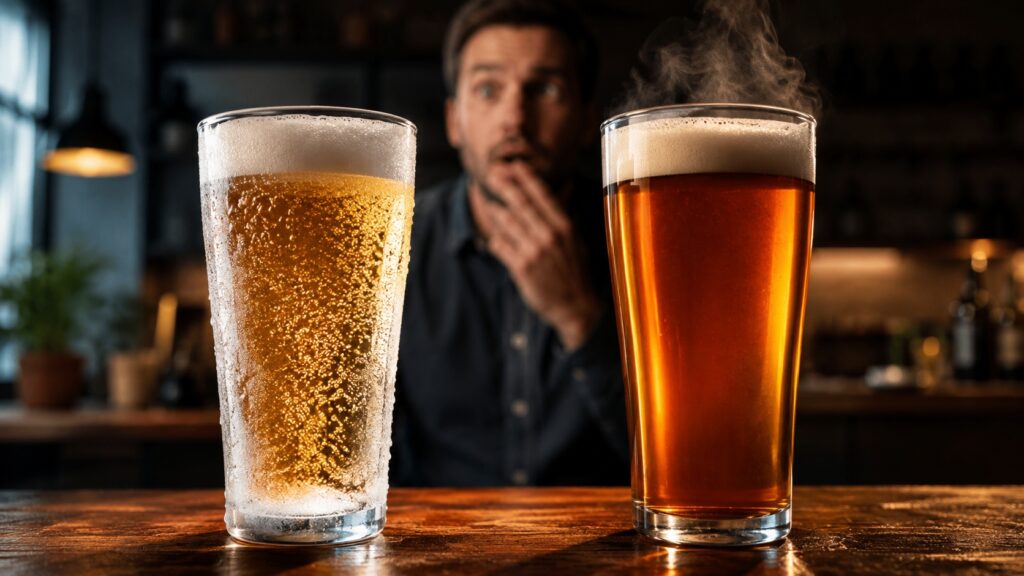
Warm beer may relax you faster, but that doesn’t mean you’re more drunk
Among beer lovers, there has long been a rumor that drinking it warm will get you drunk much faster. In reality, warm beer does not speed up intoxication — it merely creates that illusion due to a more intense taste and aroma. You definitely shouldn’t drink beer every day, but understanding how warm beer tricks our brain is worth everyone’s time. Personally, I always believed this myth, and the explanation I found online really surprised me.
What determines how quickly you get drunk from alcohol
Many people are convinced that heated alcohol affects the body more aggressively. But strictly speaking, this is a misconception — you won’t get drunk faster just because the liquid in your glass happens to be at room temperature. In fact, the speed of intoxication depends on the dose of ethanol, as well as how full your stomach is, the amount of carbonation in the drink, and your drinking pace.
In the scientific community, this question has been studied deliberately. In a 1985 study, participants were given hot and cold alcohol. The experiment subjects subjectively perceived the hot drink as stronger, but blood analysis set everything straight. There was no statistically significant difference in blood alcohol levels between those who drank cold and those who drank hot beverages.
Does beer temperature affect the speed of intoxication
The process of intoxication begins not in the mouth, but in the gastrointestinal tract. The main portion of ethanol is absorbed into the blood through the small intestine. Accordingly, the faster the stomach contents move further through the digestive system, the more rapidly the concentration of alcohol in the body rises.
Authors of a study in the journal Frontiers in Physiology conducted an experiment comparing the effect of an alcoholic beverage at 3 and 55 degrees Celsius. Participants received a strictly identical dose of 0.4 grams of ethanol per kilogram of body weight. It turned out that the overall blood alcohol concentration did not change due to the temperature of the liquid in the glass. The breath profile of the subjects was also similar.
Simply put, if two people with identical physical characteristics drink the same amount of beer at the same speed, there will be no difference in intoxication level — even if one gets an ice-cold lager and the other a warmed-up ale.
Why warm beer seems stronger
If blood tests show no difference, where does the persistent sensation of a strong hit to the head come from? First, it’s a matter of taste and aroma perception. Warm beer releases volatile compounds more actively, so a person more acutely senses the alcoholic taste, yeast, and acidity. The brain instantly reads this sharp profile and signals that the drink is very strong.
Second, heated liquids cause early vasodilation. Skin blood flow increases, the face flushes, and warmth spreads through the body. This pleasant relaxation and slight cotton-like feeling in the muscles is incredibly easy to confuse with rapid intoxication.
Alcohol itself also acts as a vasodilator. Blood rushes to the skin, and it feels like the body has warmed up from the inside. With this effect, the internal body temperature does not actually rise — it’s merely an illusion of warming.
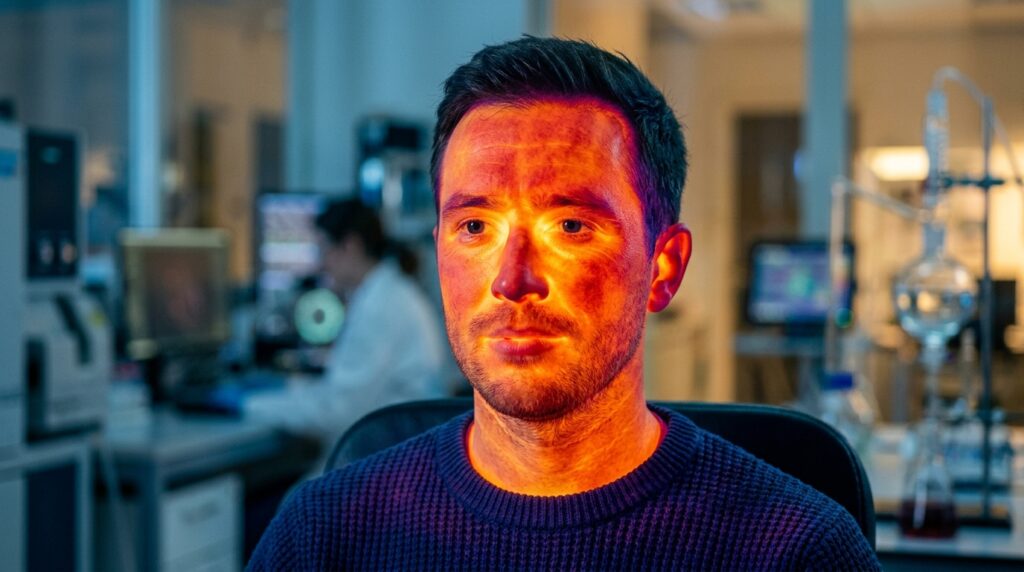
Vasodilation causes skin reddening and a false sensation of heat
What actually makes people get drunk quickly
If the temperature of the drink doesn’t play a decisive role, then what can actually knock you off your feet? The main enemy of sobriety is an empty stomach. Food physically prevents the rapid passage of ethanol into the intestine. It is believed that a hearty dinner reduces peak blood alcohol levels by approximately one-third.
Another crucial factor is carbonation. Carbon dioxide irritates the stomach walls and accelerates alcohol absorption. Studies with sparkling wines confirmed that gas bubbles lead to intoxication faster than an equivalent non-carbonated drink. And here lies the main catch — warm beer goes flat much faster than ice-cold beer. Therefore, a cold and highly carbonated drink should theoretically be even more effective.
The strength of intoxication is also directly influenced by:
- High drinking speed, where the body doesn’t have time to process ethanol;
- High alcohol content and the total volume of what’s been drunk;
- External conditions: extreme heat, sauna, fatigue, or general dehydration.
Why cold beer tastes better than warm beer
An ice-cold drink refreshes perfectly because low temperature masks bitterness and booziness. This makes beer subjectively pleasant and light-tasting. Because of this effect, a person can unknowingly drink more — and very quickly at that.
Science explains this at the chemical level. Research shows that at different temperatures, water and ethanol molecules group differently in space. That’s why in cold form, alcohol doesn’t hit the taste receptors as hard, while in a warm drink, ethanol is perceived more intensely. As a result, we drink ice-cold beer in large gulps, which leads to real — not imagined — intoxication.
How to drink beer without getting drunk
To make sure your evening doesn’t end with an unpleasant surprise, it’s important to control not the temperature of your glass but your approach to drinking. Our body can only process a small amount of alcohol, so any attempts to speed up the drinking process can result in a severe hangover.
How to reasonably reduce the strain on your body:
- Be sure to eat before the party so that food slows the absorption of ethanol in the intestine;
- Watch your drinking pace and don’t try to finish your entire portion in a couple of minutes;
- Consider the alcohol content of the variety: craft beer often contains more alcohol than standard lagers;
- Avoid drinking alcohol in extreme heat or after heavy physical exhaustion.
Believing that warm beer gets you drunk faster is a mistake based on our body’s illusions. Rigorous scientific measurements prove that the temperature of the drink does not increase blood ethanol levels. Warm beer simply has a sharper aroma and an earlier vasodilating effect, which tricks the brain.
The real reason for rapid intoxication lies in the amount of alcohol, an empty stomach, the presence of carbonation, and the speed at which you empty your glass. If you want to keep a clear head, control your pace and the volume you drink, and choose beer temperature solely for your own enjoyment and taste.