Should you leave the air conditioner on for your pets?
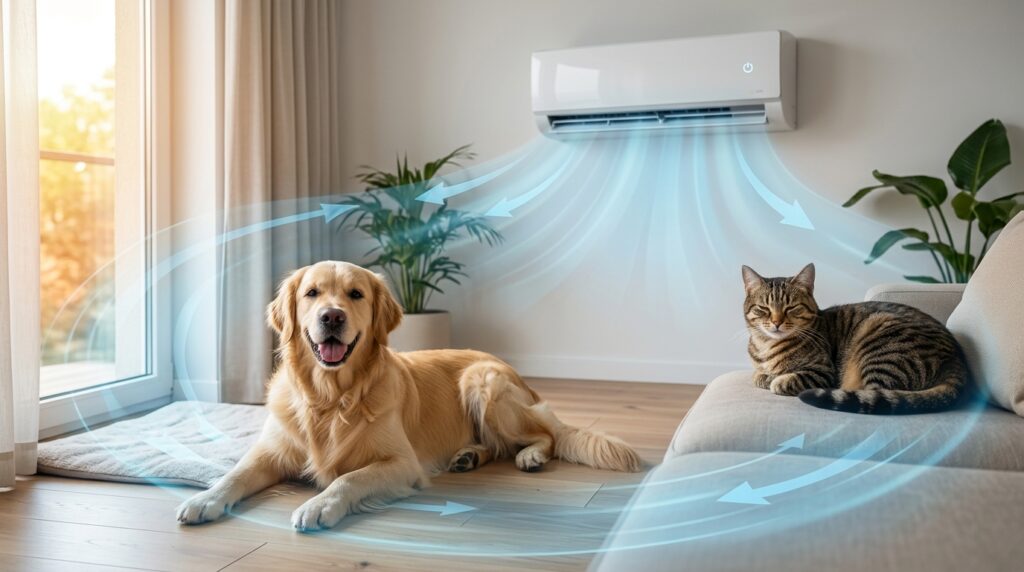
Should you leave the air conditioner on for your pets?
In summer, before leaving home, a simple question arises: should you leave the air conditioner running for your cat or dog, or save electricity? After all, cats love basking in the sun, and dogs seem to feel fine even in the heat. The answer depends on the animal, its breed, and the temperature the pet is accustomed to.
Why Cats Love Warmth and When It Becomes Dangerous
If you have a cat, you’ve probably seen it melt into a puddle in a sunny spot on the floor. This isn’t just a funny habit: cats genuinely feel comfortable where it’s already too warm for humans. Humans and dogs feel best at around 21–24 degrees Celsius (70–75°F), while many cats tolerate 27–30 degrees (80–86°F) just fine.
This also explains why cats love boxes, bags, and other tight spaces: it’s easier to retain warmth inside them.
So a healthy short-haired cat that loves to warm up can usually be left at home for the day without air conditioning. But with long-haired breeds and animals with chronic illnesses, things are different — especially if the pet has heart problems or a tendency toward seizures. They overheat faster, so leaving them in a hot apartment without cooling is not recommended.
How Pets Cool Themselves Down in the Heat
Cats are quite good at choosing a spot based on temperature. In winter, they squeeze into the warmest corners, and in summer, they move to cool surfaces. If your pet is sprawled out on bathroom tiles or cold laminate flooring, that’s a normal way to cool down, not a distress signal.
In the heat, cats also groom themselves more frequently: their tongue works like an air conditioner, spreading saliva across their fur. When the moisture evaporates, the body gradually cools down.
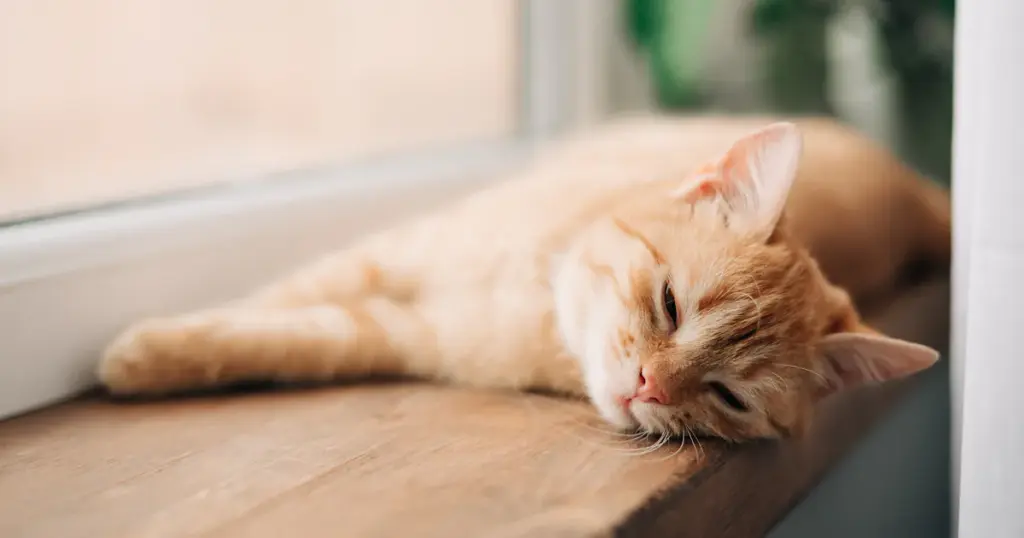
How your cat feels in an uncooled home partly depends on the temperature you usually maintain. If the difference is about 20 degrees, you shouldn’t leave the animal without air conditioning.
Dogs regulate their temperature differently — mainly through breathing. That’s why in the heat they stick out their tongues and breathe more rapidly: this is how the body releases excess heat. For dogs, this is a normal mechanism and by itself shouldn’t cause alarm.
But there’s a nuance: a pet gets used to the temperature typically maintained at home. A sudden increase of 20 degrees above the usual conditions can already cause significant discomfort. A cat that has lived all summer with the air conditioner running will handle sudden stuffiness worse than an animal accustomed to a warm apartment.
When Air Conditioning Is Truly Necessary for Pets
Focus primarily on the outdoor and indoor temperature. If your region is hit by a real heatwave and being in the apartment without cooling is hard even for you, your pet is most likely uncomfortable too. On such days, it’s better to leave the air conditioner on.

In the heat, fresh water and a cool floor help an animal cool down.
Enclosed spaces without ventilation are especially dangerous. A closed car, a sun-facing glazed balcony, or a greenhouse quickly become a trap: the animal cannot cool down and risks heatstroke. On a sunny balcony, overheating is compounded by the risk of sunburn. Never leave a cat or dog in a car, even for a few minutes, in hot weather.
Fresh water should always be available to your pet. In the heat, it helps the body maintain a normal temperature, so it’s better to fill the bowl generously and place it where the animal can’t accidentally knock it over.
Signs of Overheating in Animals You Should Not Miss
Cats, unlike dogs, very rarely breathe with their mouths open. Therefore, a cat with its tongue out and rapid breathing is an alarming sign. This type of breathing is a symptom that should not be ignored. The pet should be moved to a cool place, given water, and if necessary, taken to a veterinarian.
Here’s what to watch for in the heat:
- a cat breathing with its mouth open, like a dog — this is almost always a sign of overheating;
- the animal looks lethargic, weak, and refuses to move;
- in severe cases, loss of consciousness is possible — this is already an emergency;
- the pet lies stretched out on a cool, hard surface for extended periods.
The last point alone is not a reason to panic — that’s how animals shed excess heat. But it’s a hint that your cat or dog is getting hot, and you should check the temperature in the house. Cats have a harder time cooling down quickly, so in cases of severe overheating, it won’t be easy for the pet to cope on its own.
So Should You Leave the Air Conditioner On for Your Pets?
In short: a healthy short-haired cat can be left at home without air conditioning in normal summer weather — it will find a comfortable spot on its own. But in extreme heat, it’s better to turn on cooling, especially if you have a long-haired pet, an animal with heart disease, an elderly dog, or a flat-faced dog breed that has more difficulty breathing normally and dissipating heat.
The key is to consider the habits and condition of your specific pet. Then the air conditioning question becomes easier to resolve, and the summer heat doesn’t turn into a serious problem for your animal.