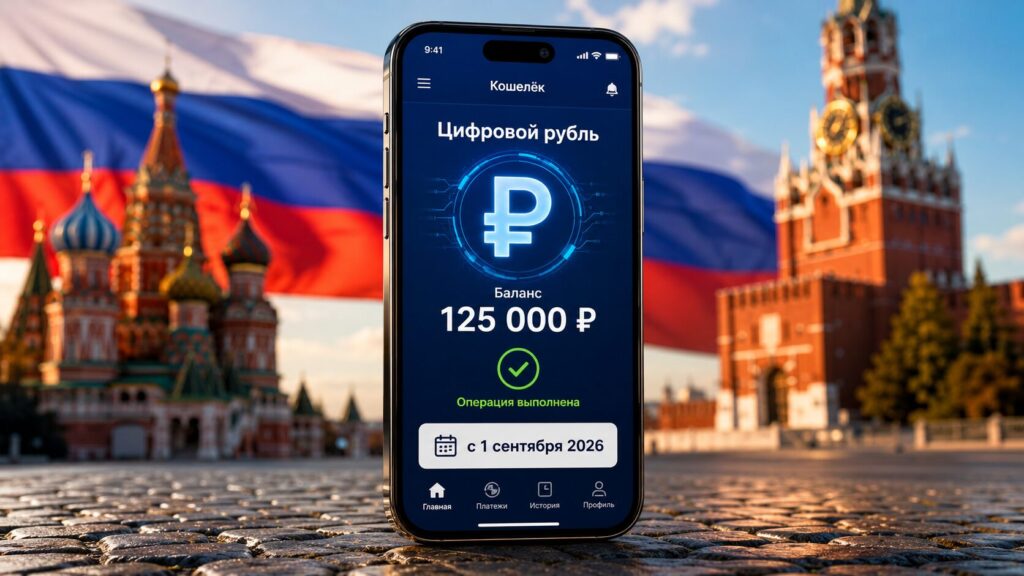
The digital ruble is neither non-cash nor crypto, but something different
Starting September 1, 2026, Russia begins the phased rollout of the digital ruble — a third form of the national currency alongside cash and non-cash money. The law, published in the summer of 2025, sets the deadlines for banks and stores to connect to digital ruble operations. It sounds complicated, but in reality, for the average person, everything is simpler than it seems.
What Is the Digital Ruble in Simple Terms
The digital ruble is a third form of money issued by the Central Bank. We already have cash (paper bills and coins) and non-cash (money in an account at a regular bank). The digital ruble is something in between: it exists only in electronic form, but it is stored not in a commercial bank, but on the platform of the Central Bank itself.
The main difference is who is responsible for your money. When money sits in a bank account, you are essentially entrusting it to that bank. The digital ruble is stored directly with the Bank of Russia, so it does not depend on how a particular commercial bank is doing.
Each digital ruble equals one regular ruble. It is not a new currency and not an investment — it is the same money, just in a different form. One digital ruble can always be converted to a regular one and vice versa.
How the Digital Ruble Differs from Regular Money and Cryptocurrency
People often confuse the digital ruble with cryptocurrency like Bitcoin, but these are completely different things. The digital ruble is issued by the state, its exchange rate is fixed, and the Central Bank stands behind it. Cryptocurrency, on the other hand, is not tied to any state, its rate fluctuates, and no one guarantees its value.
The main differences are easier to show as a list:
- Issuer: the digital ruble is issued by the Central Bank; cryptocurrency is issued by no one in particular
- Stability: one digital ruble always equals one regular ruble; the crypto rate constantly changes
- Anonymity: digital ruble transactions are transparent and monitored; crypto transactions are partially anonymous
- Storage: the digital ruble is stored on the Central Bank’s platform, not in a bank or a crypto wallet
The digital ruble differs from regular non-cash money in where it is stored and in that each user has one wallet on the Bank of Russia’s platform, rather than separate accounts in different banks. Access to this wallet can be obtained through the app of any bank connected to the system.
How to Use the Digital Ruble: Wallet and Transfers
To pay with digital rubles, you will need a digital wallet on the Central Bank’s platform. You can open it through your bank’s mobile app — there is no need to download a separate program. Money is transferred to the wallet from a regular bank account.
The key payment tool is the universal payment code. This concept has been specifically established by law in the national payment system. Essentially, it is a single QR code that replaces different codes from different payment systems: one code works for everything.

Payment with digital rubles is done through a universal QR code in the store
The law explicitly states that transferring digital rubles from an individual to a business for payment of goods and services is done through the universal payment code, unless the platform rules provide otherwise. This applies not only to store payments but also to services of notaries, lawyers, appraisers, and self-employed individuals.
An important detail for businesses: the operator providing the universal payment code is required to do so without charging fees to banks and other participants in the system. This should make settlements cheaper compared to traditional card acquiring.
Is the Digital Ruble Mandatory for Citizens
This is perhaps the main question that concerns people. The law describes the obligations of banks and sellers — they are the ones who must connect to the system within the established deadlines and provide users with the ability to make transfers through the universal payment code. In other words, the infrastructure must be created by organizations, not citizens.
For the average person, the digital ruble is another way to pay, not a replacement for the others. Cash and familiar non-cash money are not going anywhere. You will be able to choose how to pay, and opening a digital wallet remains your decision.
It is worth remembering that September 1, 2026, is not the date when everyone will suddenly start using the digital ruble. It is the start of a phased rollout: first, major banks and retailers join the system, then smaller ones. Full deployment will take time.
The Digital Ruble for Pensioners and Social Benefits
Many people are separately concerned about the topic of payments: whether pensions and benefits will be transferred in digital rubles. The law in question does not mandate the forced conversion of pensions to digital rubles — the document primarily describes the connection of banks and sellers to customer operations.
Technically, the digital ruble does allow receiving any payments, including social benefits, in a digital wallet. But this will be an option, not an obligation: the person decides for themselves in what form to receive money. The familiar ways of receiving a pension on a card or in cash are preserved.
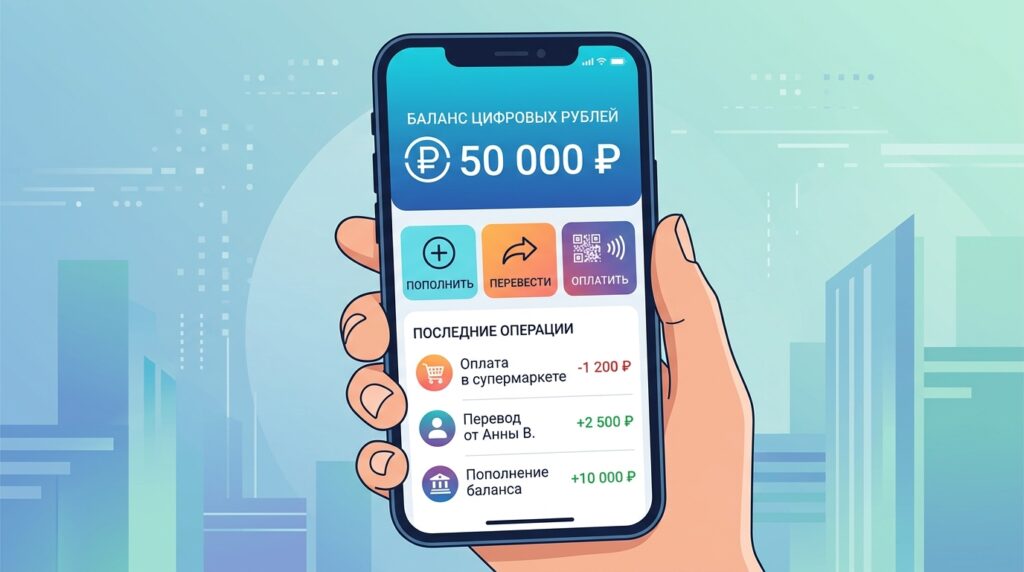
The digital ruble will be safer than cash and non-cash
For pensioners, there is both an advantage and a reason for caution. The advantage is that transfers between people and payment via the universal code should be simple and free. Caution is needed because any new payment technology requires getting used to, and at first it is wise to not rush to convert all savings into the new form until the system has been tested in practice.
What the Digital Ruble Changes for the Average Person from September 1, 2026
The digital ruble does not replace cash or cards — it adds a third payment option for which the Central Bank is directly responsible.
Starting September 1, 2026, the gradual connection of banks and stores will begin, and purchases can be paid for through a universal QR code with no commission for businesses.
How the system will work in practice, when different banks will connect, and how convenient transfers will be is worth observing after the launch.