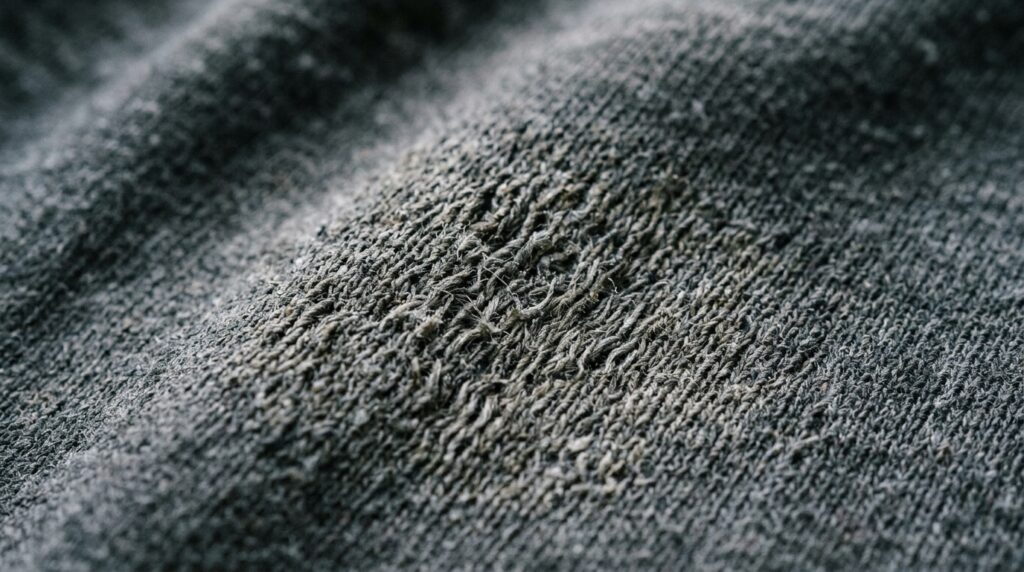
Clothes smell worse not because of bad detergent, but because of improper washing
Have you ever had this happen — you pull a fresh T-shirt out of the closet, put it on, move around a little, and suddenly catch that unpleasant body odor again, even though the item was just washed? I spent a long time thinking the problem was cheap detergent or a bad washing machine, but the truth turned out to be more interesting. The smell persists not because of dirt, but because of bacteria that have learned to hide right inside the fabric fibers. Fortunately, I found a solution to this problem.
Where Does Body Odor on Clothes Come From
Sweat itself has almost no smell. The odor appears when bacteria get to work. Sweat contains fatty acids and proteins, and for microbes, that’s a tasty meal. They settle into the fabric, feed on these substances, and their metabolic byproducts produce that distinctive sour smell.
When I used to toss a sweaty T-shirt into the laundry basket and only wash it a couple of days later, I was essentially giving bacteria a head start. During that time, they managed to multiply and saturate the fibers. The longer an item sits dirty, the deeper the smell penetrates the material and the harder it becomes to remove. I found information about this in the scientific journal PubMed.
Why Washing Doesn’t Fully Kill Bacteria
It turns out that regular washing doesn’t always finish off the microbes. Bacterial colonies can form a dense protective film on fibers, and the cleaning agents in detergent aren’t always able to break through it. So you wash the item, it looks clean, but the microbial “fortress” inside the fabric remains intact.
There’s a second factor too. Fatty acids and decomposition products can chemically bond with fiber molecules, especially with protein-based fabrics like wool and silk and with hydrophilic ones like cotton and viscose. The smell literally latches onto the material at a molecular level, so water and detergent can’t wash it away.
Main Laundry Mistakes That Make Clothes Smell Like Sweat
Once I looked into the topic, I realized I was causing half the problems myself. Here’s what most often prevents getting rid of the smell:
- Too low a temperature. Washing in eco mode at 30–40 degrees often doesn’t kill bacteria but merely masks the odor with fragrances;
- Too high a temperature. Overheating can lock protein compounds from sweat into the fibers, making the smell even harder to remove;
- Poor rinsing. Detergent residue mixes with sweat residue and creates a new unpleasant odor;
- Overloaded drum. Clothes simply don’t get enough water and movement to be properly washed.
A separate trap is antiperspirants. Products with high aluminum content, when interacting with sweat and bacteria, can produce an even more persistent odor that then clings to the fabric in the underarm area.
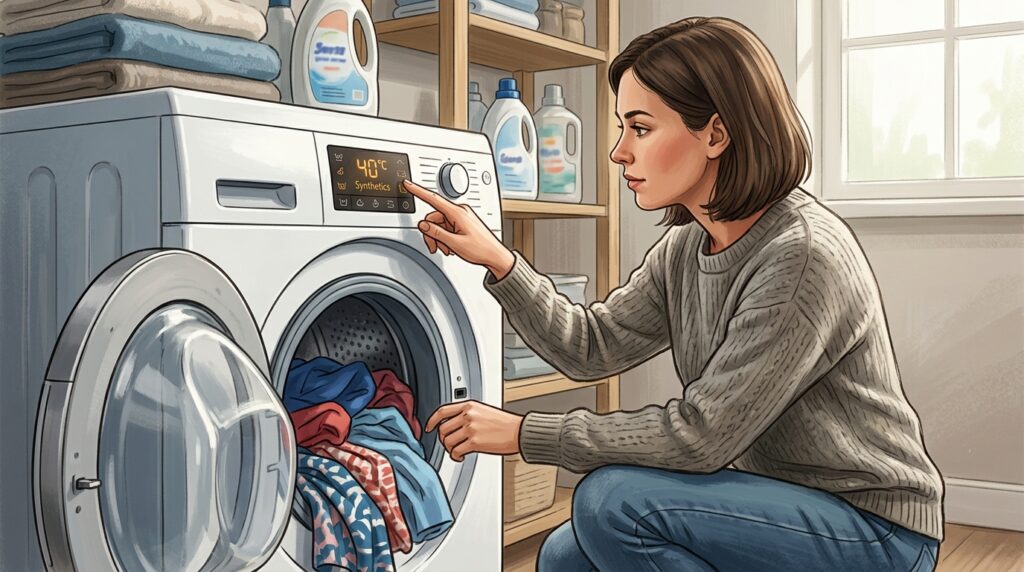
Temperature and wash cycle matter more than you think
Why Synthetics Smell Worse Than Cotton
The type of fabric affects odor no less than the wash cycle. Synthetics like polyester, nylon, and acrylic don’t breathe well and actively absorb sweat, creating an ideal environment for bacteria. That’s why athletic T-shirts often start smelling faster than regular ones.
Blended fabrics like cotton with elastane or polyester are also tricky, because one component absorbs sweat while the other traps it inside, creating a greenhouse effect within the fibers. Pure cotton and linen, on the other hand, dry more slowly, and while the item remains damp, bacteria have plenty of time to multiply.
What Intensifies Body Odor on Clothes Beyond Washing
Sometimes the problem isn’t the washing machine at all. The smell can be intensified by things that are easy to overlook:
- Hard water. It reduces detergent effectiveness and leaves soap deposits on fabric where bacteria get trapped;
- Improper storage. Damp clothes or a poorly ventilated closet become a breeding ground for bacteria and mold;
- Infrequent clothing changes. If you wear an item too long and skip a shower after physical activity, the smell sets in even before washing.
When I started drying clothes immediately instead of leaving them balled up in the machine for half a day, the difference was noticeable. A damp environment is bacteria’s greatest ally, and simply depriving them of this condition is enough to make the smell weaker.

Quick drying and ventilation deprive bacteria of a damp environment
How to Get Rid of Body Odor on Clothes
From everything I’ve tried and what fabric care specialists recommend, a simple set of habits emerges:
- Wash clothes immediately after wearing them, especially if you sweated a lot — don’t give bacteria time to establish themselves;
- Choose the right temperature for the fabric: hot enough to kill microbes, but not so hot that it seals in sweat proteins;
- Don’t overload the drum and use an extra rinse cycle to wash out detergent residue;
- Use a conditioner with antibacterial properties;
- Take out and dry laundry immediately, and air out worn clothes rather than putting them away damp.
It’s also worth taking a closer look at your wardrobe. The more natural and breathable fabrics you have, the less likely your clothes will start smelling within an hour of putting them on.
I realized that post-wash odor isn’t about cleanliness in the usual sense — it’s about bacteria, moisture, and temperature. Clothes smell not because they were poorly washed, but because microbes remained inside the fibers or returned due to dampness. Change a couple of habits and a problem that seemed unsolvable practically resolves itself.