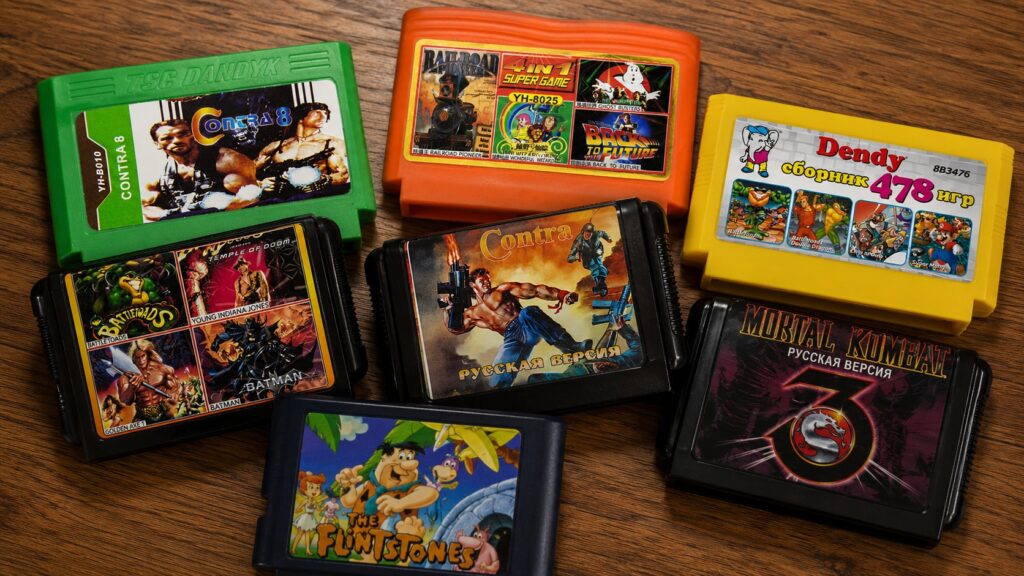
Old game cartridges can be worth a lot of money, but you need to know how to find them
In June 2026, a sealed copy of Super Mario Bros. sold at auction for an incredible 3 million dollars, prompting many people to dig through their old boxes in storage. However, a video game’s age alone means nothing — a dusty disc from twenty years ago can easily be worth just a couple of dollars. If you’ve read my article about old cassettes worth thousands of dollars, you know that a collectible item’s price is formed by a complex combination of rarity, condition, and the history of a specific copy.
Which Games Can Be Sold to Collectors
It’s important to understand that collectors aren’t buying just a piece of old plastic. They need a specific edition, released in a particular print run and preserved in perfect condition. Let’s figure out which games are being hunted at auctions and how not to give away the rarest artifact for next to nothing.
Old Games in Factory Packaging
Many people find it illogical that the most popular game in the world can be worth a fortune. The point is that fans specifically need the first batch of an iconic hit that made it to store shelves at the very start of sales. Different print runs of the same title can differ in packaging method, text on the box, logos, or even corrected typos.
According to The Verge, the copy of Super Mario Bros. that sold for 3 million dollars belonged to the second print run of 1985. Its main value lay in the fact that the box was sealed with a factory glossy sticker. Later, Nintendo switched to regular shrink wrap. An ordinary person would see two absolutely identical games, but for a specialist, the early seal seam is the most important sign of a genuine rarity.
Just like collectors search for rare Kinder Surprise toys, gamers chase regional versions of certain games. A game could have been released separately for Japan, the USA, and Europe. Sometimes the Japanese version is found everywhere, while the European print run was tiny and is now worth dozens of times more.
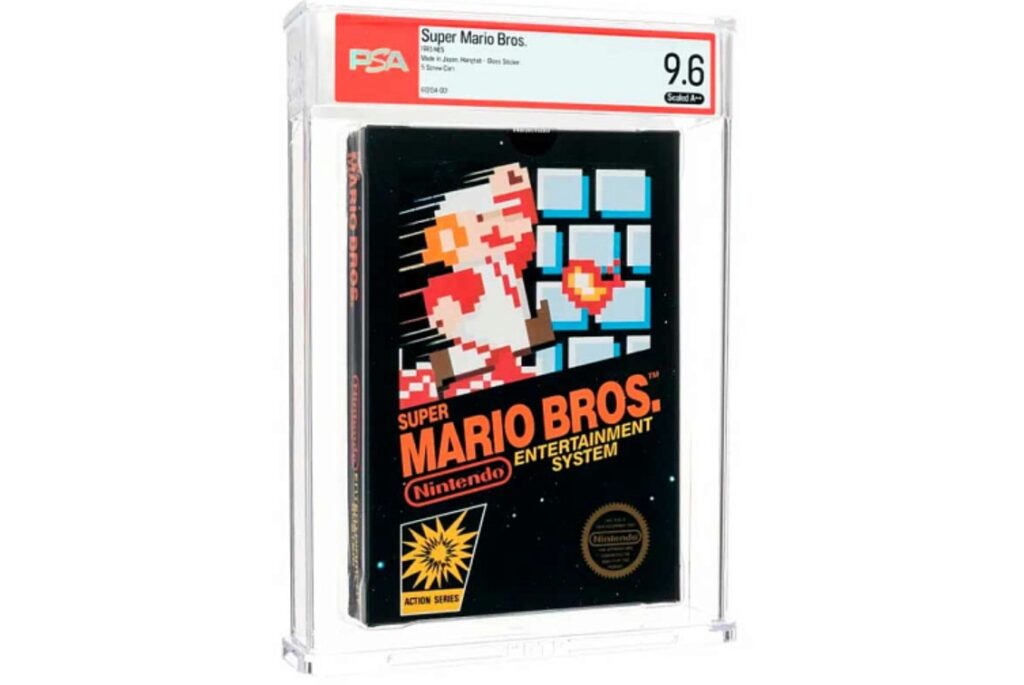
The Mario game cartridge sold for 3 million dollars. Image source: The Verge
Canceled Games with Small Print Runs
The first thing that attracts serious money is scarcity. Games that were released during the twilight of a console’s lifecycle, like the Sega Saturn, are highly valued. The console was attracting fewer and fewer buyers, so publishers printed new titles in tiny batches.
If you will, the Holy Grail consists of copies of canceled games that officially almost never made it to stores. A company could print cartridges and then suddenly lose the rights to the music or brand. The bulk was destroyed, but a few copies accidentally ended up with journalists or developers.
A historical example often cited by specialized resources like DTF is Tetris for the Sega Mega Drive. Its release was halted due to licensing issues, and only a few confirmed cartridges have survived to this day. Promotional editions that were given only to tournament winners or gifted to studio employees fall into the same category.
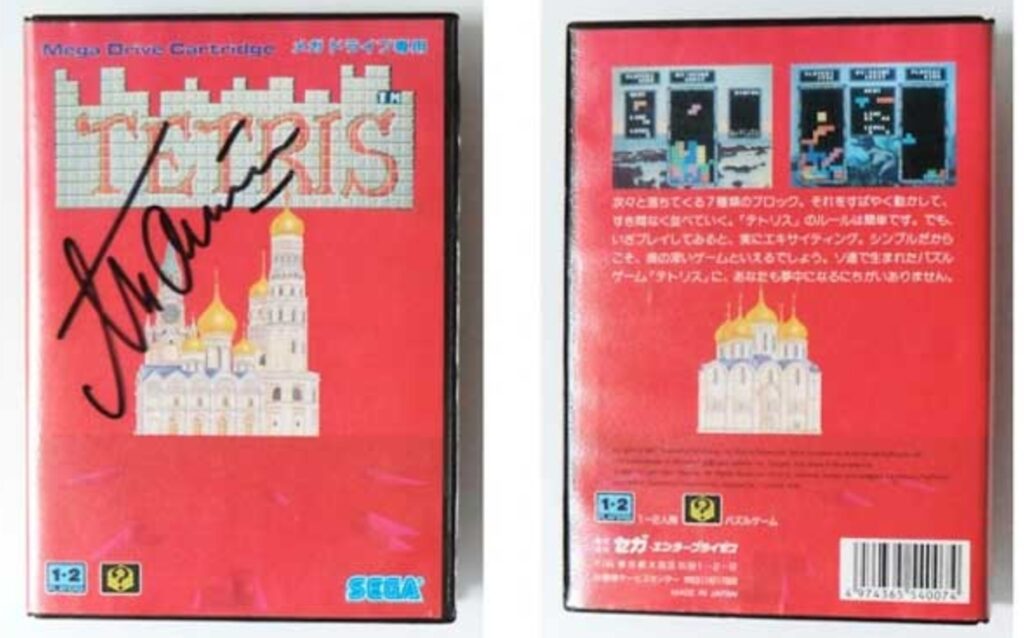
Tetris for Sega Mega Drive was never officially released. Image source: raregames.fandom.com
Old Games with a Complete Set
The price skyrockets the most if a game has never been opened. The demand for factory-sealed copies is explained by simple logic: thirty years ago, kids tore off the packaging, threw away receipts, and immediately inserted the cartridge into the console. Very few unopened boxes have survived to this day.
But even an opened game can surprise you with its price if the original cardboard box with all internal contents has been preserved. In the international community, this is referred to as CIB — Complete in Box.
A full collector’s set usually includes:
- the disc or cartridge itself in good condition;
- the internal plastic or cardboard insert;
- the paper instruction manual and advertising booklets from that era;
- a game world map, posters, or registration cards.
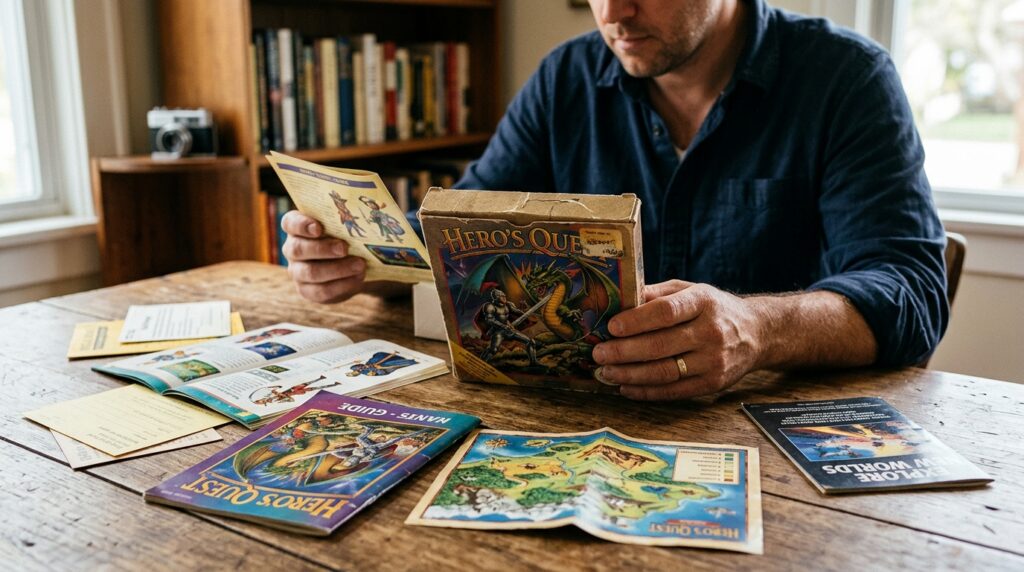
For a collector, a missing paper instruction manual can reduce the set’s value several times over
At the same time, it’s important to understand that shrink wrap doesn’t turn just any game into a gold mine. A sealed mass-market sports simulator like an old soccer or hockey game is often unwanted because too many copies were produced.
Pirate Games for Dendy and Sega
In the former USSR countries, a unique market has formed. For a long time, official releases simply didn’t reach us, so Western valuation rules work differently here.
Local enthusiasts are very interested in old pirate Dendy cartridges and Sega cartridges from the nineties. For an American collector, they have no value at all, but in Russia, rare translations by the Steepler company, unusual case shapes, and legendary “999 in 1” compilations evoke enormous nostalgia.
People are willing to pay considerable money for a specific poorly translated game with that very cover art they remember from childhood. Large cardboard boxes of early official Russian PC localizations are also highly valued.
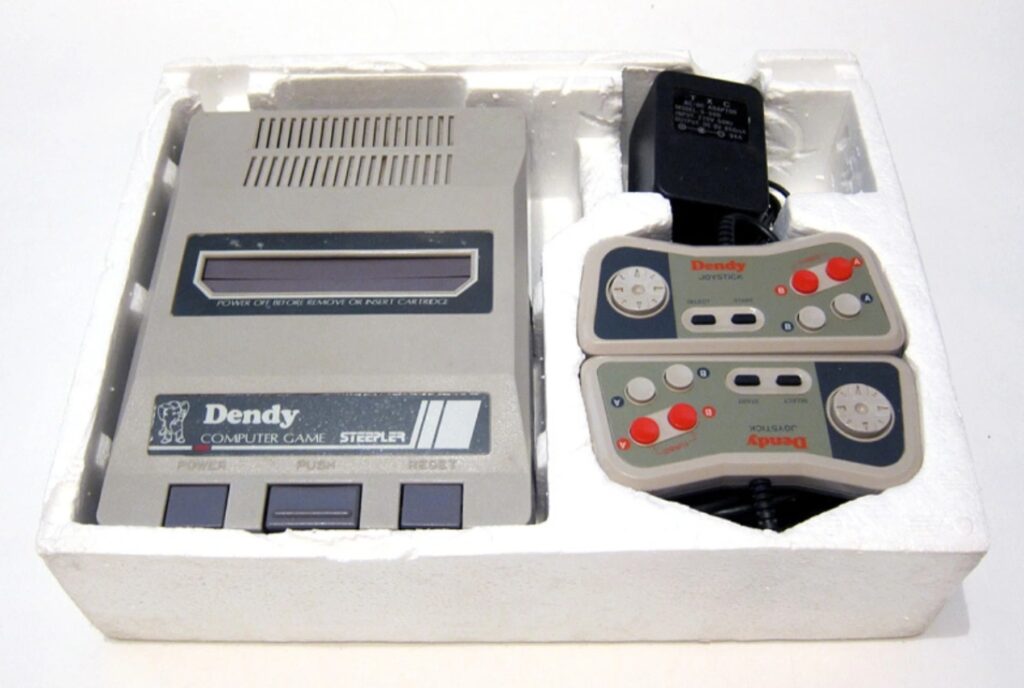
Dendy by the Steepler company. Image source: habr.com
How to Tell If an Old Game Is Worth a Lot
Where big money circulates, scammers always appear. Expensive retro games are actively counterfeited today: printing is copied, discs are repackaged in new shrink wrap, and plastic is intentionally aged.
Authenticity has to be assessed practically under a microscope. Experienced gamers read a cartridge’s history by the color of the circuit board, the chip manufacture date, and the shape of the screws. For example, when verifying an expensive Alien Soldier game, they check the chip markings, as pirates often put genuine casings on counterfeit boards.
To protect buyers from fraud, professional condition grading of retro games exists through specialized companies. They verify authenticity, seal the game in plastic, and assign a grade.
If you’ve found an old game at home and want to know its price, check the following:
- Identify the exact edition: platform, region, box code, and contents;
- Search on Avito or eBay for fully matching copies;
- Only look at completed sales. A listing priced at half a million rubles doesn’t mean anyone will actually buy the game for that amount;
- Don’t rush to peel off store stickers or clean the box with chemicals — you could destroy its historical value.