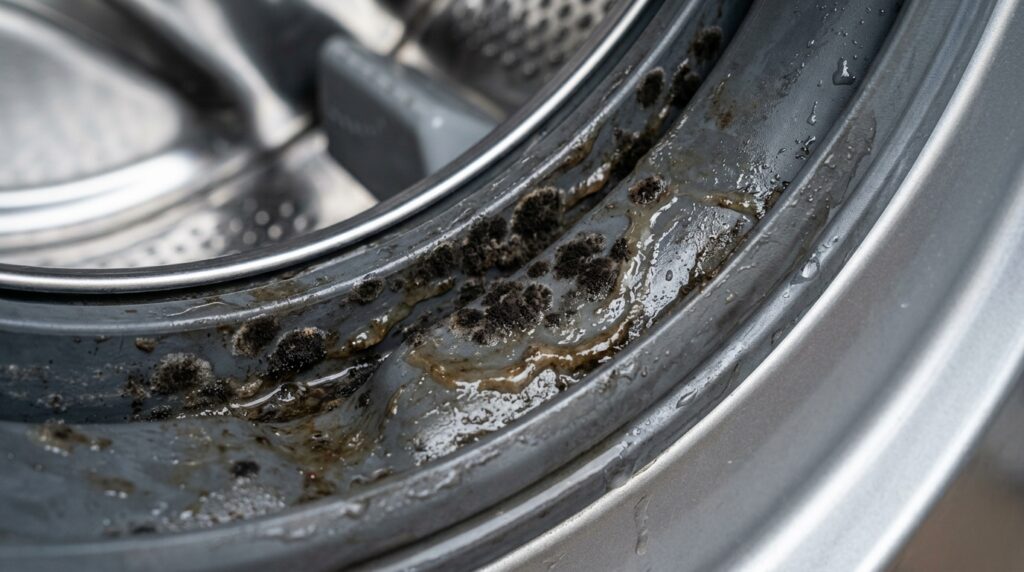
If you properly maintain your washing machine, you can forget about unpleasant odors from the drum forever
A washing machine seems clean by default, since liters of water and detergent regularly pass through it. But in practice, many people unknowingly contaminate their washer without even realizing it. Water-saving modes, low temperatures, and liquid gels without bleach help microorganisms survive and actively multiply.
Where Mold Lives in a Washing Machine
Users regularly take out laundry and sometimes wipe down the drum, but almost never fully remove the detergent dispenser. As a result, the dirtiest spot turns out to be the detergent tray and the deep recess behind it. Moisture, conditioner residue, and leftover gel constantly accumulate there.
A study by Samsung showed that mold rarely confines itself to one location. A washing machine has several problem areas at once:
- the pull-out tray and the upper “ceiling” of the recess inside the machine;
- the rubber door gasket on front-loading models;
- the drain pump filter at the very bottom;
- the invisible part of the drum and drain hoses;
- the conditioner dispenser in top-loading machines.
Appliance manufacturers directly warn that standing moisture in dark places promotes mold growth. This is exactly where the unpleasant smell from the washing machine comes from, which eventually transfers to clean clothes.
Why Mold Appears Under the Door Gasket
Front-loading machines have their door sealed with a massive rubber gasket. It folds into several layers to prevent water from spilling onto the floor. It is precisely in the lower fold where a small puddle constantly remains, trapping hair, clothing lint, and dirt.
Fungi love such places. Ordinary household mold thrives perfectly well in the humid darkness of a closed drum. If you close the door immediately after washing, a greenhouse effect forms inside.
Additionally, detergent residue forms a sticky biofilm. On the surface of this slime, bacteria and mold spores find it much easier to attach to rubber and plastic.
Why Dirt and Odor from a Washing Machine Are Dangerous
The main problem with mold in a washing machine is compromised household hygiene. Spores spread throughout the bathroom, and clothes after washing smell of dampness and mustiness. Instead of clean laundry, you pull out fabric covered with mold particles.
Mold must be removed immediately if you smell it or see buildup. There is no need to identify the specific type of fungus — any of them can cause irritation in people with sensitive skin or allergies.
How to Tell If Mold Has Developed in Your Washer
Most often, the problem is revealed by a persistent musty smell from the washer drum. But to find the source itself, you’ll need to look into hidden cavities. Start by pulling the detergent tray toward you all the way, press the latch, and remove the dispenser completely.
Then take a flashlight and check the upper part of the tray recess. That is where the water supply holes are located, which become covered with black buildup and slime. Sure signs of mold include black spots, sticky film on plastic, gray-green buildup, and floating bits of dirt at the bottom of the conditioner compartment.
How to Properly Clean the Washing Machine Gasket
Start cleaning with gentle methods. Open the door and carefully fold back the gasket with your fingers. First check the lower part where water collects and the small drainage holes.
Dampen a cloth in warm soapy water and thoroughly wipe all inner surfaces of the gasket. If there are black spots in the fold, take an old toothbrush and scrub the buildup away.
If mold has penetrated the rubber, you can use a weak solution of household bleach. According to the CDC, you can dilute approximately 240 ml of bleach in four liters of water, treat the stains, and then be sure to rinse the rubber with clean warm water.
How to Remove Mold at Home
For regular prevention, plain warm water combined with dish soap works best. It’s important to mechanically scrub the mold with a brush rather than just dousing it with chemicals.
Bleach is only needed for stubborn black stains, but it should be used cautiously. The main safety rule: never mix bleach with vinegar or ammonia, as this causes the release of toxic gases.
Vinegar can be used separately to remove limescale if your model’s manual allows it. But don’t leave acid on rubber parts for too long to avoid damaging the gasket.
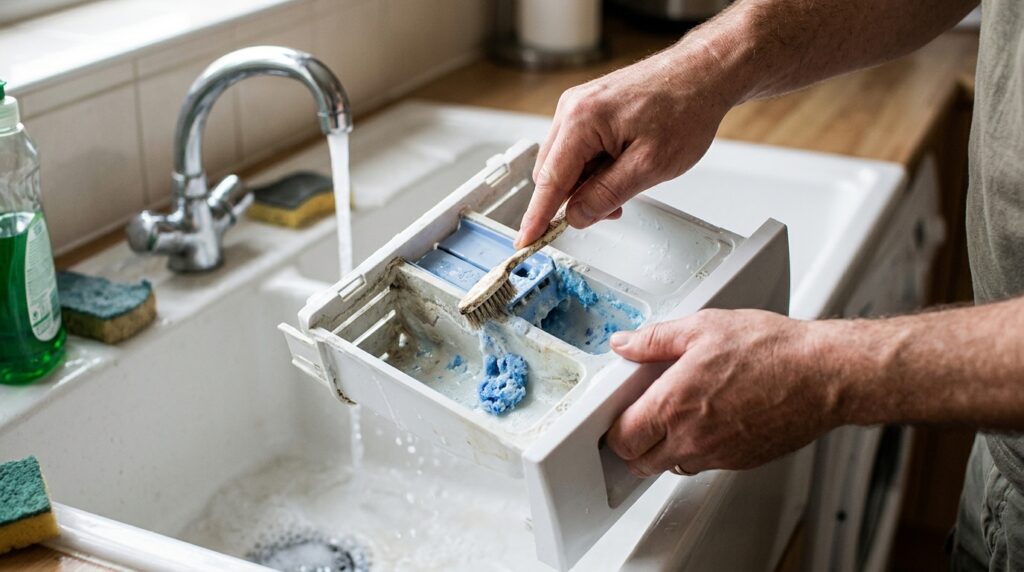
Hard-to-reach places in the tray are most conveniently cleaned of buildup with an old toothbrush
How Often Should You Clean Your Washing Machine
Basic washing machine maintenance is needed constantly. Once a week, you should wipe down the door glass and the gasket fold, and check the tray for slime.
Once a month, deep maintenance is necessary. Remove and thoroughly wash the tray and the recess behind it. Open the bottom panel, carefully drain residual water, and clean the drain pump filter, where hair and threads often rot.
Also once a month, it is recommended to run a drum cleaning service mode or simply the hottest wash cycle without laundry to flush invisible tanks and hoses.
What to Do to Prevent Mold from Coming Back
The most common mistake owners make is tightly closing the door right after unloading the laundry. Humid, warm air remains inside, turning the drum into something like an incubator for bacteria. Always leave the door and tray slightly open after the cycle is complete.
The second problem lies in detergent dosage. Excess gel or conditioner doesn’t make clothes cleaner but instead settles as a thick film on the walls.
Follow the recommended amount of laundry detergent and don’t leave wet clothes in the machine for too long. If you keep the drum dry and regularly wash the tray, your washing machine will serve you for years without a hint of a swampy smell.