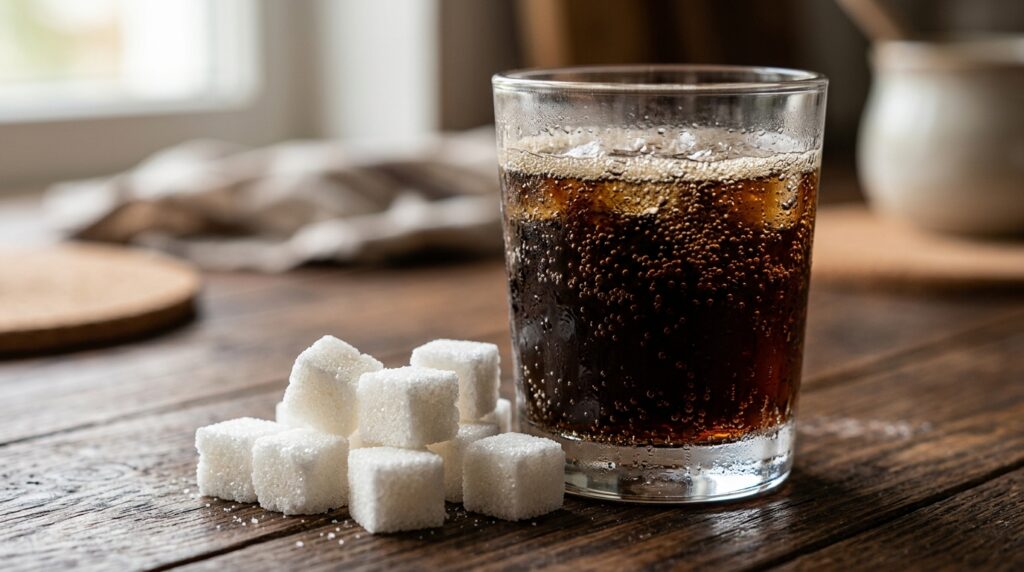
Cola contains too much sugar to drink it every day
If you place a classic can of soda and its diet counterpart side by side, the choice seems obvious. The absence of calories appeals to those watching their figure, but scares them with stories about artificial additives. However, sugar-free cola is indeed less harmful when comparing only these two drinks. But that doesn’t make it a healthy water that you can drink by the liter. Let’s break down what exactly hides behind the black label and how this drink affects our body.
How much sugar is in Coca-Cola
The main and most obvious difference lies in calories and carbohydrates. One standard can of classic soda contains about 40 grams of free sugar dissolved in it. To make it easier to visualize, that’s roughly 8–10 heaping teaspoons.
Such a serving practically exhausts the daily allowance. According to recommendations from the World Health Organization, a normal-weight adult should consume no more than 25 grams of sugar per day. By drinking just one can, you’ve already blown past the limits. If consumption reaches liters, the strain on the pancreas increases dramatically.
In this regard, diet drinks confidently win. In Russian stores, the labels of such drinks usually show only about 3 kcal per 100 milliliters. This reduces the risk of overeating and blood glucose spikes, which is especially important for people managing their weight.
The harm of Coca-Cola to teeth
Having eliminated carbohydrates, manufacturers left other controversial components in the formula. The main problem with diet drinks is their high acidity. Phosphoric and citric acids often serve as regulators.
The American Dental Association warns that regular consumption of sodas leads to tooth enamel erosion. The complete absence of carbohydrates doesn’t save your teeth, because carbon dioxide and acids do their work, thinning the protective layer.
Furthermore, the acidic environment of the drink is close in its parameters to the acidity of gastric juice. If you drink such liquids constantly and on an empty stomach, this can provoke irritation of the stomach lining, which is especially critical for people with gastritis and a tendency toward heartburn.
Are sweeteners in cola dangerous
There are many myths surrounding artificial substitutes. Experts from the reputable Mayo Clinic note that for a healthy adult, modern sweeteners are generally safe. They don’t raise glucose levels and do an excellent job as a short-term sugar replacement.
The biggest stir in 2023 was caused by aspartame, when the WHO classified it as a “possibly carcinogenic substance.” It sounds scary, but in practice this only means that the evidence of its harm is still very limited. At the same time, the safe daily dose remained the same — up to 40 milligrams per kilogram of body weight.
To exceed the allowable aspartame limit, an adult weighing 70 kilograms would need to drink 9 to 14 cans of diet soda in a single day. Doing this accidentally is virtually impossible. The only strict exception is people with the rare genetic disorder phenylketonuria, for whom aspartame is truly contraindicated.

Laboratory studies confirm the safety of sweeteners in reasonable doses
How much sugar-free cola can you drink per day
The ideal approach is to treat diet soda as a rare treat. For a healthy person, one can a couple of times a week will pass completely without a trace. If you’re used to having it every day, doctors advise limiting yourself to 330–500 milliliters per day.
Why can’t you replace water with it? First, because of caffeine. Half a liter of a diet drink contains about 40–75 milligrams of it. The safe norm is considered to be up to 400 milligrams per day, but if you’re also drinking espresso or tea, you can unknowingly cross the line.
Second, sugar substitutes maintain the habit of sweet taste. Because of this, plain water and healthy food may seem bland, which interferes with establishing a proper hydration routine and increases cravings to binge on real sweets.
How many times a day can you have regular cola
Nutritionists urge people to treat classic sweet soda exclusively as a liquid dessert. Just one can of cola exhausts the daily carbohydrate limit, delivering a powerful and unnatural energy spike.
Drinking it daily is a bad idea, especially if you are overweight or have diabetes. Regular indulgence in such drinks is directly linked to the risk of developing obesity and type 2 diabetes. If you desperately crave that specific taste, it’s better to buy sugar-free cola or limit yourself to a minimal serving of the classic version, and strictly not on an empty stomach.
How to drink cola without harming your health
To minimize the harm from acids and caffeine, dentists and gastroenterologists advise following a few simple rules:
- Drink the beverage in one sitting, rather than stretching one can throughout the entire day, to reduce the time your enamel is in contact with acid;
- Use a drinking straw, because it helps direct the liquid straight to your throat, protecting the front teeth;
- Rinse your mouth with plain water immediately after finishing the soda.
However, brushing your teeth right after cola is absolutely forbidden. Doctors recommend waiting about an hour after acidic drinks so that the softened enamel has time to recover, and you don’t damage it mechanically.
Also, you shouldn’t drink soda before bed. Even 30–50 milligrams of caffeine can disrupt circadian rhythms in sensitive individuals and interfere with deep sleep.

Using a straw helps reduce the contact of acids with tooth enamel
What is better to drink instead of cola
To sum up, it can be confidently said: diet soda is indeed safer than the sugary version. It saves you from extra calories and carbohydrate swings, but at the same time brings absolutely no benefit to the body.
The only drink that should form the basis of your hydration routine is plain clean water. Tea and coffee without sweeteners are excellent additions to your diet, while diet soda should remain a rare pleasure. Stick to one can from time to time, don’t replace water with it, and then your favorite taste won’t cause your body any problems.