
Can everyone eat fish: popular myths, fears and doubts
Everyone talks about the benefits of fish constantly, but many people have a whole list of fears in their heads. Mercury, cholesterol, “pregnant women can’t eat it,” “frozen fish is no longer healthy.” In reality, most of these concerns are myths, and actual restrictions apply to only a few groups of people. Let’s sort out what’s true and what’s just a misconception, and which fish to choose for your diet.
How Fish Is Actually Beneficial for the Body
First, the main point — why fish should be on the table at all. It’s a source of protein that our body absorbs easily, without putting extra strain on digestion. But it doesn’t stop at protein.
Fish contains polyunsaturated fatty acids — those very omega-3 acids that support immunity and improve brain function. During pregnancy, these same acids help with proper growth and development of the baby. On top of that, fish provides us with phosphorus, iodine, and fat-soluble vitamins A, D, and E, and also supports normal production of bile acids and certain hormones.
There’s a nuance though: fish can accumulate harmful substances. If it was raised not in the wild but on a farm where it was fed antibiotics and hormones for rapid weight gain, there will be less benefit in such meat.
Is It True That Frozen Fish Is Useless?
The most persistent myth: supposedly you can only eat fresh, just-caught fish, and everything else is a waste of money. Relax: that’s not true.
Yes, the ideal option is fish that was caught and immediately prepared. But there is no harm in regular frozen fish. The problem only begins when fish has been thawed and refrozen many times — in that case it truly loses beneficial nutrients (repeated freezing degrades its quality). So what matters is not the fact of freezing itself, but how the product was stored and transported.
Mercury in Fish: What to Fear and What Not
Another popular fear — mercury. And it’s scary because mercury is a poison. But let’s not panic.
Mercury is indeed found in certain types of fish, but its quantity is not lethal. We’re talking about fish such as wild sea bass, tilefish, Atlantic orange roughy, king mackerel, oilfish, cod, tuna, shark, and swordfish. And here’s an important detail: mercury in food is not as dangerous as its vapors. So a regular fish dinner doesn’t turn you into a poisoning victim.
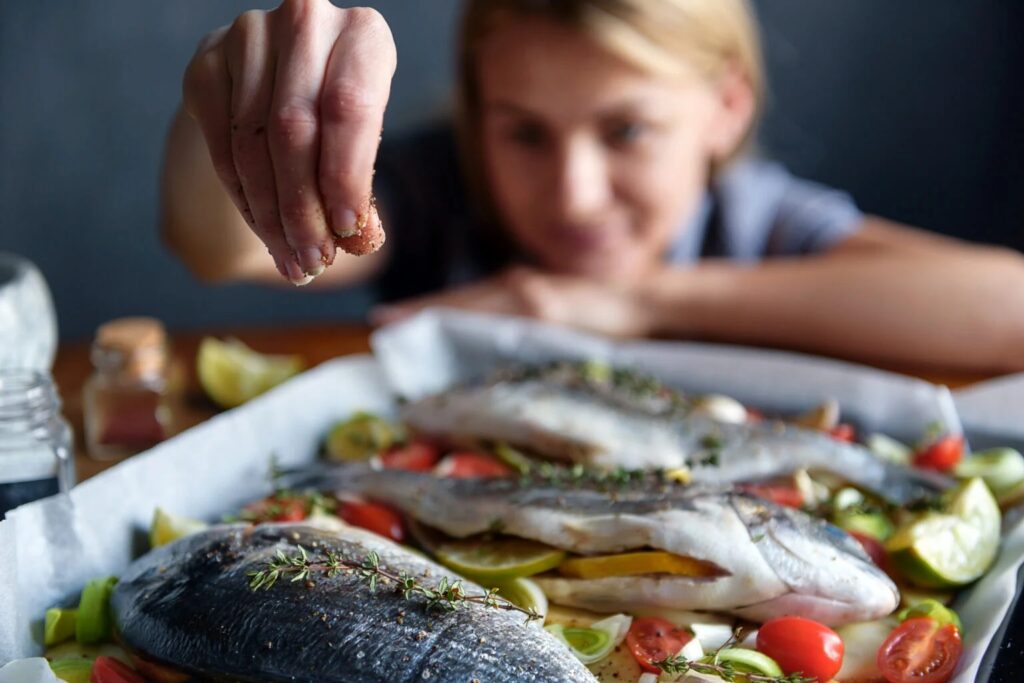
Large predatory fish accumulate more mercury than small ones
Can Pregnant Women and People with High Cholesterol Eat Fish?
Two myths that scare people most often — about pregnancy and cholesterol. Pregnant women can eat fish, and it’s even beneficial, they just need to limit the amount. While a regular person without allergies can eat fish every day, an expectant mother should limit herself to two or three servings.
As for cholesterol, it’s actually the opposite: fatty acids in fish help prevent ischemic heart disease. So fish is more of a friend to your blood vessels than an enemy.
A separate story is fish allergy. Such people exist, and they really should be more careful. But this allergy is not a death sentence: selenium, iodine, and healthy fatty acids can be obtained from other foods or as supplements.
Smoked and Lightly Salted Fish: Who Should Be More Careful
With smoked and salted fish, real restrictions begin — not made up, but actual ones. Smoking and salting don’t change the fish itself, but rather what we consume along with it.
Hot-smoked fish retains proteins and fats, but carcinogens are formed during the smoking process, which are very harmful to the body. Eating such fish every day is not advisable — it’s a dish for rare occasions. Lightly salted fish has a different trap: the beneficial nutrients remain, but there’s a lot of salt.
Here’s who should be especially careful with salted fish:
- People with hypertension
- Those with kidney diseases
- People with heart conditions
Another point is the degree of salting. In lightly salted fish it’s especially important: poorly salted fish can cause helminthiasis, meaning infection with parasites. Therefore, such fish is better eaten rarely and with attention to quality.
Top 5 Healthiest Fish
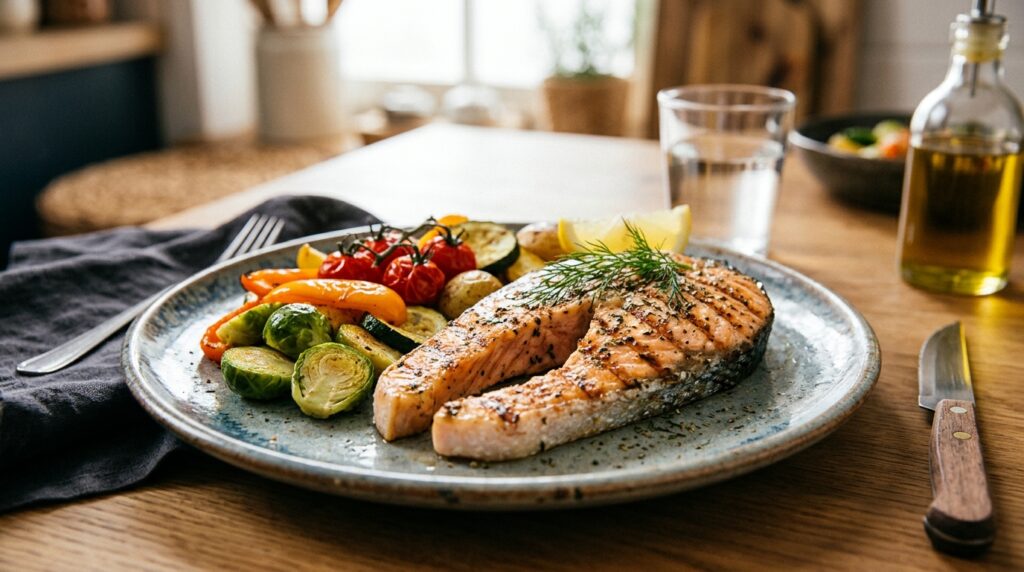
Grilled fish with vegetables — a simple and healthy dinner
If you want specifics, here are five fish that dietitians consider especially beneficial:
- Tuna — almost pure protein, low in fat and calories, rich in vitamin D, zinc, calcium, and selenium.
- Salmon and trout — yes, fatty, but beneficial for the heart and blood vessels, with vitamins A, B, and D, selenium, phosphorus, and folic acid.
- Cod — rich in elements that support immunity, the nervous system, and metabolism.
- Halibut — contains tryptophan, from which the body makes melatonin and serotonin, helping with sleep and mood.
- Flounder — high in calcium, sodium, and iron, beneficial for teeth and bones.
And no complicated cooking is required. The best dinner option is boiled or grilled fish with a vegetable side dish. The meal is light, filling, and suitable for every day, but dietitians recommend diversifying your diet and cooking fish two to three times a week.
The conclusion is simple: fish remains one of the healthiest foods on the table, as long as you don’t turn it into a daily salty-smoked snack and remember to pay attention to quality.