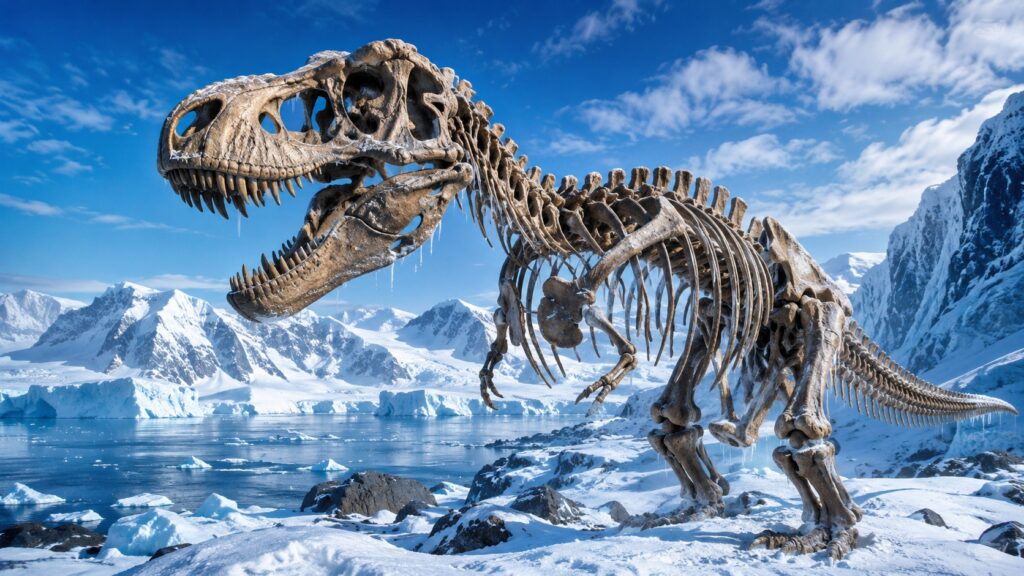
Scientists found evidence that millions of years ago dinosaurs lived in Antarctica
In 1985, scientists found an unusual fossil in Antarctica. It was identified as the remains of a marine reptile, and was then forgotten for 40 years. Recently someone decided to re-examine the old finds, and the result was unexpected: the bone belonged not to a sea creature at all, but to a being that, logically, shouldn’t have lived there. This discovery overturns our understanding of what animals inhabited Antarctica millions of years ago. After all, in ancient times Antarctica was nothing like the continent we know today.
How Dinosaur Bones Were Found in Antarctica
According to Daily Galaxy, in 1985, geologist Mike Thomson was conducting research on James Ross Island, near the Antarctic Peninsula. There he discovered a large bone fragment, which due to harsh field conditions and the abundance of marine fossils in the area was recorded as the remains of an ancient reptile that had lived in the ocean.
The fossil was sent to storage, where it lay without much attention for nearly forty years. The situation changed when paleontologists from London’s Natural History Museum decided to study the specimen anew. It turned out that they were looking at a fragment of a titanosaur vertebra, a representative of a group of enormous herbivorous dinosaurs with long necks.
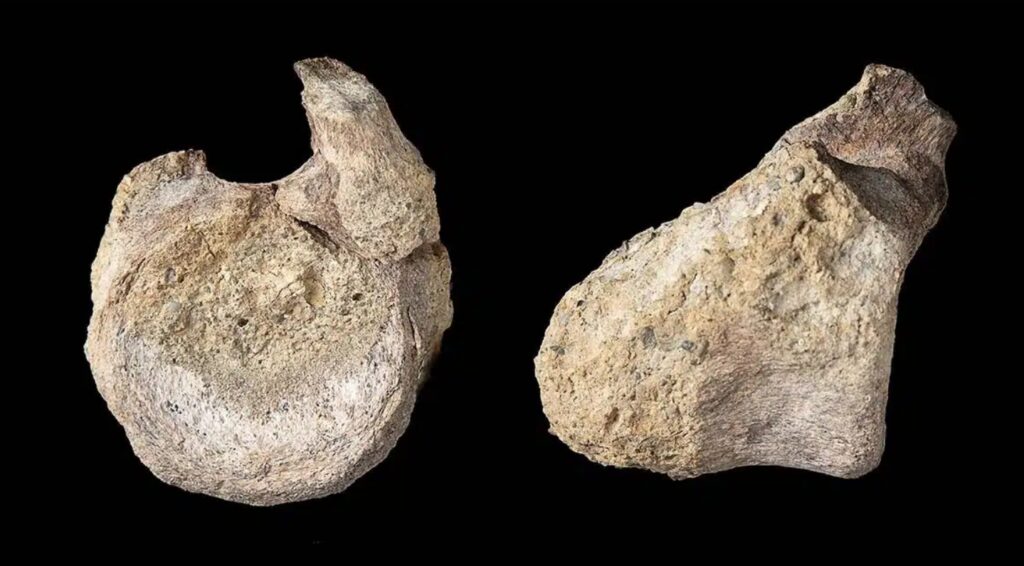
Titanosaur vertebrae found in Antarctica. Image source: dailygalaxy.com
Scientists estimate the length of this animal at six to seven meters. It is not yet clear whether the bone belonged to a juvenile of a giant species or whether it was a small-sized adult. Nevertheless, this is the first confirmed evidence that titanosaurs walked on land that is now covered by a multi-kilometer layer of ice.
Why Dinosaur Bones Were Lying on the Ocean Floor
The most unusual thing about this find is the place where it was resting. The vertebra was extracted from sedimentary rocks that in the distant past were the ocean floor. Surrounding the fossil were numerous ammonite shells and other extinct ocean inhabitants.
It was precisely the proximity to ancient mollusks that helped scientists accurately determine when the dinosaur lived. It turned out that the dinosaur lived at the very beginning of the Campanian stage of the Late Cretaceous period.
The scenario of what happened, according to the researchers, is quite simple and commonly encountered in paleontology. The herbivorous giant died on land, after which the dinosaur’s body was washed into a river. A strong water current carried the remains out to the open sea, where they sank to the bottom and were buried under a thick layer of sand and silt.
What Antarctica Was Like During the Age of Dinosaurs
Antarctica millions of years ago looked nothing like the modern icy desert. In the Late Cretaceous period, it was part of a huge southern supercontinent that connected the territories of present-day South America and New Zealand.
According to a study published in the journal Acta Palaeontologica Polonica, the climate on the continent was much warmer. Ferns and coniferous trees grew there in abundance, as well as plants that outwardly resembled modern palms.
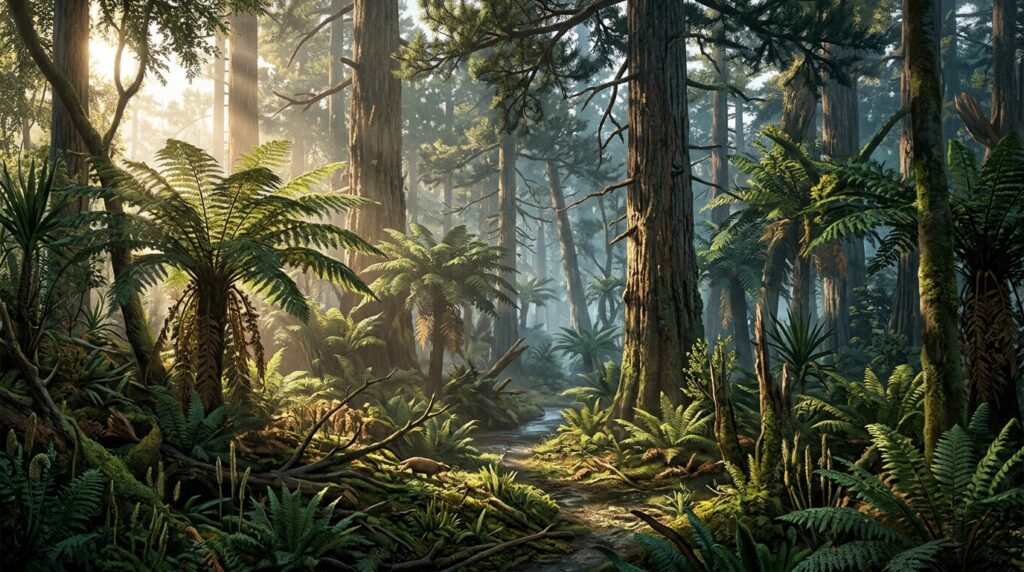
Ancient Antarctica was covered with dense green forests
Despite the warmth, living conditions in Antarctica remained harsh due to its extreme location. Dinosaurs had to survive long polar nights in winter and continuous daylight in summer. Nevertheless, paleontologists have already found traces of various prehistoric animals on the continent:
- Morrosaurus — small bipedal herbivores;
- Antarctopelta — armored quadrupedal ankylosaurs;
- Imperobator — large bipedal predators;
- Vegavis — ancient birds that lived alongside dinosaurs.
Antarctica’s Role as a Green Bridge Between Continents
Fossils in Antarctica are extremely rare and often severely damaged due to glacier movement. Scientists are confident that the species found to date are only a small fraction of the animals that lived there millions of years ago.
The discovery of the titanosaur vertebra provides an important clue about how giant animals dispersed across the planet. Remains of similar sauropods had previously been found in South America and New Zealand, but their presence on the icy continent was confirmed for the first time.
Researchers suggest that the Antarctic Peninsula served as a kind of land bridge. Along this warm green corridor, giant herbivores could freely migrate between landmasses that today are separated by thousands of kilometers of cold ocean waters.