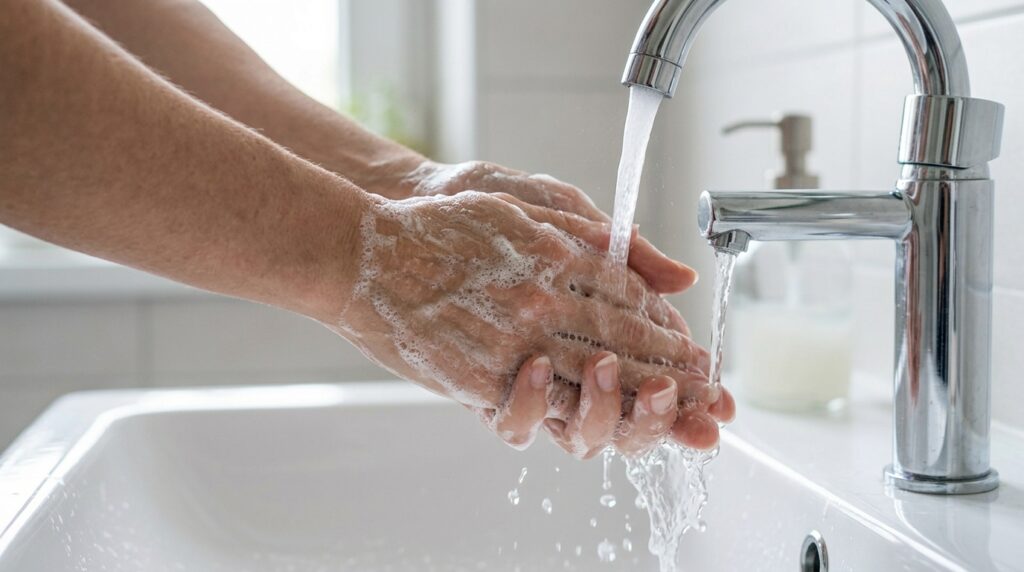
There is no difference in effectiveness between bar and liquid soap, but there are some nuances
In stores, we choose liquid soap because it’s convenient and seems more hygienic. Many people consider a bar of soap on a dish outdated and even dirty. But experts say there is no difference in effectiveness. Both kill germs equally well, as long as you lather your hands for at least 20 seconds and rub them together. So why do we still pay more for dispensers when a bar for 30 rubles does the same thing?
How Soap Washes Away Dirt
The debate about the difference between bar and liquid soap has been going on for a long time. From a scientific standpoint, there is no absolute winner. Soap doesn’t kill bacteria directly — it works as a surfactant.
When lathering, the foam forms special structures called micelles, which trap particles of fat, dirt, and microbes, allowing water to easily wash them off the skin. In this process, the form of the product doesn’t matter.
The Food and Drug Administration (FDA) also emphasizes that popular antibacterial soap is not necessary for home use. Moreover, many antibacterial additives have been banned because their advantage over regular soap and safety for daily use have not been proven.
Why It’s Better to Buy Bar Soap Instead of Liquid
Regular bar soap remains an excellent choice for the bathroom. Its main advantage is cost-effectiveness and simplicity. A solid bar lasts noticeably longer than liquids, takes up little space on the sink, and doesn’t require bulky plastic pumps.
If each family member has their own bar or the soap is stored on a proper slatted soap dish, it’s a completely safe option. Additionally, bar soap produces less waste. Environmental studies show that the production and disposal of plastic containers from liquid products leaves a much larger carbon footprint compared to the lightweight packaging of bar soap.
How to Properly Store Soap
Despite all its advantages, bar soap has its vulnerabilities. Problems begin when the bar constantly sits in a puddle of water and doesn’t have time to fully dry. In such a moist environment, microorganisms can survive and linger right on the surface.
Research conducted in dental clinics showed that bacteria do indeed grow on actively used, wet bars of soap. This is precisely why bar soap is absolutely unsuitable for public restrooms, hospitals, and offices with heavy foot traffic. But at home, where the bar has time to dry between uses, the risk of infection transfer is minimal.
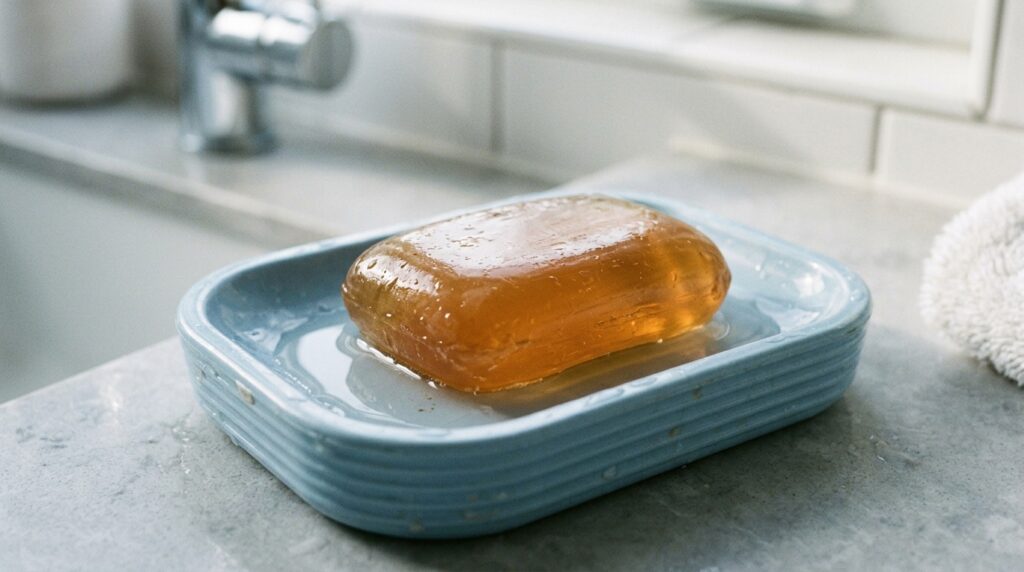
If soap doesn’t have time to dry, bacteria can multiply on its surface
When It’s Better to Buy Liquid Soap
The main strength of liquid soap lies in its dispenser. A person doesn’t need to pick up a shared slippery bar — a single quick press is enough. Because of this psychological comfort, for cafes, shopping centers, and guest bathrooms, liquid soap is the hygiene standard.
At home, this format can also be indispensable, especially in the kitchen. While cooking, hands often get dirty from raw meat, fish, eggs, or soil from fresh vegetables. Touching bar soap with such hands is simply inconvenient and unhygienic. It’s much more practical to use a dispenser with liquid soap, which you can easily press with the back of your hand or your elbow.
Main Disadvantages of Liquid Soap
The liquid format seems flawless, but it also has serious drawbacks. Such soap runs out faster and regularly requires purchasing new plastic bottles. But the main danger is hidden in refillable bulk dispensers.
If the container in a public restroom isn’t washed but simply topped off with a new portion, an ideal environment for bacteria forms inside. Studies have found that every fourth such dispenser is contaminated. After using a dirty reservoir, the number of bacteria on the skin increases tenfold. Therefore, only dispensers that use sealed single-use cartridges are considered safe.
By the way, it’s worth distinguishing regular liquid soap from the popular foaming variety. Experiments show that foaming soap is less effective at reducing bacteria because it contains too much air and significantly fewer cleansing agents per dose.
Which Soap to Buy for Hands, Face, and Body
The format of the cleansing product largely depends on which specific area you plan to wash.
- For washing hands at home, feel free to use any convenient format. If your skin is normal, bar soap on a dry soap dish will do the job perfectly;
- For kitchen hygiene, place liquid soap with a dispenser — it will be much easier to wash your hands of grease and raw food juices;
- For the shower, skip harsh toilet soap in favor of a gentle gel;
- For washing your face, regular soap should not be used. Delicate skin requires gentle foams or gels; otherwise, the risk of irritation and breakouts increases significantly.
Now we understand that the form of a cleansing product does not affect its ability to rid us of bacteria. The main secret to hygiene remains thorough lathering and rubbing for at least 20 seconds.
For optimal results, try different formats: keep practical liquid soap by the kitchen sink and an economical bar in the bathroom. The main thing is to avoid marketing traps with aggressive antibacterial additives and choose a formula that won’t dry out your skin.