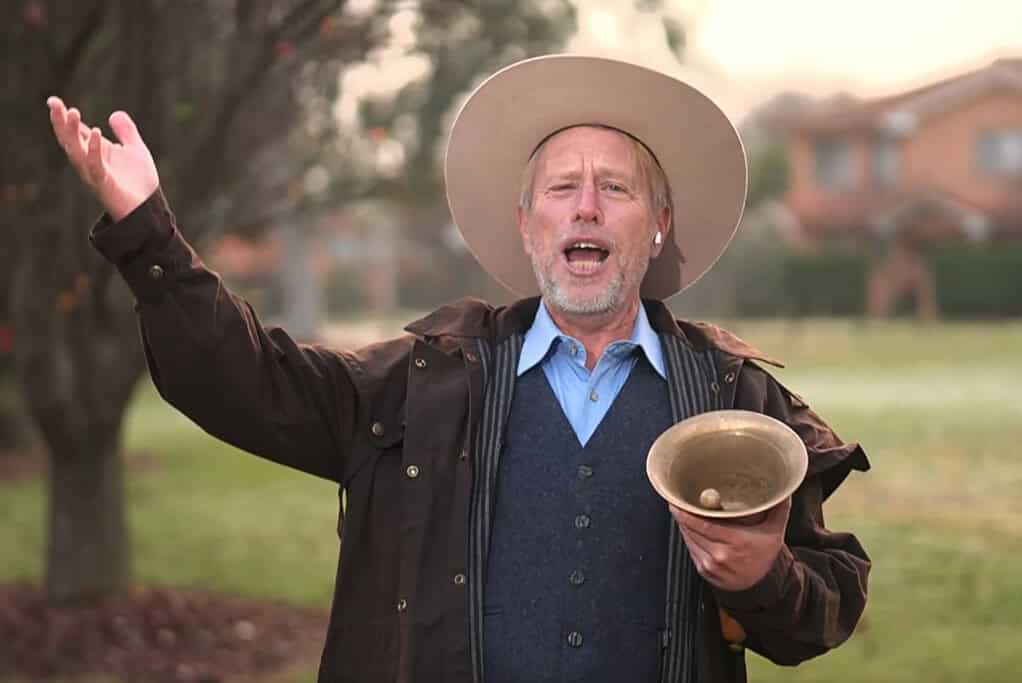
Australian set the world record for voice loudness — screamed as loud as a taking-off airplane
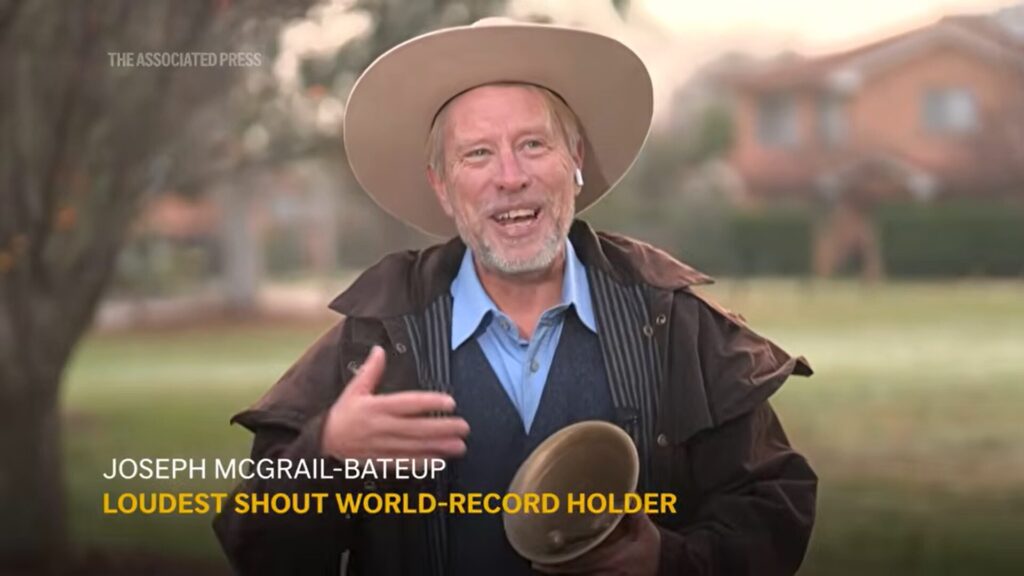
58-year-old Australian Joseph McGreil-Baitup shouted at 122.4 decibels — the Guinness Book of World Records recognized him as the loudest person in the world. That’s louder than a chainsaw and roughly on par with a taking-off jet aircraft — already in the range of dangerously loud sounds. The air conditioning cleaner and honorary town crier made his attempt in a radio studio in Canberra. A professional acoustic engineer measured the shout at 122.4 decibels, which was enough to beat the previous record. Curiously, a man whose work is connected to the quiet hum of equipment became famous precisely for his loudness. The most interesting part here is how a seemingly tiny number actually represents a huge difference in sound energy.
A 122.4-Decibel Shout Is Louder Than a Chainsaw
To understand the scale, it helps to compare with familiar sounds. A normal conversation is about 60 decibels, while busy street traffic reaches 80–90. The Australian’s shout turned out to be louder than a chainsaw and close to the roar of an ambulance siren at close range, falling roughly in the same sound zone as a taking-off airplane.
The previous record belonged to Annalisa Flanagan, a school teacher from Northern Ireland, who in 1994 shouted the word “quiet” at 121.7 decibels. The new result surpassed it by just 0.7 decibels — the difference seems negligible, but that impression is deceptive.
The thing is that decibels grow not linearly but logarithmically — a small number on the scale means a noticeable jump in actual sound energy. By calculations, McGreil-Baitup’s shout carried approximately 17 percent more sound energy than the 1994 record. So “just” 0.7 decibels is not a small matter at all.
Why the Loudness Record-Holder Chose the Word “Now”
The sound seems louder than many machines, but achieving it didn’t happen on the first try. The Australian tried several words before settling on the short and explosive “now.” This word is easy to push out with one sharp exhale — a short, crisp syllable that’s convenient to “fire off” at maximum force.
The record attempt took seven tries, and according to the record-holder himself, it’s impossible to properly prepare for something like this. He said that you need to save your strength for the decisive day, and after seven shouts his voice “gave out” for a couple of days, becoming hoarse and raspy.
Sound is born when air from the lungs causes the vocal cords to vibrate
Here it’s worth explaining how voice is actually produced. Sound begins when air from the lungs passes through the larynx and causes the vocal folds to vibrate, while the mouth, tongue, and throat then shape that vibration into speech. If you push too hard, the same tissue that allows you to speak, sing, and laugh can become inflamed, fatigued, and irritated — which is why hoarseness after such a shout is entirely expected.
Why 122 Decibels Are Dangerous for Humans
At the 122.4-decibel mark, sound stops being merely annoying and becomes potentially harmful. But there’s an important caveat: what matters is not just loudness but also duration. One short shout is nothing like hours next to noisy factory equipment.
That’s exactly why the comparison with an airplane takeoff helps you feel the scale but doesn’t make the shout as dangerous as constant industrial noise. Occupational safety agencies typically warn that prolonged exposure to sound above 85 decibels can damage hearing over time. It’s no surprise that after concerts and other loud events, many people experience ringing in their ears. So this is a good reminder to wear earplugs at summer music festivals.
By the way, humans aren’t the only living beings capable of producing such sounds: the loudest animals on the planet also sometimes exceed 120 decibels.
Loudness as the Legacy of the Town Crier Profession
Joseph’s path to the record turned out to be connected to an unusual position. In 2017, he became the official town crier of Canberra — an honorary, partially paid role established by local authorities. Under the name Lord Joseph, he makes announcements at public events, school fairs, and car shows.
This profession is older than microphones, loudspeakers, and phone notifications. Town criers needed loudness, clarity, and theatrical delivery: they had to attract attention in a noisy, crowded place and get the announcement across to those standing far away. Today the role is mostly ceremonial, but in his case it became genuine training in public loudness.
In 2024, he won the Australian Guild of Town Criers competition with a cry of “Oyez, Oyez, Oyez” at 98 decibels. The record-holder himself was pleased that the Guinness Book of World Records kept Annalisa Flanagan’s place in the record book: she remains the loudest woman in the world, while he is the loudest man.
Why the Australian Loudness Record-Holder Is Ready to Give Up His Title
This isn’t the Australian’s first record. In 2019, he set a Guinness record by shooting 10 arrows in 60.03 seconds — though nine months later he was surpassed by a seven-year-old boy, by more than 11 seconds.
He takes his achievements without fanaticism and isn’t rushing to defend his title. In his words, if someone beats it, that would be great, because records exist to be broken. This attitude perfectly reflects the spirit of such records — half athletic, half simply human and fun.