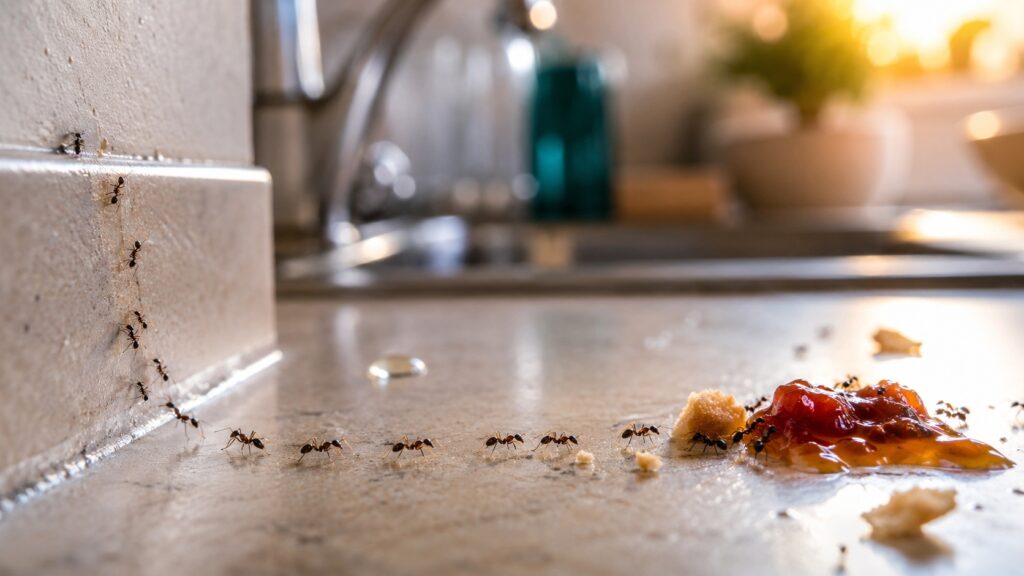
Ants don’t sense sweets as a crowd — they always have scouts
Have you noticed that ants in the kitchen always seem to appear on command, right when you’ve relaxed after cleaning? They’re not just looking for sugar, as we tend to think, and they certainly aren’t reading your thoughts through the walls. Their routes are built according to rules that few people know, and what actually lures them into your home may surprise you. Once you understand this hidden logic, you’ll stop mindlessly poisoning insects and will be able to solve the problem once and for all — without unnecessary chemicals or stress.
How Ants Find Sugar and Other Food in the Kitchen
The first to enter your home are solitary scout ants that randomly explore the space. They prefer to move along distinct lines like walls, pipes, baseboards, and wires. If a scout finds food, it doesn’t eat it alone but returns to the nest.
On the way back, the insect leaves an invisible pheromone trail — a chemical pathway that serves as a guide for the rest. Interestingly, dry sugar by itself has a fairly weak smell and attracts them less often. Scouts are much more interested in sticky residues: a drop of jam near a jar, spilled sweet tea, dried juice, or unwashed containers in the trash bin. This was explained by researchers from the University of California.
Why There Are So Many Ants in Your Apartment
It often happens that you spotted one ant in the evening, and by morning a whole army is marching across the countertop. This occurs because insects have a positive feedback system at work.
One worker found a puddle of syrup and left a trail. Ten more came following that scent, and each of them also released pheromones on the way back, amplifying the signal. Soon the trail becomes a perfect navigator for the colony.
Squishing insects collecting crumbs on the table is practically useless. Destroying worker ants doesn’t harm the colony, since only a small fraction of them are outside the nest at any time. The main life force and the queen are hidden deep inside the shelter.
What Attracts Ants to Your Apartment
Insects come into human homes not just for sweets. Their food preferences depend on the specific species.
Ants eagerly go after protein and fats — they are attracted to meat, cheese, pet food, peanut butter, and ordinary garbage. That’s why it’s important to tightly close containers with any food.
Besides food, insects vitally need water. They often gather under the sink, near the dishwasher, washing machine, or damp flower pots. Even a tiny pipe leak can become a reason for regular visits.
Pests also penetrate through micro-cracks near windows, ventilation, and floor joints. If you live on the ground floor or in a private house, they can come directly from outside — from mulch, old wood, or branches of bushes touching the walls.
How to Tell If Ants Have Appeared in Your Home
One ant is a reason for alertness but not yet a catastrophe. However, if insects have lined up in a chain from the baseboard to the cabinet or sink, it means a working route has already been established.
Pay attention to the direction of their movement. If the line goes to the bathroom, the insects are most likely looking for a moisture source, not food. The appearance of pests from electrical outlets or from under baseboards indicates that their nest or part of their route is hidden in wall cavities.
A special case is large black ants near which coarse wood shavings appear. These are carpenter ants. They don’t eat wood but chew tunnels in it for nests, which can seriously damage wooden structures of the house.
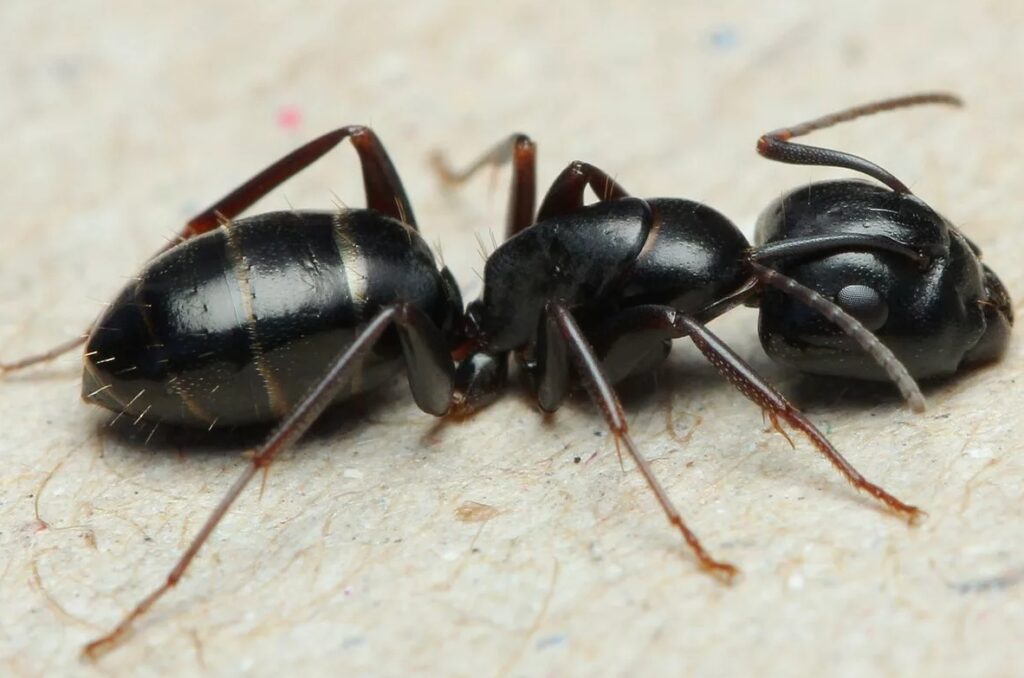
Carpenter ant. Image source: 4ants.ru
How to Get Rid of Ants at Home: Step-by-Step Instructions
To get rid of ants, you need to act systematically and not immediately reach for aerosols.
- Track the route. Spend 10 minutes figuring out where the pests come from and where they go. This will point to the entry point or the approximate location of the nest;
- Hide food sources. Transfer cereals, sweets, and pet food into airtight plastic or glass containers. Thoroughly wash sticky jars and wipe the floor under the refrigerator;
- Eliminate moisture. Wipe the sink dry, check the traps for leaks, and don’t leave wet sponges on the countertop;
- Wash away the pheromone trail. Wipe the ant trail with soapy water or a mild vinegar solution to disrupt their navigation;
- Seal the entrances. Block gaps near pipes, baseboards, and windows using silicone sealant or fine mesh.
Poisonous Baits for Ants
If cleaning and sealing gaps didn’t help, it’s time to use chemicals. Baits work much more effectively than sprays because their action is delayed.
An ant eats the poisoned bait and carries part of the poison back to the nest to feed the larvae and the queen. This way, the poison destroys the colony from within. If the poison acted instantly, the worker would simply die halfway there.
Place baits right next to the active trail, but in places inaccessible to children and pets. And remember that this is not a fast process because destroying a nest can take from several weeks to a couple of months.
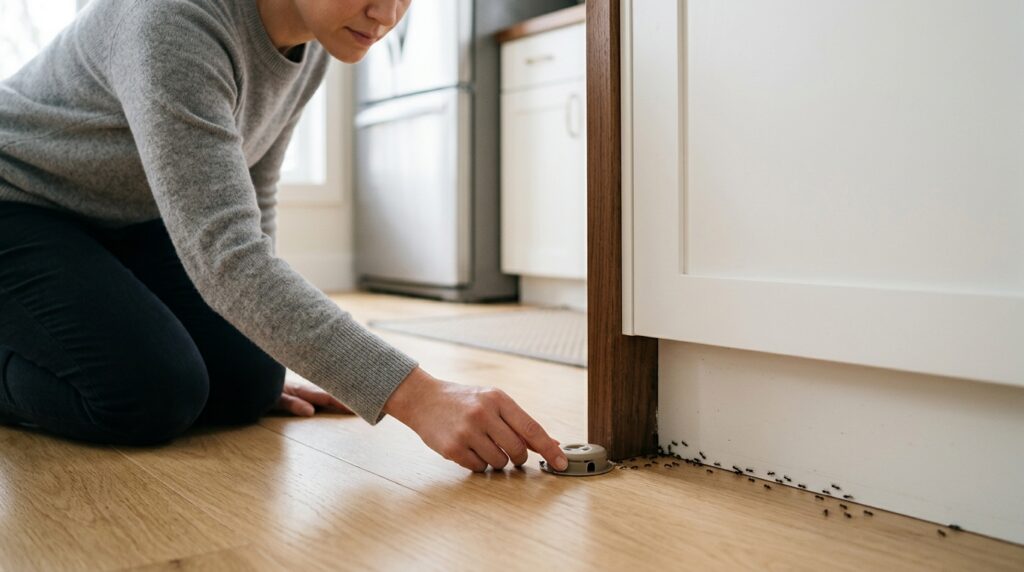
Poisonous bait should be placed directly on the insects’ path
Mistakes When Fighting Ants
The main mistake is flooding the kitchen with broad-spectrum aerosols. The spray will only kill those foragers that got hit by the stream, but the colony will quickly send replacements.
Don’t mix different control methods. If you’ve set up a bait, don’t spray repellents nearby — essential oils or soapy water. Strong smells will simply make the pests bypass the poison.
Also, don’t rely entirely on folk remedies. Scattered cinnamon or chalk may temporarily disrupt a route, but if there’s a nest in the wall and accessible food on the table, the insects will definitely find a way around.
What to Do If Yellow Ants Appear in Your Home
If you’ve noticed very small yellowish-reddish insects at home that appear year-round and even get into household appliances, there’s a high probability these are pharaoh ants.
They thrive in heated spaces and build nests in hidden cavities. Fighting pharaoh ants with aerosols is dangerous: sensing a threat, the colony splits into parts, and queens leave to establish new nests in neighboring rooms. Only special food baits or professional pest control are effective against them.
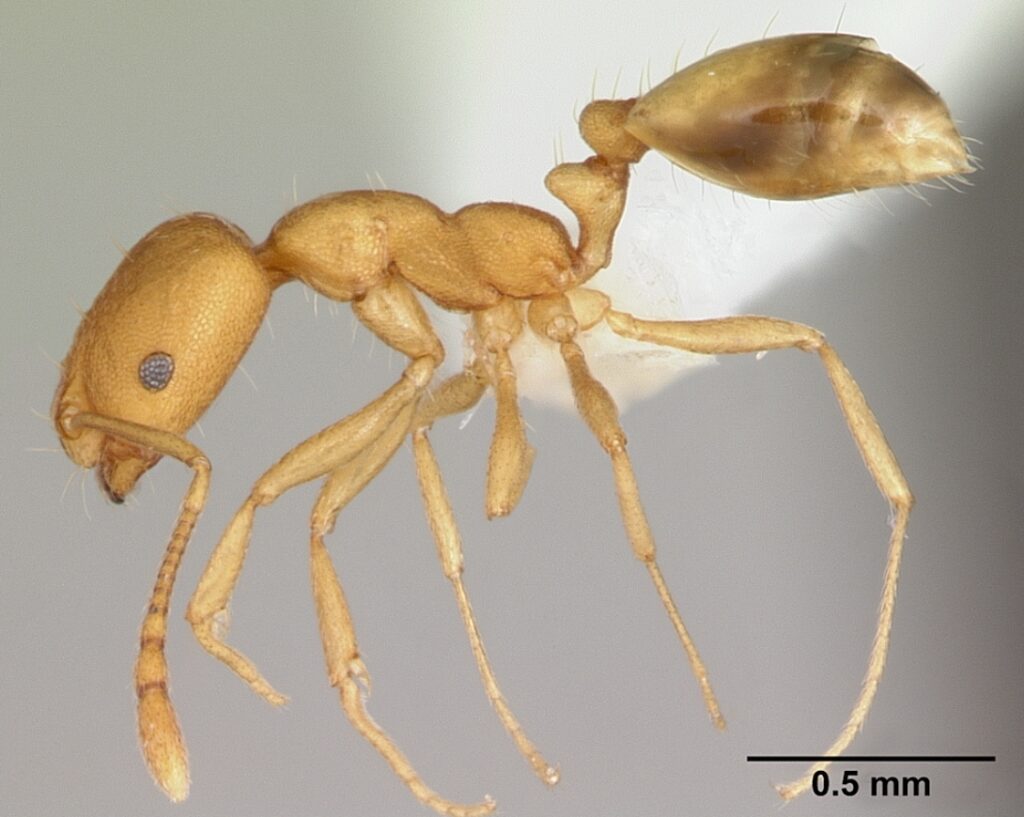
Pharaoh ant. Image source: wikimedia.org
How to Protect Your Home from Ants
If the problem has just started, try to nip it in the bud with these simple steps:
- In the evening, remove all food from tables, wipe sticky spots, and take out the trash;
- Wipe sinks dry and check whether pipes are leaking;
- Wash away any ant trails you’ve noticed with a vinegar solution or soapy water;
- In the morning, find the gap through which scouts entered and seal it with sealant;
- If insects continue following the route, place a food bait nearby, removing all other food sources.
In summary, fighting ants is not a war against individual bugs but a systematic destruction of their routes. Once you cut off the colony’s access to food and water and then offer the right bait with slow-acting poison, your home will once again become exclusively your territory.