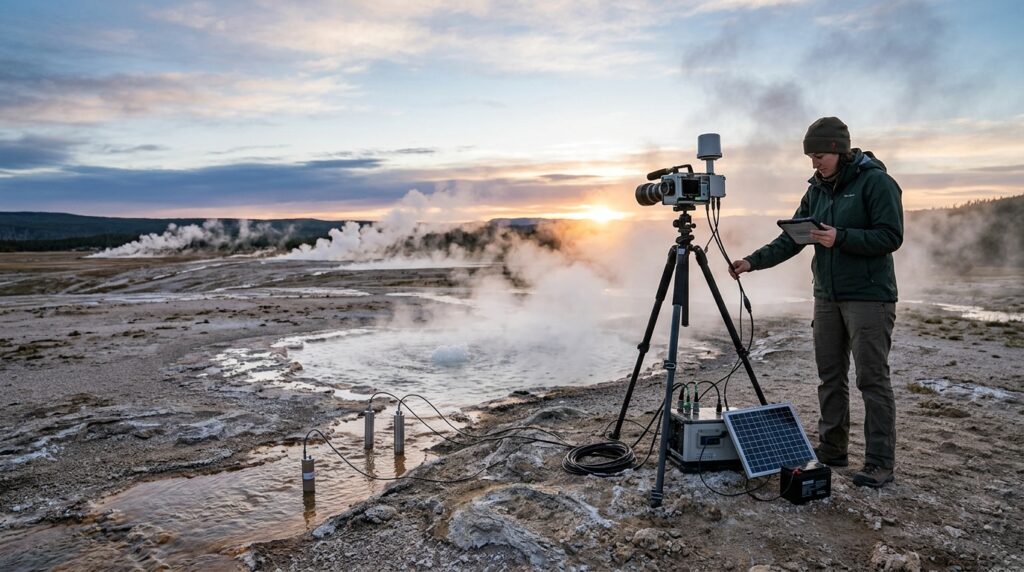
Sensors detected a seismic and infrasound signal at dawn
In Yellowstone National Park, within the territory of the Yellowstone Caldera, a boiling pit suddenly formed roughly the size of a small swimming pool — and it appeared on the very patch of ground where geologists had been walking just two days earlier. No one saw it happen, but the event turned out to be significant: it occurred closer to scientific sensors than any similar burst of activity in the entire history of observations.
How the Boiling Hole Appeared in Biscuit Basin
The story began with a small hydrothermal explosion. The explosion occurred on June 13, 2026, in the Biscuit Basin area, and the new boiling pit appeared sometime between June 14 and 16. The strangest part is that no one witnessed the moment it formed — the ground simply turned into a hissing gray pit filled with boiling water.
The spot where researchers had previously stood was replaced by a wet-mud-colored basin filled with bubbling boiling water. According to the United States Geological Survey (USGS), this is already the second such event in Biscuit Basin in two years — the previous explosion occurred in July 2024.
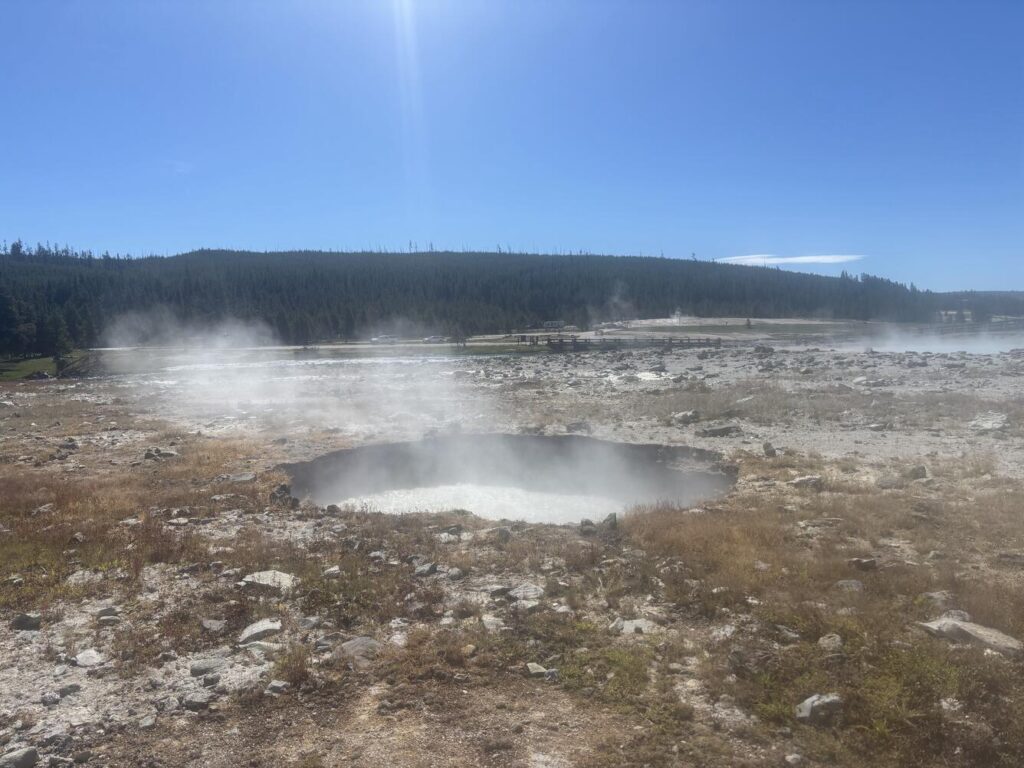
The new pool that formed in the ground where scientists had walked two days earlier.
Back in 2024, the explosion was more powerful: rocks and scalding water were hurled into the air, seriously damaging the wooden boardwalk and visitor area. Fortunately, no one was injured in either of these incidents.
What Seismic Sensors and Infrasound Showed at Yellowstone
The most interesting part began early in the morning. At 5:09 AM on June 13, equipment detected anomalous activity — seismic energy and a low-frequency acoustic signal known as infrasound (sound too low for humans to hear). The signal came from the direction of Black Diamond Pool.
When daylight came, scientists noticed something else: the Firehole River downstream had turned a light gray, milky color. Park geologists immediately suspected that Black Diamond Pool had exploded again. But sensors showed only a small thermal spike at that location — meaning the actual explosion occurred somewhere nearby, not there.
The key clue was found in observatory camera footage. At 5:09:50 AM, the frame shows a column of dark steam rising from an area north of Black Diamond Pool — at exactly the same time as the seismic and infrasound anomalies. This made it clear exactly where the underground water had broken through.
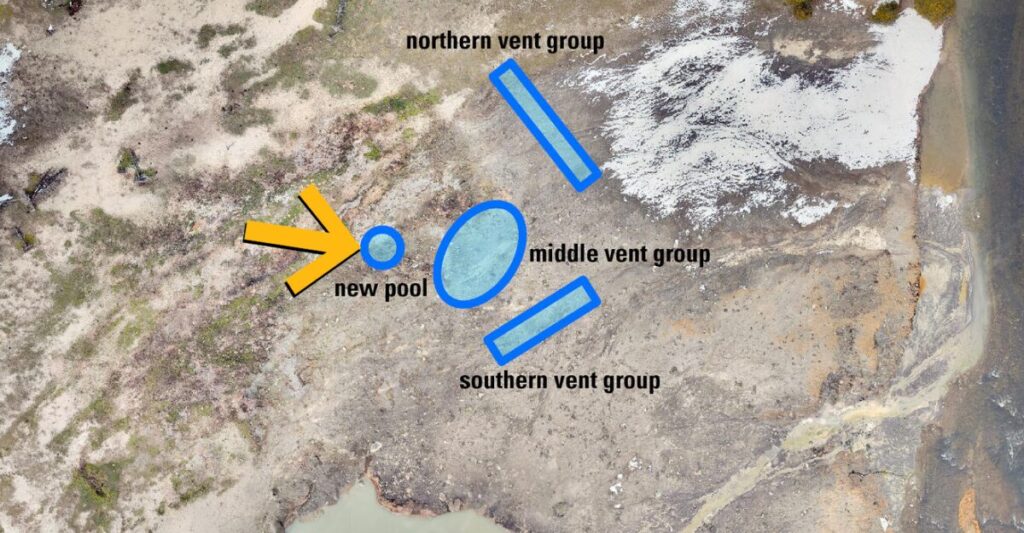
A strange boiling hole suddenly appeared in Yellowstone: scientists are shocked
Where the New Cracks and Hot Water in Yellowstone Came From
The next day, investigators found evidence that enormous volumes of boiling water had surged into the river from three new openings. According to the USGS team, these openings are pathways through which water at boiling point suddenly found an exit to the surface and instantly flashed into steam. This is precisely what drove the hydrothermal explosion.
By the time scientists reached the site, the water had cooled to approximately 85 °C. But they clearly observed a crack 18.5 meters long and up to 1.5 meters wide, from which near-boiling water was still flowing. Rocks ejected by the explosion lay scattered around, but they had traveled only a few meters — meaning the blast was weaker than the one in 2024.
Incidentally, such “living” processes are not uncommon for Yellowstone. If you’re interested in the geology of this place, read about how the Yellowstone volcano erupted and about the supervolcano’s lid that keeps it from erupting.
Why the Boiling Pit in Yellowstone Appeared Without a New Explosion
The pit itself wasn’t there at first. Scientists only found the boiling gray pool measuring 6.5 by 5.3 meters on June 16, when they returned to the site, and they were shocked. The pit emitted a dull thumping sound — created by steam bubbles that formed and immediately collapsed.
Why wasn’t it caught on camera like the previous explosion? The USGS team believes that the pit formed through ground collapse rather than an explosion — as indicated by the absence of ejected debris around it. That’s why cameras didn’t capture the moment it appeared. And footage from June 18 showed that water jets periodically shot up to heights of 6–9 meters — meaning the zone is still active.
How Scientists Will Predict Hydrothermal Explosions
This is the closest hydrothermal explosion to a monitoring system in the entire history of observations. The team now has extensive data recorded both before and after the event. This means scientists can thoroughly analyze what exactly happened underground and determine whether there were any warning signs at all.
Similar new features appear in Yellowstone regularly: just last summer, another milky-blue pool formed in the Porcelain Basin area. It’s remarkable that even a well-studied national park remains unpredictable, and hydrothermal activity here is truly dynamic and dangerous.