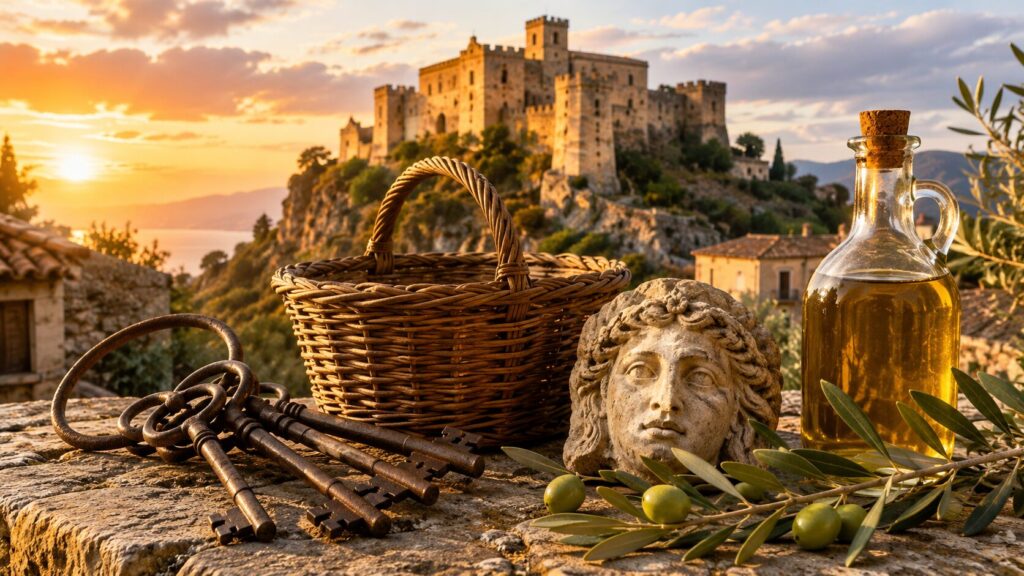
5 rare professions in Italy.
I know some of our readers love Italy. It’s usually imagined as a country of great museums, fashion, and famous cuisine. But in the small towns of Calabria and Basilicata, there is another Italy, where ancient professions haven’t disappeared and remain part of everyday life. Here you can meet a castle keeper, basket and rope weavers, a sculptor, and an olive oil pressing master.
Why Rare Professions Have Survived in Southern Italy
Calabria is located in the south of the Apennine Peninsula — in the part commonly referred to as the toe of the Italian “boot.” The region’s small towns and villages live at a much slower pace than Rome or Milan, and local families continue to practice crafts taught to them by their parents and grandparents.
These crafts are preserved not just for the sake of making useful things. For the locals, it’s also a way to maintain connections between generations, remember the history of their area, and gather around shared work. As long as the knowledge is passed on, the craft remains alive rather than turning into a museum exhibit.
Some artisans hold workshops for travelers. Guests can try milking a goat, making cheese, weaving a basket, or carving stone. Here, skills are passed on through practice: first a person watches the master, then repeats the movements with their own hands.
Keeper of an Ancient Castle in Calabria
Olga looks after the Fiuzzi Castle, nestled among the hills near the town of Praia a Mare. When you hear “castle keeper,” it’s easy to imagine a silent guard with an enormous set of keys, but her job is organized differently. The keeper tells the castle’s story and explains why this place matters to the people of the region.
As long as a castle has a person who knows its past, the old walls don’t turn into a silent backdrop. The history continues to live through stories, memories, and the keeper’s personal connection to the place.
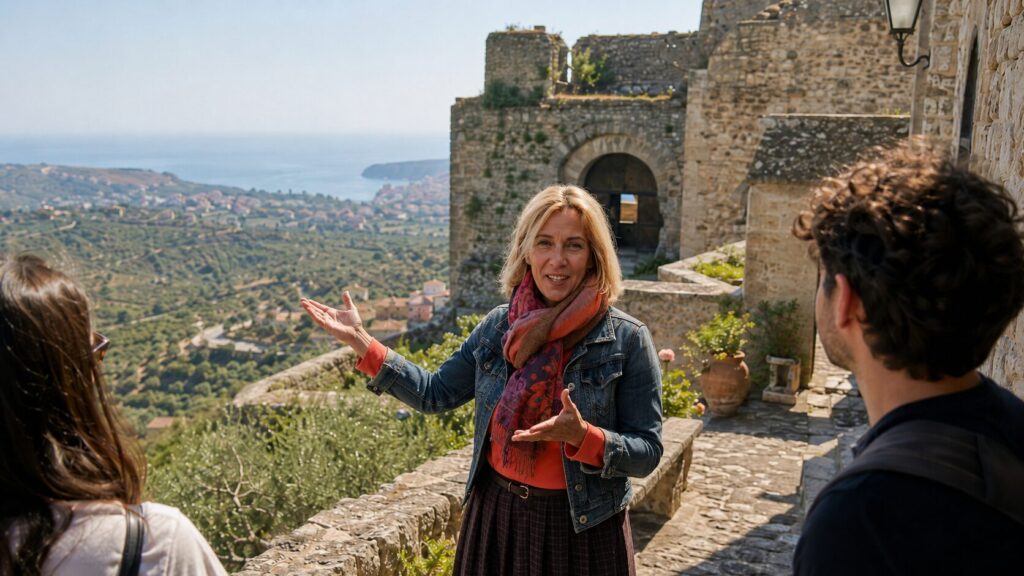
Keeper Olga welcomes visitors at an ancient Italian castle.
A Basket Weaver Who Has Worked by Hand Since Age 12
In the town of Verbicaro lives Antonio, who has been weaving baskets by hand since he was 12. He holds workshops for travelers, including on the seashore. Participants quickly realize how much patience and precise movements each piece requires.
Today, hand basket weaving still demands concentration and countless repetitive motions. Antonio hopes that his creative and contemplative craft won’t disappear along with the current generation of artisans.
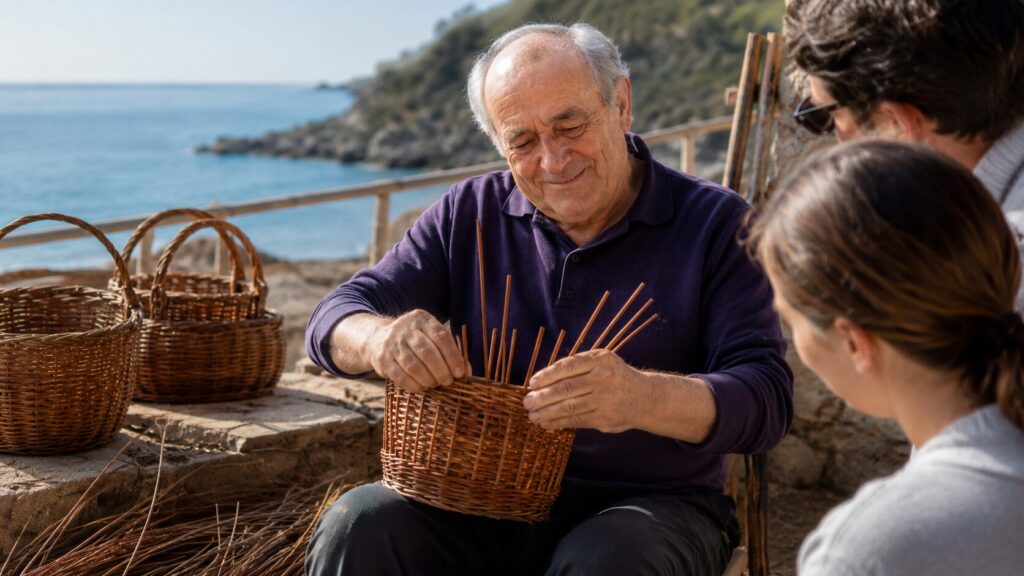
Basket weaver Antonio at his favorite craft.
A Sculptor Who Created a Park of 2,000 Stone Figures
In the town of Maierà, sculptor Franco works. In the park he created, there are about 2,000 stone sculptures dedicated to art, spirituality, and human emotions. Among his most well-known works is a series depicting the Stations of the Cross.
Franco’s work continues a long Italian tradition. Stone and bronze works outlast their creators by thousands of years. Franco himself allows travelers not only to view the finished works but also to try creating their own. Stone doesn’t forgive haste: every strike of a tool leaves a mark that can no longer be undone with a button.
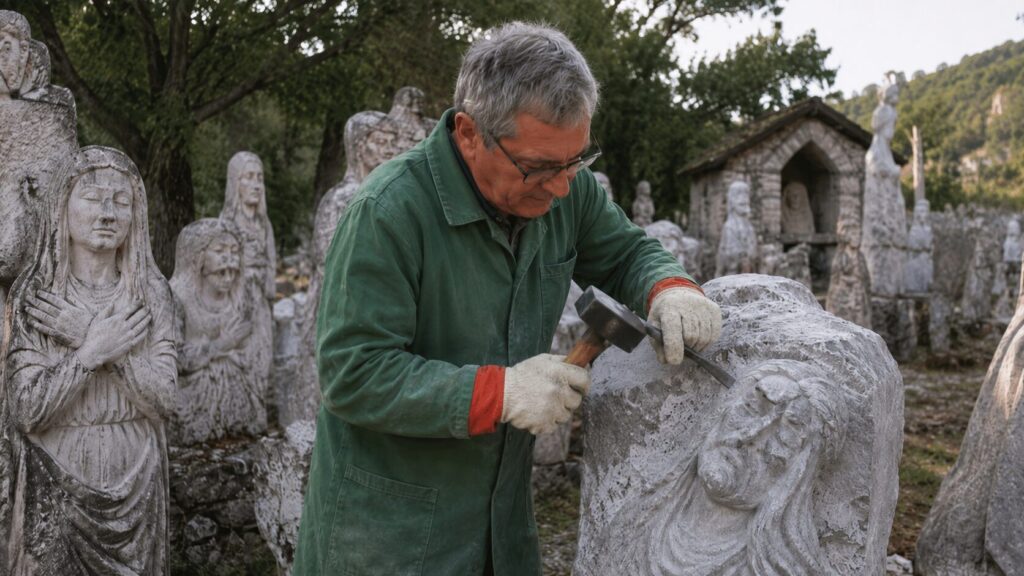
Sculptor Franco among his sculptures.
Artisans Who Weave Ropes from Wild Grass
Monia, Ida, and Carmela from the town of Lauria in Basilicata practice libbani — the traditional weaving of ropes from wild Mediterranean grass. The plant material is processed, twisted, and manually joined into long, sturdy cords.
Libbani ropes are made from grass that grows in the surrounding area. That’s why the artisan needs not only to know how to weave but also which plant to choose, when to harvest it, and how to prepare it.
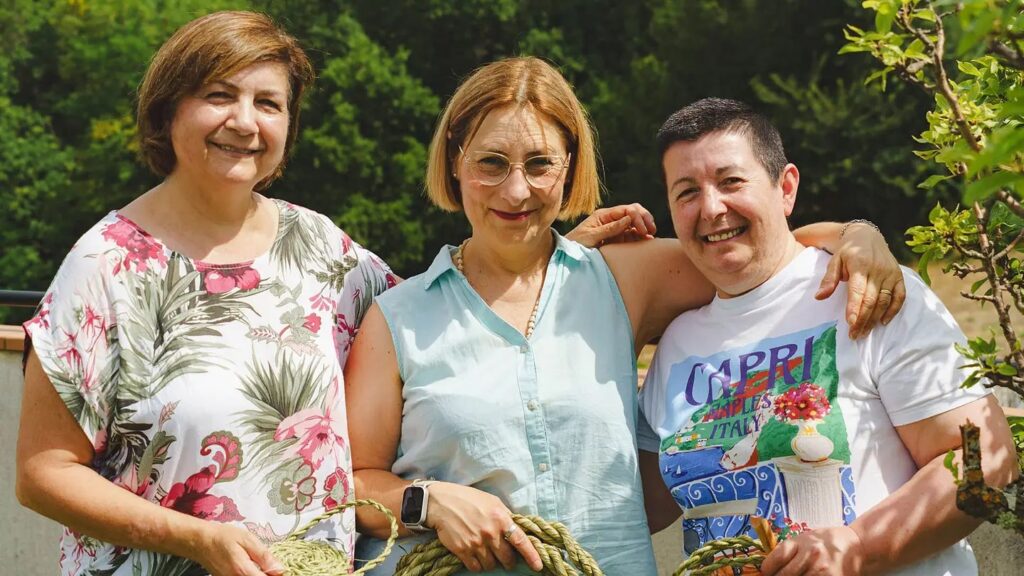
Libbani artisans Monia, Ida, and Carmela.
While weaving, you can chat, exchange news, and keep an eye on the movement of your hands at the same time. Monia, Ida, and Carmela invite guests to join in so that a person takes away not just a finished rope but also an understanding of how it was made.
Master of a Family Olive Oil Mill in Calabria
In Belvedere Marittimo, Salvatore runs the Frantoio Carrozzino olive oil mill together with his wife and brothers. He demonstrates ancient traditional pressing techniques and the entire production process: from harvesting in the olive groves to grinding and tasting the finished oil.
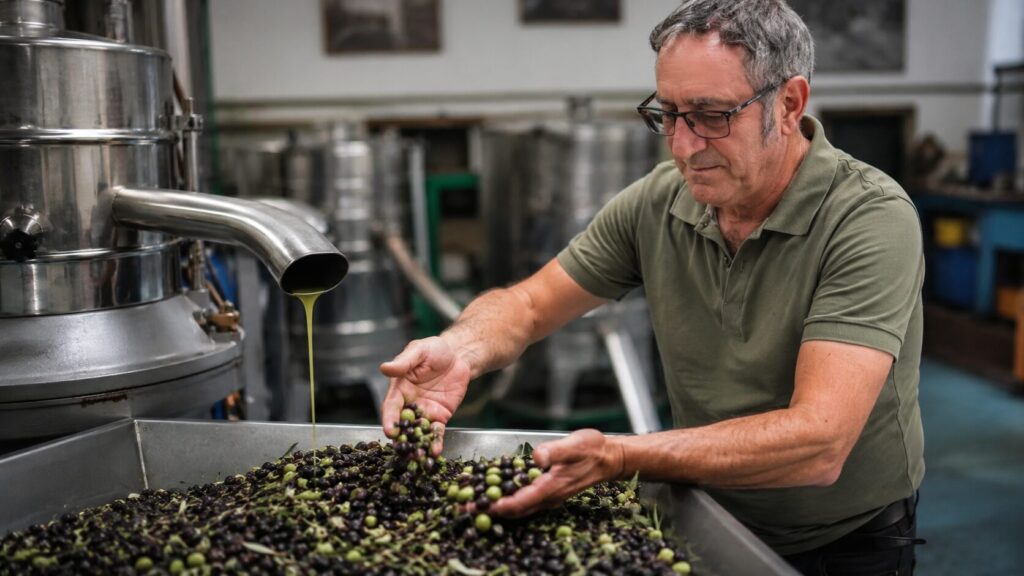
Family olive oil mill master Salvatore.
Here, oil is made by the whole family, combining work on the land, operating equipment, and knowledge passed down from elders. Extra virgin cold-pressed oil is especially valued, and its beneficial properties continue to be studied by scientists. Along with the technique, methods for evaluating the aroma, bitterness, and flavor of the finished product are passed from generation to generation.