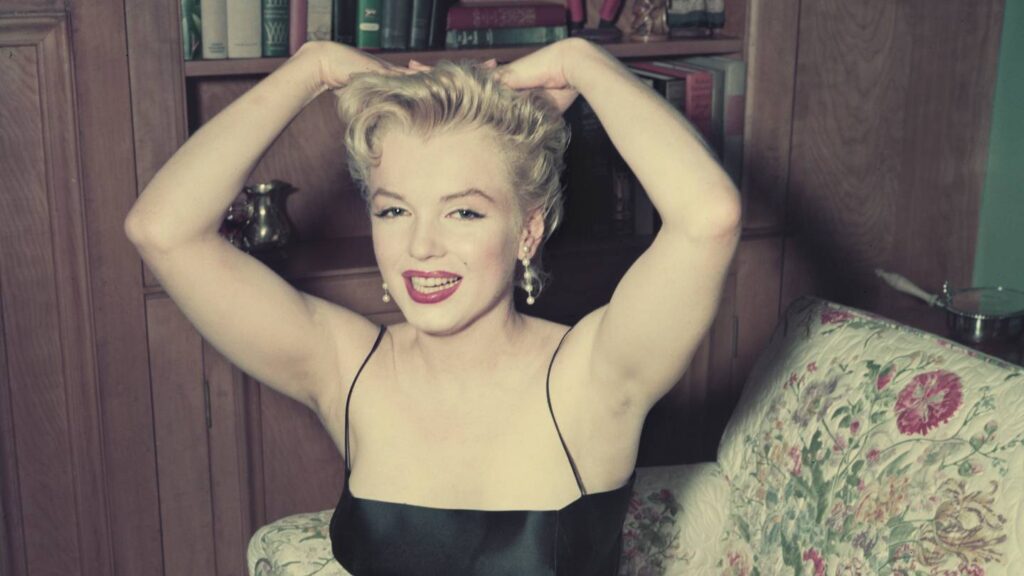
Five myths about Marilyn Monroe that everyone believes
In her 36 years of life (although Hollywood actors live suspiciously long), Marilyn Monroe managed to become one of Hollywood’s greatest icons, but along with fame came dozens of half-true stories. The longer a legend lives, the more the real facts of her biography get distorted through retellings. Here are five persistent myths about Monroe — and what actually happened.
Is It True That Monroe’s Mother Abandoned Her in Childhood
Stories about the actress’s difficult childhood are still retold today, and one of the most enduring is that her mother Gladys Baker essentially abandoned her daughter right after birth. Formally, the beginning was indeed bleak: the girl, then known as Norma Jeane, was placed with a foster family in the town of Hawthorne, California, when she was just two weeks old.
But the story doesn’t end there. Gladys remained present for a significant part of Marilyn’s childhood: she visited her daughter in the foster family, and when the girl was older, she would take her for overnight stays. Trouble came later — Gladys developed mental health problems, was placed in a medical facility, and was treated for paranoid schizophrenia. Because of this, Monroe did indeed spend most of her childhood with foster families and relatives, but the notion that her mother had nothing to do with her upbringing is incorrect.
Was Marilyn Monroe a Natural Blonde
One of the foster families, according to the actress’s own recollections, would send her to the movies to get her out of the house — and Norma Jeane would sit in the local cinema for hours. She especially loved Jean Harlow, Hollywood’s first “blonde bombshell,” and reportedly modeled her image partly after her.
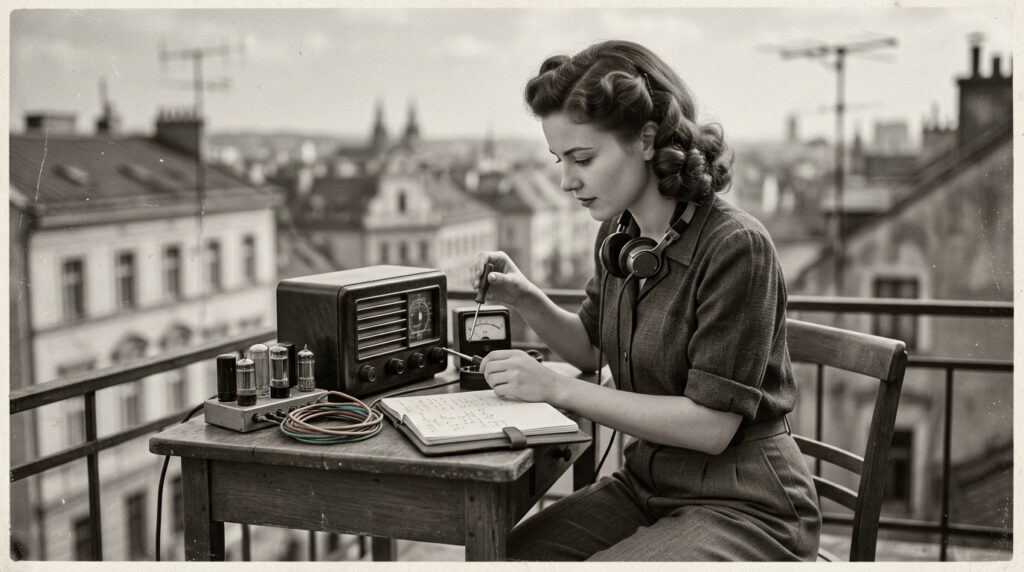
In early photo shoots of the 1940s, the future star had dark hair
In reality, Monroe was naturally a brunette and only began lightening her hair in the 1940s. This was one of the beauty standards of the time. She eventually settled on a bright platinum shade that she herself called “white as a pillowcase.” In rare photos from her early modeling career, her dark hair is still visible — so the myth of the natural blonde doesn’t hold up to scrutiny.
Was Marilyn Monroe a “Dumb Blonde”
Light hair brings with it an unfair label, and Monroe gained a reputation as the quintessential “dumb blonde.” Here it’s important to distinguish between two extremes. Rumors that her IQ was around 168 — higher than Einstein’s — are unsubstantiated. But the image of a brainless beauty is equally far from the truth.
Monroe was an avid reader: her personal library contained more than 400 books, and she was interested in philosophy, politics, and classical literature. Her third and final husband, playwright Arthur Miller, called her a very intelligent woman with a wonderful sense of humor, irony, and generosity.
Why Marilyn Monroe Was Considered Unprofessional on Set
Monroe had a reputation as an actress who couldn’t remember her lines and was always late to set. The stories sound plausible: during the filming of Billy Wilder’s comedy “Some Like It Hot,” she needed more than fifty takes to correctly deliver a single three-word line. Wilder eventually began hiding her lines all over the set — on cue cards behind the camera and even inside props.
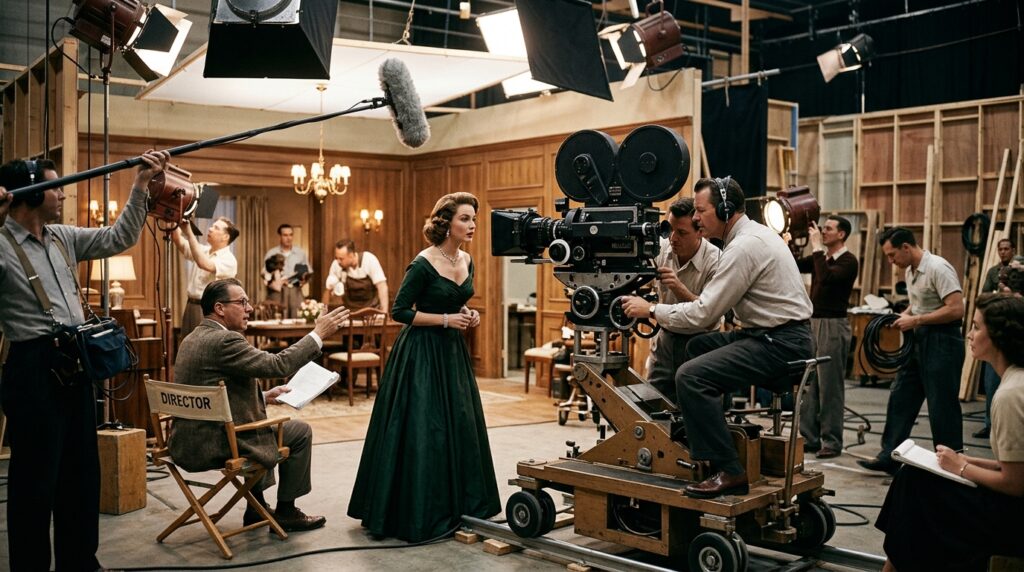
On set, Monroe frequently faced difficulties
But film historians suggest looking at the context. Monroe suffered from debilitating anxiety, insecurity, and stage fright, which understandably made it difficult for her to memorize and deliver lines on command. Moreover, both Wilder and Laurence Olivier, with whom she clashed during the filming of “The Prince and the Showgirl,” had reputations as difficult people to work with.
There is a theory that some of her “unprofessionalism” was her quiet protest. During the 1957 filming, Olivier dismissively told her that all she needed to do was “be sexy” — and it was precisely after that, by all accounts, that she began showing up late every day. This habit was later reinterpreted as a response to her co-star’s condescending words.
How Much Did Marilyn Monroe Actually Earn
You would think the biggest star of the era must have been swimming in money. Her films grossed over $200 million at the box office, and after her death, her name and image have generated millions through advertising and brand deals. But during her lifetime, the actress herself saw far smaller amounts.
The contracts from her early career, under which she appeared in many of her most famous films, were quite modest. A telling example: for “Gentlemen Prefer Blondes” in 1953, Monroe was paid only $18,000, while her co-star Jane Russell received $100,000. So financial prosperity came to her legacy only after her death.
Monroe’s story is a good example of how a convenient legend grows from a real life, where nuances are lost. A similar fate has befallen many famous stories from the past. Behind the bright labels — “abandoned child,” “dumb blonde,” “difficult star” — lies a far more complex and vivid person, and that is precisely what makes her real biography more interesting than any myth.