Which action movies are considered the best in cinema history.
Car chases, shootouts, and explosions alone don’t guarantee that an action movie will be remembered for long. The best films in the genre offered something new in their time: unusual heroes, impressive special effects, or scenes that other directors spent years replicating. If you compare lists from well-known movie websites, a clear set of leaders emerges: five films that are most often named the best action movies of all time.
5. “The Matrix” Turned Fight Scenes into Digital Art
In 1999, “The Matrix” showed that action could be not only fast-paced but almost philosophical. Shootouts, kung fu, and the sci-fi concept of a virtual world came together so successfully that the film became a benchmark for 21st-century action movies.
The film’s main technical breakthrough was the bullet time effect. The camera seemed to freeze next to the character or move around them while bullets continued to fly. Today, such scenes seem commonplace, but at the time of the film’s release, they looked almost impossible.
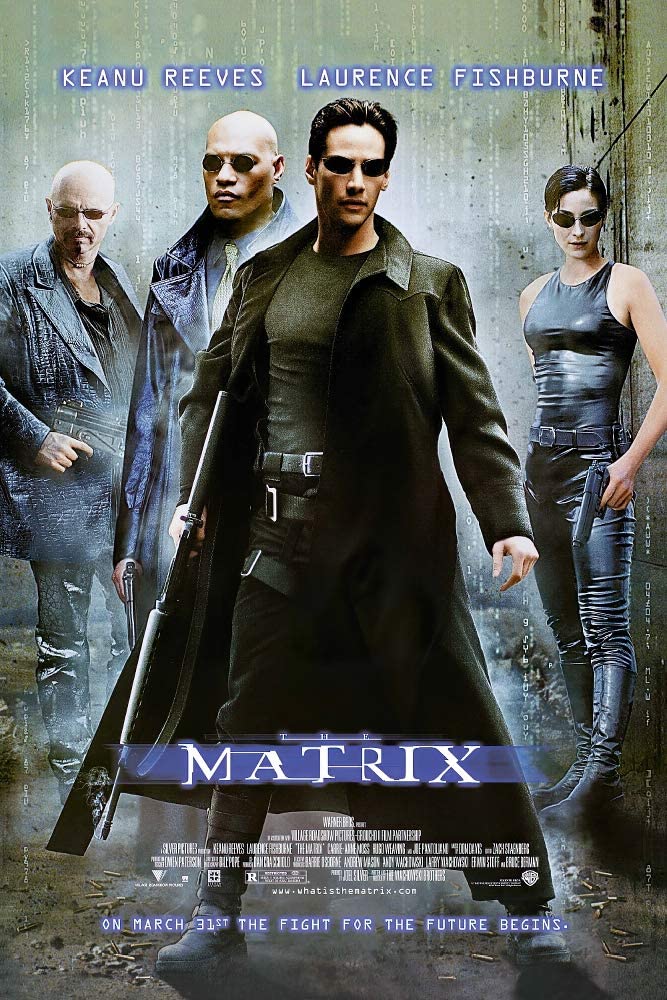
The Matrix, 1999.
“The Matrix” is worth rewatching not just for the famous bullet-dodging scene. In the film, it’s not just a cool trick: since the world turned out to be a program, its physics can also be hacked.
4. “Terminator 2” Showcased the Power of Computer Graphics
In the first “Terminator,” Arnold Schwarzenegger played a killing machine. In the sequel, his character returned as John Connor’s protector, and the main antagonist became the liquid-metal T-1000.
The T-1000 was the film’s main technological breakthrough. Thanks to computer graphics in “Terminator 2,” transformations were shown that would have been nearly impossible to achieve with makeup and mechanical effects alone. The T-1000 changed its appearance, passed through obstacles, and regenerated after taking damage.
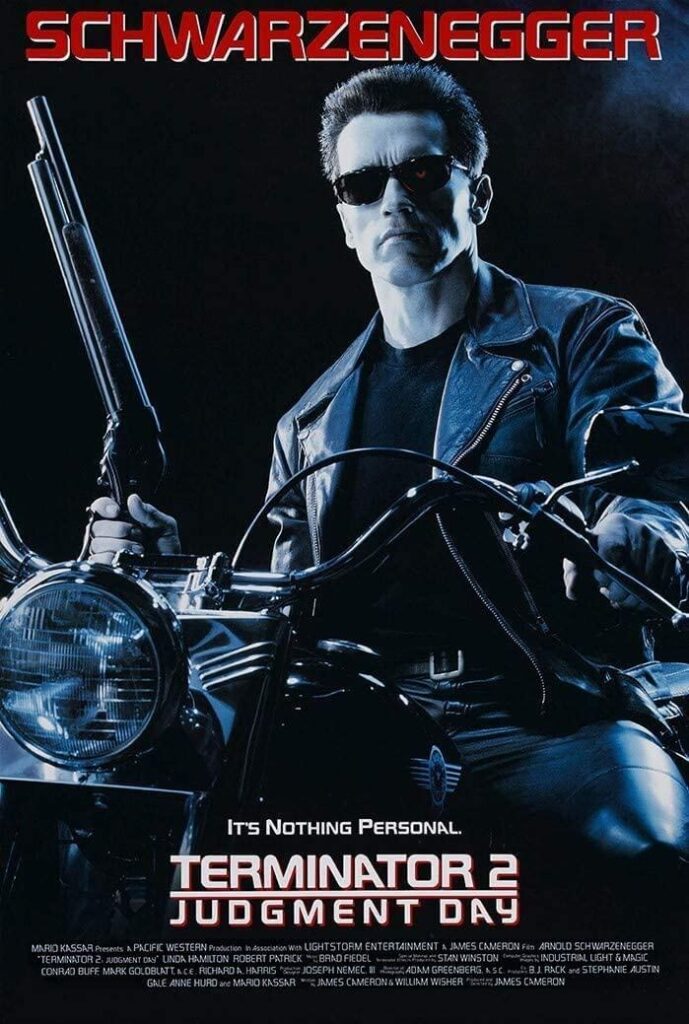
Terminator 2: Judgment Day, 1991.
But the film is remembered for more than just technology. The massive budget gave James Cameron the ability to stage large-scale chases and shootouts, while the emotional core of the story became the relationship between a boy and a machine that gradually learns to understand humans.
3. “Aliens” Turned Cosmic Horror into a Military Action Film
The first “Alien” was a dark horror film about an unknown creature hunting a ship’s crew. James Cameron didn’t repeat the previous formula: in “Aliens,” he expanded the world and turned horror into military action.
Now Ripley, played by Sigourney Weaver, was up against more than just one xenomorph. The film featured a squad of space marines, an entire colony of creatures, and the Alien Queen. The scale grew, but the sense of danger never disappeared.
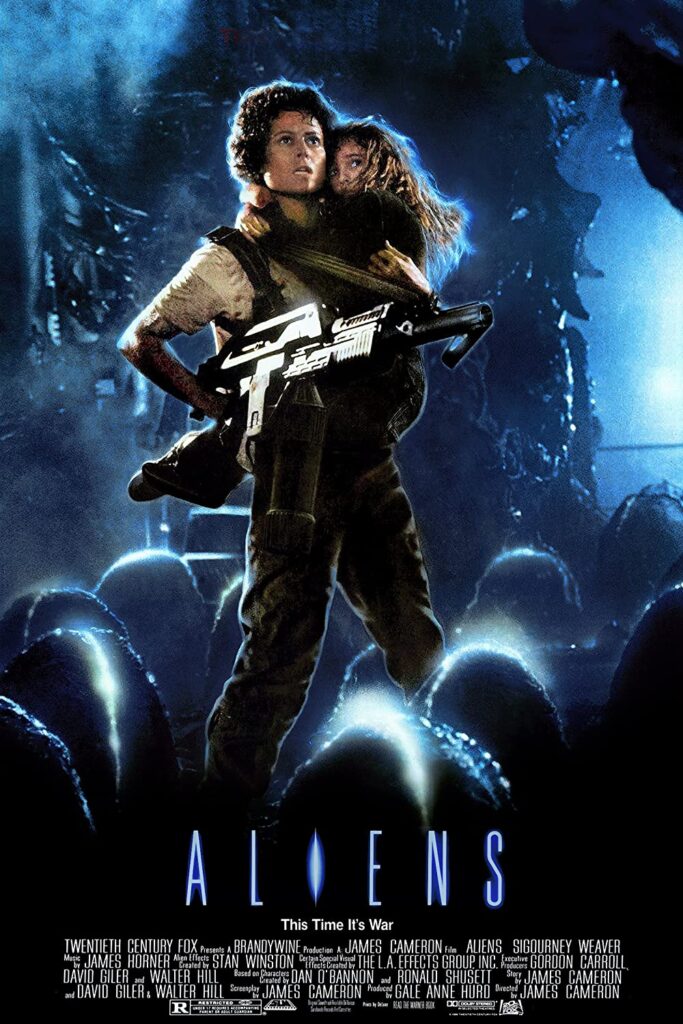
Aliens, 1986.
Ripley’s character proved especially important. She wasn’t a secondary character who needed saving: the heroine made her own decisions, protected others, and entered the final battle herself. As a result, Ripley became one of the most recognizable female characters in the history of action movies.
2. “Indiana Jones: Raiders of the Lost Ark” Doesn’t Let You Catch Your Breath
Within the first few minutes, Indiana Jones grabs a golden idol, falls into traps, and runs from a giant boulder. This scene immediately establishes the film’s rules: the hero may be smart and experienced, but trouble will always be one step ahead of him.
Steven Spielberg’s action film constantly mixes adventure, fights, chases, and humor. Indiana is dragged through the streets of Cairo, armed Nazis and enormous opponents come after him, and dangerous artifacts turn out to be anything but museum exhibits.
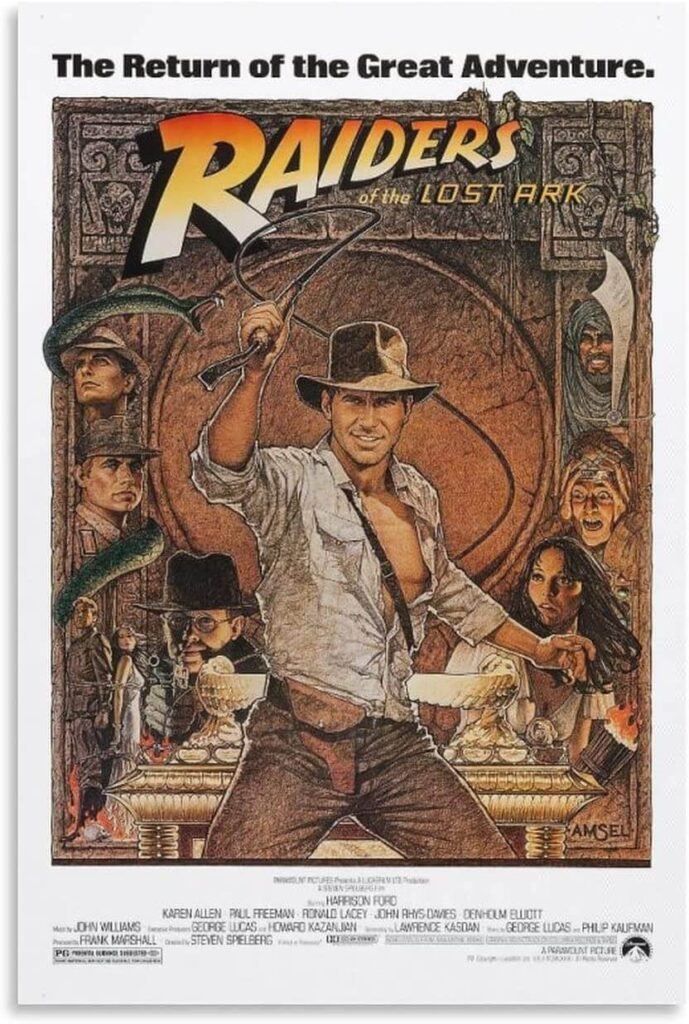
Indiana Jones: Raiders of the Lost Ark, 1981.
The film races along like a comic book being flipped through on the go, but the action always remains clear. The viewer can see where the characters are, what they’re trying to achieve, and where the danger is coming from. That’s why the old-school stunts still work even without modern computer graphics.
1. “Die Hard” Made an Ordinary Person an Action Hero
First place goes to “Die Hard” from 1988. Police officer John McClane finds himself in a skyscraper taken over by criminals and is forced to take them out one by one. The confined space turns the film into a tense game of cat and mouse. Over time, “Die Hard” also became a Christmas movie for many, although the holiday serves merely as a backdrop.
The main reason for its success is McClane himself. Bruce Willis’s character doesn’t appear invincible: he gets tired, gets wounded, feels fear, and makes mistakes. That’s why it’s easier for the audience to imagine themselves in his place rather than next to yet another indestructible super soldier.
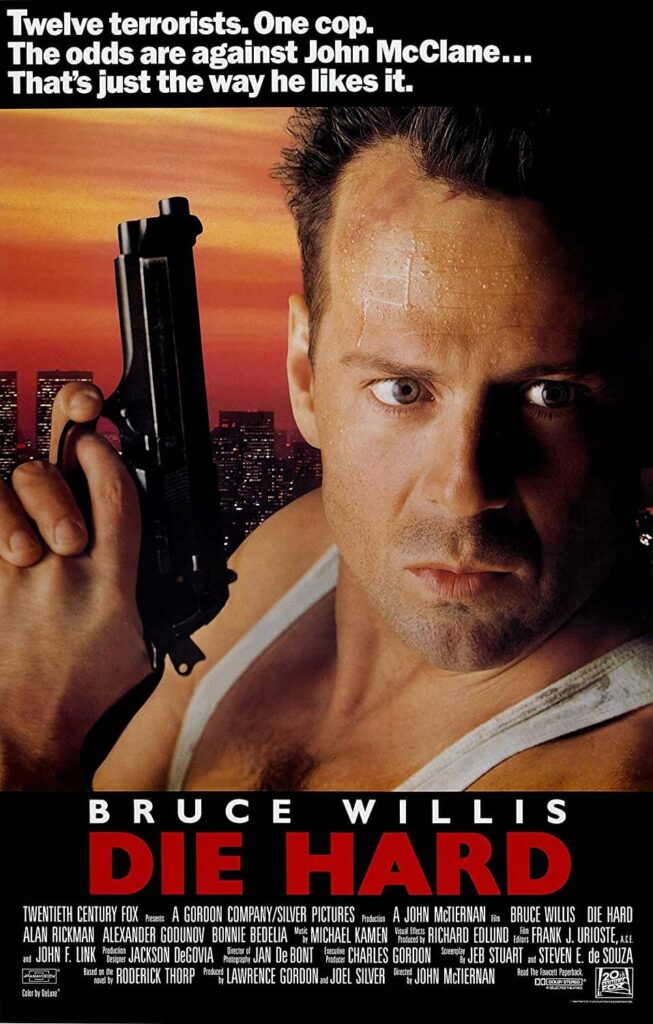
Die Hard, 1988.
Equally important is Hans Gruber, played by Alan Rickman — a calm, calculating, and charismatic antagonist. Their confrontation is driven not just by gunfire: McClane constantly improvises, while Gruber tries to calculate every move. The formula of “one hero against enemies in a confined space” went on to spawn countless imitations.
Each of these films influenced the genre in its own way. “Die Hard” showed that an action hero can be an ordinary person, “Indiana Jones” set a nearly perfect adventure pace, and “Aliens” merged horror with military action. “Terminator 2” raised the bar for special effects, and “The Matrix” changed the very staging of movement on screen. That’s why this isn’t just a list of five spectacular films, but five important milestones in the history of the genre.