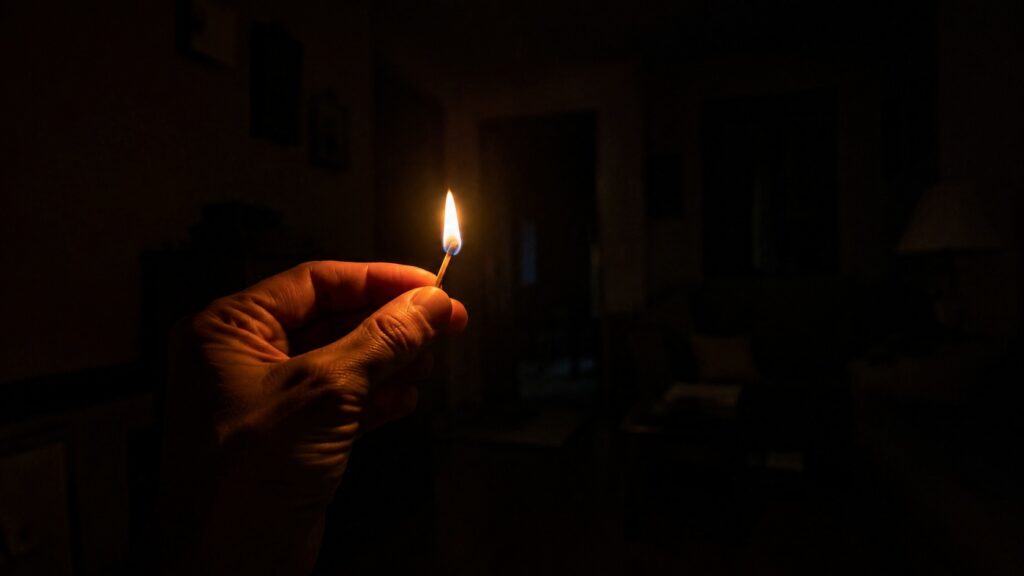
A day without electricity is not a catastrophe, but everyone should be prepared for it
One day without electricity isn’t the end of civilization, but for a modern city it’s a serious challenge. The lights go out immediately, but the consequences come in waves: first household appliances and traffic lights stop working, then problems with communications, water, elevators, stores, ATMs, and refrigerators begin. A lot depends on the cause of the outage, the season, the size of the city, and the availability of backup power. And you should always be prepared for such emergencies, because even a single solar flare can knock out the power.
What Shuts Down in the City in the First Minutes Without Power
In the very first seconds, lights go out in apartments, stairwells, offices, stores, and on the streets. Outlets stop working, and along with them Wi-Fi routers, computers, TVs, electric stoves, microwaves, kettles, chargers, intercoms, some electronic locks, and barrier gates.
In homes with electric stoves, people immediately lose the ability to cook normally. Where the stove is gas-powered, it may remain functional, but modern gas boilers, exhaust fans, and heating pumps also depend on electricity. Traffic lights either go dark or switch to emergency mode. According to the rules, if a traffic light isn’t working and there’s no traffic officer, the intersection is considered unregulated, and drivers follow priority signs and the rules for unregulated intersections.
Why Communications and Internet Disappear Without Electricity
Home internet usually disappears almost instantly because the router, optical terminal, and modem run on mains power. Even if the provider has backup power somewhere further along the chain, without a working outlet in your home the network won’t come up.
Mobile communications are more complicated. The phone runs on its battery, but base stations, switches, and the transport network also require power. Operators sometimes have batteries and generators, but they don’t always last and aren’t available everywhere. Often the charge lasts for a few hours, after which service begins to drop out. First internet speed drops, then call quality deteriorates, and then individual areas may be left completely without a network.
There’s also a second reason: network overload. When power goes out for thousands of people, everyone simultaneously starts calling, texting, and refreshing feeds. The network may be physically intact but overwhelmed. That’s why in the first hours it’s smarter not to drain your battery on endless calls — a short SMS saying “I’m home, everything’s fine” gets through more easily and is more useful than ten attempts to get through on a call. Incidentally, a similar principle of redundancy and emergency systems works at much more critical facilities as well.
Water, Elevators, and Intercoms Without Electricity
With water, it all depends on the specific building. In low-rise buildings, water may continue to flow for a long time thanks to pressure in the system and reserves in tanks. But in high-rises, electric pumps push water to the upper floors, and without backup power it will disappear there faster than on the lower floors.
Particularly unpleasant is the loss of water pressure: when pressure drops, contaminants can enter the pipes through backflow or damaged sections of the network. This is exactly why after major outages there’s sometimes a recommendation to boil water — and it’s not worth arguing with it.
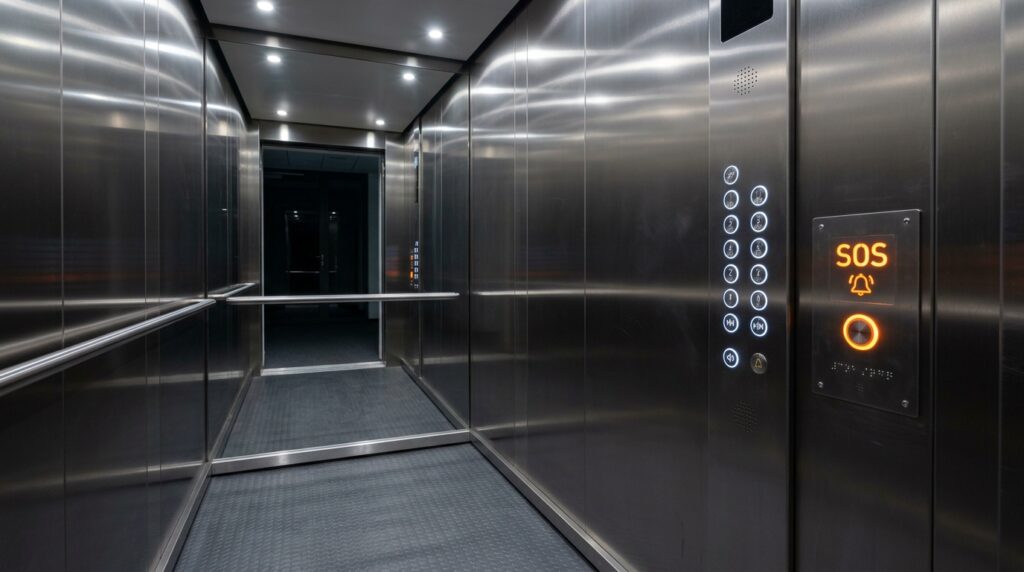
When the power goes out, an elevator can stop between floors — trying to get out on your own is dangerous
Elevators during a sudden power outage can stop between floors. This is unpleasant, but the elevator car doesn’t fall because modern elevators have mechanical brakes that engage even without power.
Here are the main rules if you’re stuck in an elevator:
- Don’t try to force open the doors or get out on your own;
- Don’t climb through the hatch in the ceiling;
- Press the call button and phone the dispatcher, the management company, or 112;
- If there’s no signal, bang on the doors and call for help, and wait for specialists.
Intercoms and automatic gates will also lose power. For the city, this means emergency services in the first hours will be swamped with calls: someone is stuck in an elevator, somewhere a door won’t open, somewhere an elderly person is stranded on an upper floor with no way to get down. However, if there’s no communication, nobody will be able to call anyone anyway.
How Stores and ATMs Work During a Power Outage
After half an hour, the city already looks different. Traffic jams appear on the roads due to dark traffic lights, and small shops without generators close almost immediately. This is because without electricity, cash registers, payment terminals, scales, refrigerated display cases, and inventory systems don’t work.
Large supermarkets hold out longer if they have generators. But a generator usually powers not the entire building, but only critical areas like the refrigerator, checkout, emergency lighting, and server room. If the outage drags on, stores begin writing off perishable products.
A separate problem is money. ATMs and payment terminals also become useless, so cash suddenly becomes the most reliable payment method. Having a small amount of cash at home isn’t paranoia — it’s a sensible habit.
Which Foods Spoil the Fastest
First at risk are products from the refrigerator that need constant cold. According to Food Safety, if you don’t open the door, a refrigerator keeps cold for about 4 hours. A full freezer holds for about 48 hours, a half-empty one — about 24 hours.
Here are foods that spoil in warmth:
- Meat, poultry, fish, and seafood — the riskiest products; if they’ve been at a temperature above 4°C for more than two hours, they shouldn’t be eaten;
- Dairy products — milk, cream, sour cream, yogurt, cottage cheese, and soft cheeses quickly become dangerous without refrigeration;
- Prepared food — soups, stews, rice, pasta, casseroles, pizza, salads with mayonnaise or meat;
- Eggs and egg dishes — boiled eggs, omelets, custards, puddings, pies with egg-milk fillings;
- Cut vegetables and fruits — a whole apple will survive the outage, but salads and greens in containers spoil faster.
You cannot taste a product to determine if it’s safe. Dangerous bacteria don’t always change the smell, color, or taste of food. After 4 hours without power, perishable products are better thrown away.
Here’s what usually survives 24 hours without problems: whole fruits and vegetables, bread, cookies, grains, pasta, canned goods, nuts, peanut butter, jam, hard cheeses, and butter. The freezer is your main ally — if it’s full and hasn’t been opened, products remain safe for up to 48 hours. If a product still has ice crystals or its temperature is no higher than 4°C, it can be cooked or refrozen, although the quality may deteriorate.
The Dangers of Power Outages in Winter and Summer
The season dramatically changes the picture. After 24 hours, the city is already living in emergency mode, and it’s the weather that adds risks. In the heat, homes quickly overheat without air conditioning, and in freezing temperatures they cool down without electric boilers, heating pumps, and heat distribution units.
It’s in winter that people most often make the most common mistake. The main danger of a blackout isn’t darkness — it’s carbon monoxide. People bring generators, gas burners, grills, and heaters indoors. This can kill, because carbon monoxide is colorless and odorless, making it especially insidious. Generators and gasoline engines must not be used inside a house, basement, garage, or closer than approximately 6 meters from windows, doors, and ventilation.
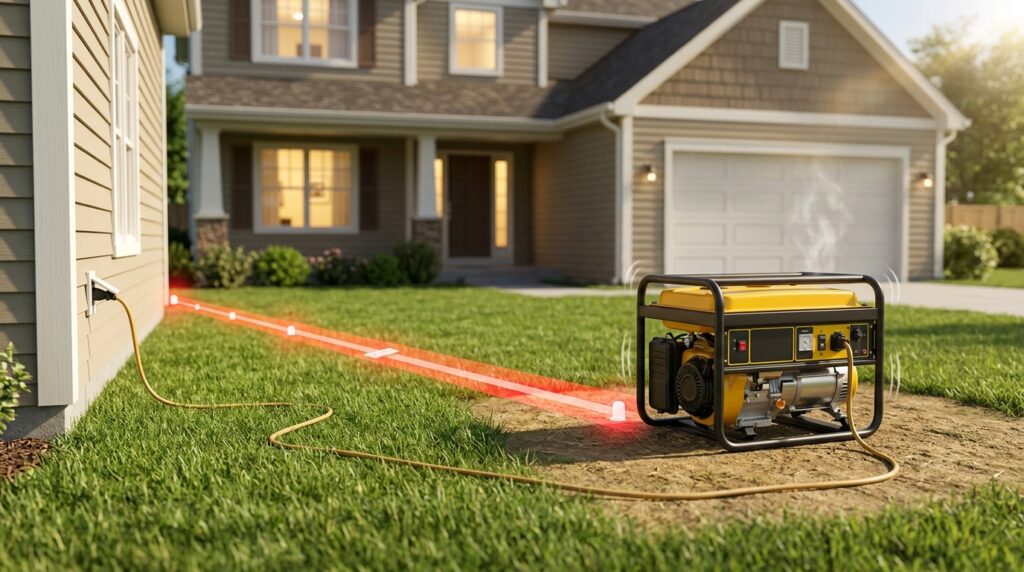
A generator should only be run outdoors, away from windows and doors — carbon monoxide is deadly
The second common hazard is candles. They seem like a simple solution, but in a dark apartment with children, pets, and tired people, it’s easy to start a fire. Don’t leave candles unattended and extinguish them before going to sleep.
The third danger is spoiled food. After 8–12 hours without power, people start eating questionable products, which can lead to food poisoning.