While we were figuring out when YouTube would start working normally in Russia after being blocked by Roskomnadzor, Google itself came up with a way to put a spoke in the wheels of Russian users. Now YouTube has started selectively blocking videos accessed via VPN. That is, if you try to open a video through a foreign IP, instead of the video you may see a warning asking you to disable your VPN. There’s no need to panic yet: the restrictions don’t affect all content, but for those in Russia, it’s a worrying sign.
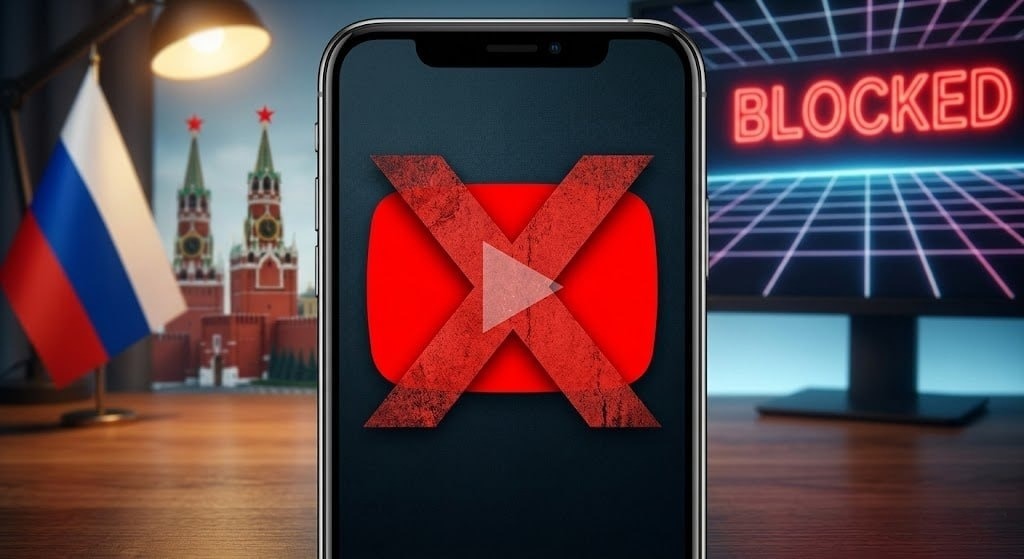
YouTube itself has started blocking access via VPN
Which Videos YouTube Stopped Showing via VPN
YouTube users in Russia have encountered a warning from the video hosting service: in some cases, instead of showing the video, a message appears demanding they disable their VPN or proxy. In some channels, videos in the “New” section are also not displayed.
This mainly concerns channels hosting content with regional licenses — for example, channels with official Formula 1 sports broadcasts, Olympic Games, and certain TV premieres. Simply put, if the rights holder sold broadcasting rights separately for each country, YouTube now more actively checks where you’re actually watching from. If you’re watching regular YouTube content through a VPN and nothing has changed — everything works as before.
Why YouTube Doesn’t Work Through VPN
According to Damir Feyzullov, SMM and ORM Director at PR Partner agency, this is a gradual tightening of control over regional content rights. YouTube has always been fairly lenient about circumventing geographic restrictions, but the streaming and digital broadcasting market has become too expensive — especially in sports, music broadcasts, TV content, and exclusive licenses.
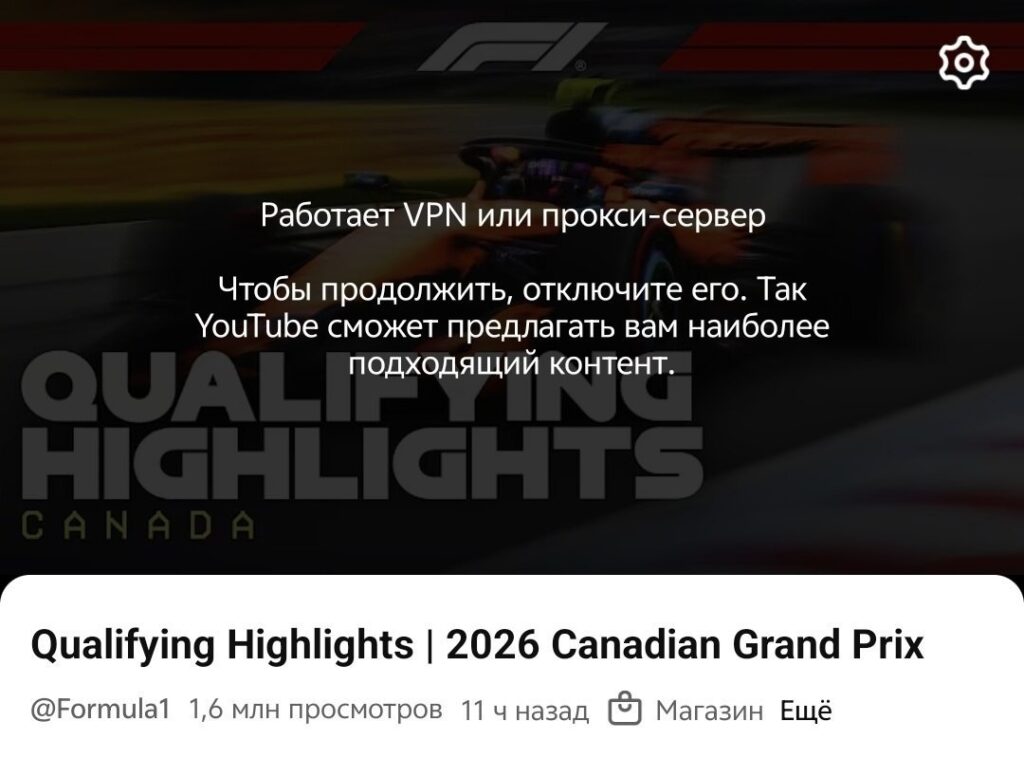
You might see this message on your Android device
YouTube blocks VPN to protect copyrights and fulfill obligations to rights holders. Exclusive broadcasting rights for major sporting events cost millions of dollars and are sold separately for each country. VPN breaks this model because a user can “move” to another country in seconds and gain access to a broadcast that is officially unavailable in their region. Earlier, YouTube had already started more actively fighting users who subscribed to YouTube Premium through cheaper regions like Turkey or Argentina. The current restrictions are a continuation of the same logic.
VPN Detection by Apps on Android
The restriction mechanism is implemented not by country, but by specific rights to specific content, which is why one user can open a video while another cannot. YouTube looks at the IP, account country, payment data, location history, and signs of IP spoofing. Russian apps block VPN in a similar way, but they restrict access not to individual pages, but to the entire service.
YouTube’s algorithms primarily detect IP addresses of popular VPN services and data centers with mass connections. This means free and mass-market VPN services fall under restrictions the fastest. Because of this, users have to look for workarounds: using obfuscated servers that disguise VPN traffic as regular web traffic, or regularly clearing cookies and changing IP addresses.
YouTube Restrictions via VPN in Russia
The block mainly affected videos on channels with regionally licensed content. Sources cited by Kommersant believe that the restrictions could affect not only Russia but the entire platform. Geographic restrictions are also widely used in Russia (primarily for sports broadcasts and other licensed content). At the same time, historically, VPN usage control has been less strict than on Western platforms, despite rumors about a complete ban on VPN in Russia. International services are now gradually unifying their approaches to enforcing territorial restrictions.

YouTube still doesn’t work in Russia
For Russian users, the situation has additional context. YouTube in Russia has been operating with speed restrictions since July 2024, and a significant portion of the audience watches videos only through a foreign IP. Therefore, any restrictions from YouTube itself are perceived more acutely.
What to Do If YouTube Blocks Your VPN
It’s too risky for YouTube to restrict all content for VPN users, but targeted control over specific categories will intensify, which is already evident. In practice, this means the following:
- Regular videos, blogs, reviews, educational and entertainment content still work through VPN without changes
- Problems arise with licensed content: sports broadcasts, TV premieres, some music videos
- Free VPNs with well-known IP addresses fall under restrictions faster
- YouTube considers not only the IP, but also the Google account country, payment data, and location history
If you watch YouTube via VPN on Android, regular content remains accessible. But if you’re used to watching sports broadcasts or TV shows with regional restrictions through a VPN, be prepared for YouTube to increasingly demand you disable your bypass tools. For now, this is not a mass VPN block per se, but rather protection of commercial rights to specific content. However, the trend is clear: YouTube is gradually tightening the screws, and for Russian users who already depend on VPN, each such tightening narrows the room for maneuver.