Following last week’s release of the Android 17 operating system, Google announced one of the biggest search updates in recent years. At the I/O 2026 conference, the company showcased a revamped AI Mode in Search with a new language model, AI agents, interactive elements, and even mini-apps right in the search results. Here are eight key changes and what they mean for those who use Google every day.
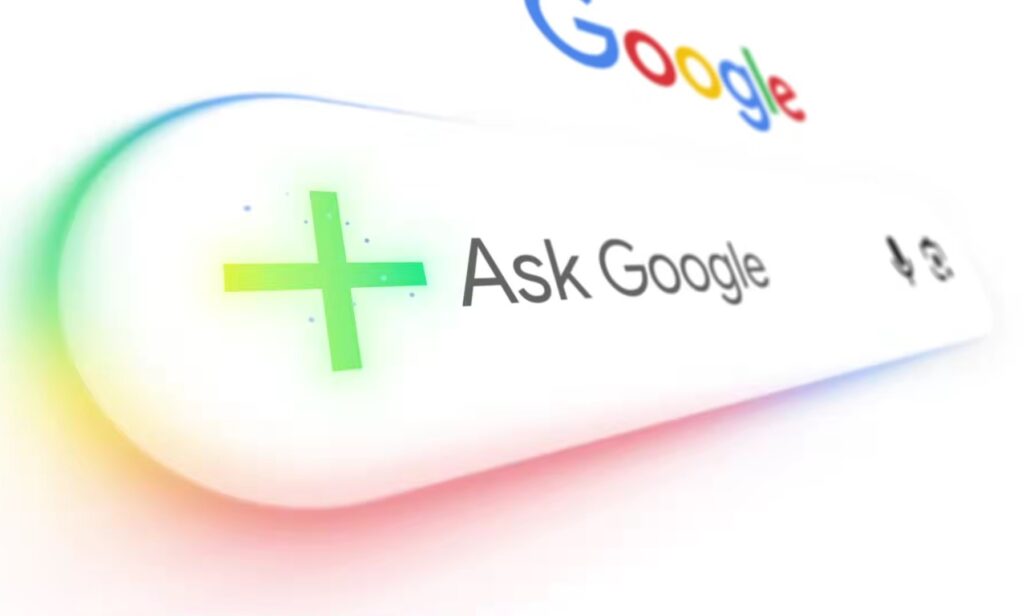
Google Search is starting to work in a completely new mode. Image: Google
New Neural Network in Google Search
Google confirmed that Gemini 3.5 Flash is now running by default in AI Mode worldwide. According to the company, the model provides faster responses and handles complex queries better. It will be a great complement to the base Gemini neural network that works on Android as a standalone app.
A new neural network is now powering search. Image: Google
For users, this means that AI-generated answers in search should appear noticeably faster, and their quality should improve, especially for multi-step questions.
New Google Search Bar
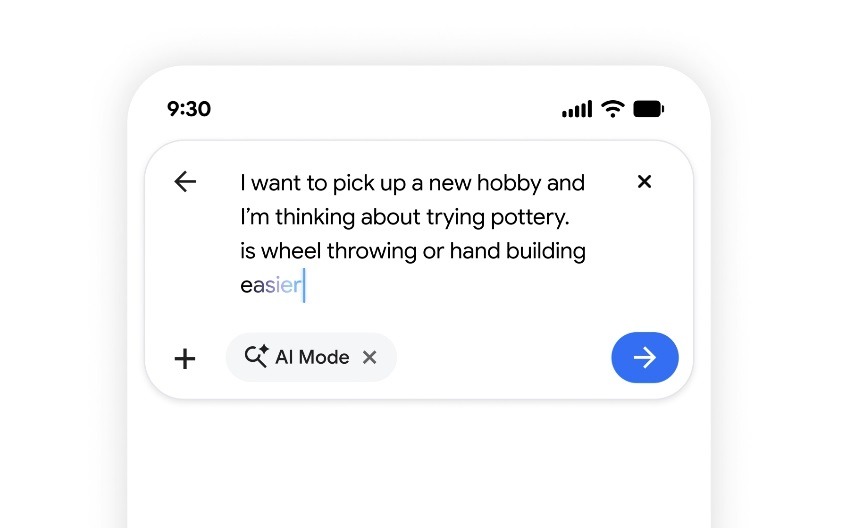
The familiar Google search bar has received a new design tailored for working with AI. You can now enter long, natural-language queries and attach images, files, videos, and even open Chrome tabs as context. This changes the whole approach to search: instead of short keywords, you can describe an entire situation, and Google will figure it out on its own.
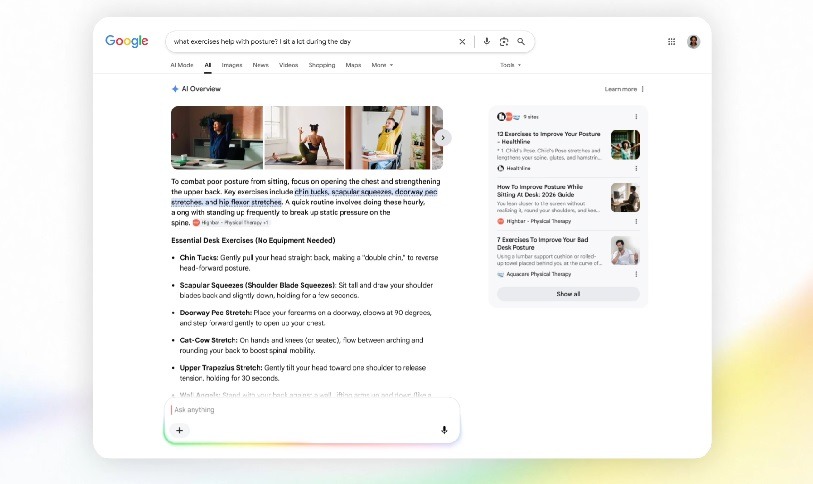
The search bar itself has also changed. Image: Google
For those who are used to formulating queries like “buy sneakers black size 42,” the difference may not be obvious. But if you need to find something complex (for example, compare several options or ask a question with context from a photo), the new search bar significantly simplifies the task.
AI Agents in Google Search
Google is adding informational AI agents to search. They can continuously monitor the internet for your query and notify you about changes. Example scenarios: tracking new apartment rental listings, products going on sale, financial updates, and sports results.
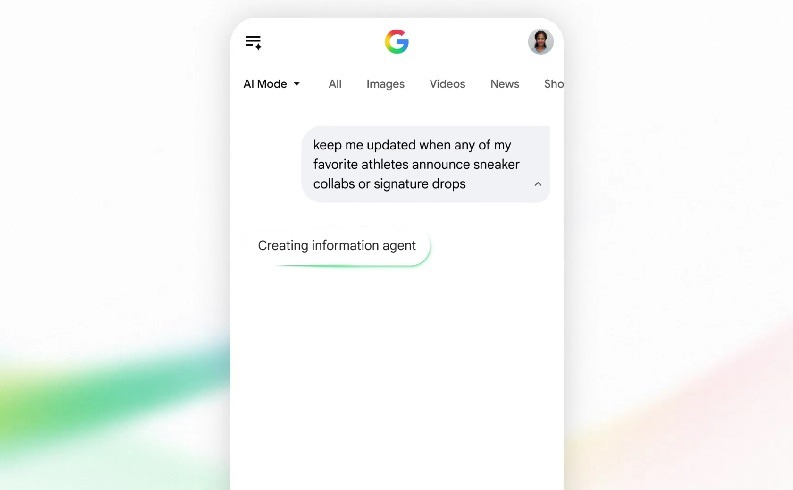
Google has introduced special AI agents. Image: Google
Essentially, this is a replacement for manual monitoring: instead of checking the same query every day, you can delegate it to an agent. It’s still unclear exactly how notifications will be delivered and how flexibly you can configure filters, but the idea of automatic topic tracking through Google Search looks useful for those who frequently search for the same things.
Booking and Service Selection Right in Google Search
Google is expanding booking capabilities through search. You can now specify very specific requirements for an event or service, and the system will automatically gather availability and pricing information from different providers. This can come in handy when planning trips, choosing restaurants, or booking activities.
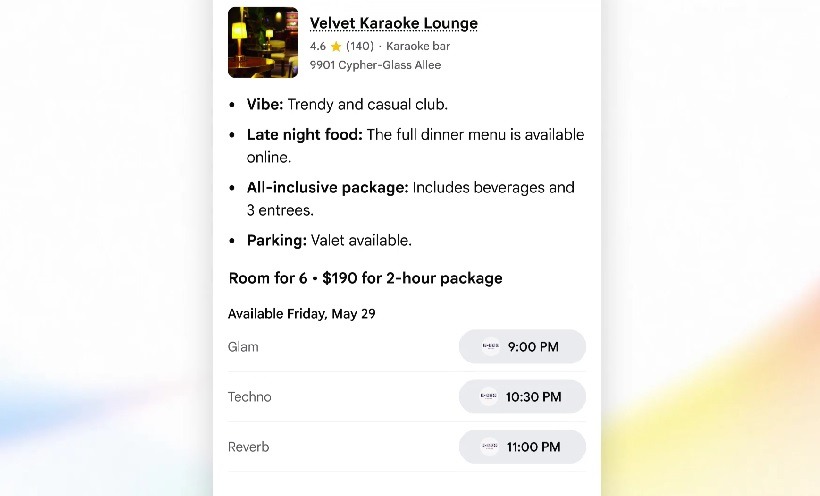
Search has gained new booking capabilities. Image: Google
Moreover, in some categories (beauty salons, repair services, pet care), Google will be able to contact businesses on your behalf. However, at launch, this feature will only be available in the US. When and whether it will appear in Russia is still unknown.
Interactive Google Search Answers
Search is learning to generate interactive content right in the results. Depending on the question, Google will be able to create tables, charts, visualizations, and even real-time simulations. Instead of reading a long text answer, you’ll get a clear visual picture.
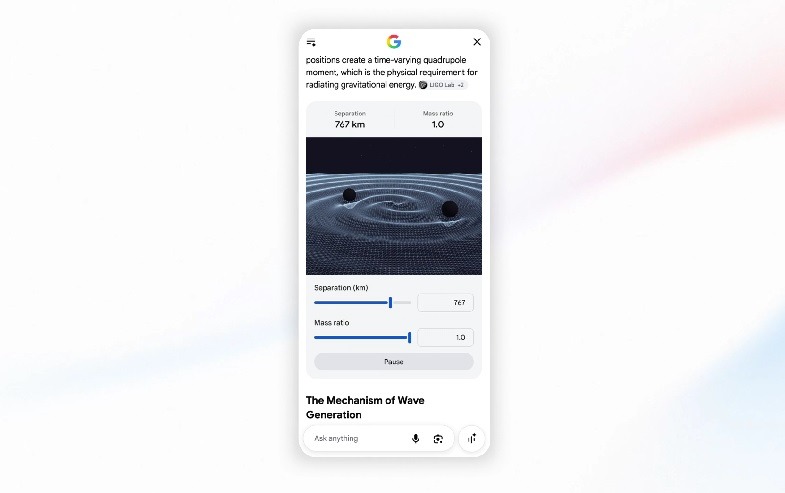
Search has started delivering interactive answers. Image: Google
If you’ve ever searched for comparisons of plans, specifications, or statistics and struggled with scattered data across different websites, the generative Google Search interface is designed to solve exactly this problem. How well this will work in practice remains to be seen.
AI-Powered Mini-Apps in Google Search
One of the most unusual features: Google Search will be able to generate personalized dashboards and trackers for recurring tasks. Examples: planning workouts, organizing a move, or preparing an event. Essentially, the search engine is turning into a personal assistant with its own mini-app tailored to your task.
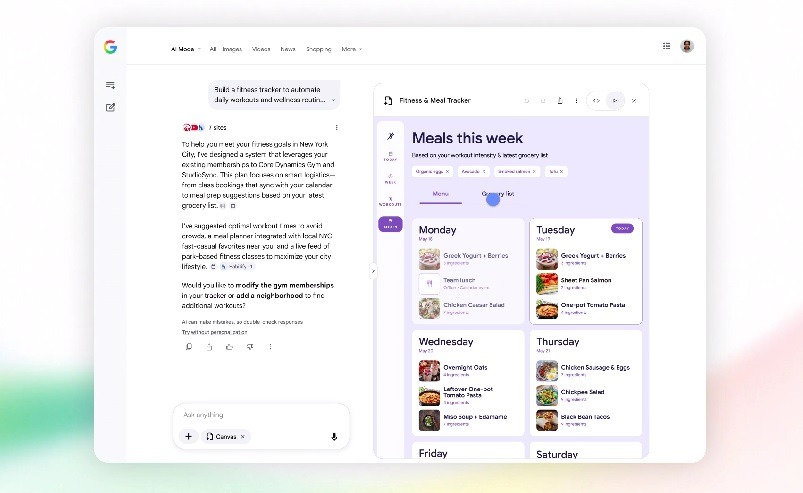
Mini-apps have also appeared in search. Image: Google
But there’s an important limitation: mini-apps will initially be available only for Google AI Pro and Ultra subscribers in the US. For other users, this feature is not yet available, and no timeline for expansion to other regions has been announced.