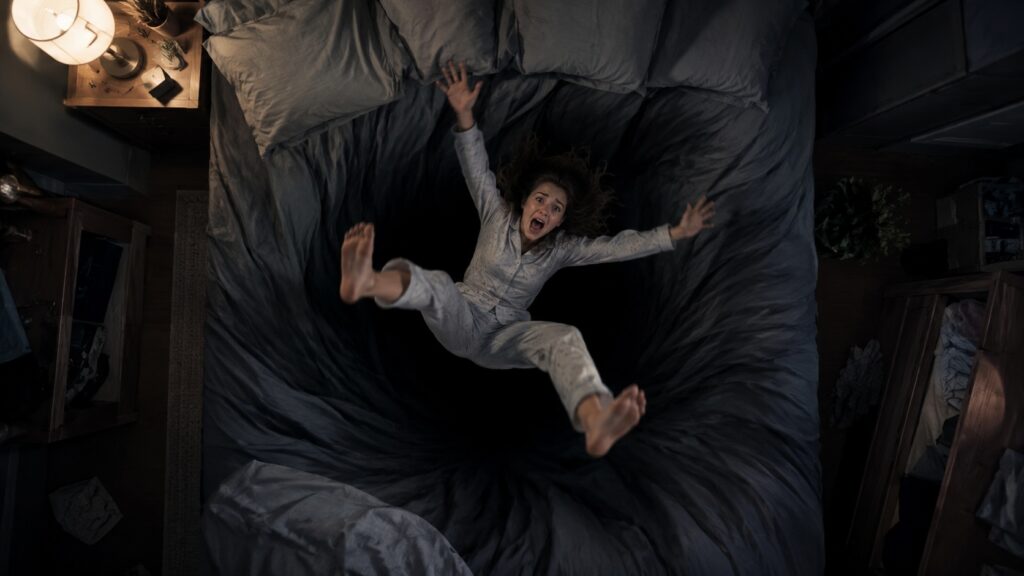
The sensation of falling during sleep is normal, but there can also be alarming causes
A few seconds before falling asleep, many people jerk suddenly due to a sensation of falling. And this jolt can be strong enough to wake a person up with a racing heart. But there’s no need to be afraid, because this phenomenon is very common and has likely happened to every person on Earth. Yet scientists still debate its causes. After all, in the moment of falling asleep, numerous mysterious things happen in the brain. What theories exist, and what do researchers actually think about this?
How Often Do People Jerk Before Sleep
If you flinch at the moment of falling asleep, you’re not alone. Russian medical publications cite an estimate that around 60–70% of people have experienced such jerks at least once. In other words, it’s almost the norm, not a rare anomaly.
It’s important to remember that in most cases this is not a disease and requires no treatment. The body is simply switching from wakefulness mode to sleep mode, and it doesn’t always do this perfectly smoothly. It will become clear why below.
What Happens to the Body at the Moment of Falling Asleep
We tend to think that falling asleep is like turning off a light switch: click — and consciousness goes dark. In reality, it’s more complex. The brain, muscles, breathing, and sensory organs transition to nighttime mode gradually, and different systems may not do this entirely in sync.
Here’s how people typically fall asleep:
- You lie with your eyes closed, but the brain is still partially operating in wakefulness mode;
- Muscles begin to relax, their tone decreases;
- Conscious control over movements weakens;
- Some nerve cells are still active and may suddenly send a brief impulse to the muscles;
- An arm, leg, shoulder, or the entire body contracts sharply;
- From this jolt, a person sometimes wakes up for a second.
This is precisely why we don’t jerk for long before sleep. It’s not a prolonged cramp, but a short electrical click in the motor system. According to MSD, the hypnic jerk (yes, that’s what this phenomenon is called) indeed occurs during falling asleep and in the early stages of sleep. And it’s a physiological norm, not a malfunction.
Why We Feel Like We’re Falling During Sleep
An exact, fully proven answer to this question doesn’t yet exist in science. As experts emphasize, the popular explanation about “the brain interpreting relaxation as falling” is a hypothesis, not an established fact.
According to this theory, muscles begin to relax rapidly, and the brain, not yet fully asleep, misinterprets the change in body tone. It essentially receives a signal: “We’re losing our footing.”
In response, a sharp muscle contraction occurs, similar to an attempt to regain balance. At the same time, consciousness is already drawing the first fragments of a dream, so the muscle jerk combines with a vivid scene: you tripped, slipped off a step, or flew downward. Sometimes you first “see” the fall and then jerk, sometimes it’s the other way around — the body jerks first, and the brain instantly creates a sensation of flight to match.
There is also a second hypothesis: during falling asleep, the brain’s control over motor structures weakens, impulses become less organized, and one of them accidentally triggers a muscle contraction.
Russian sleep specialist Roman Buzunov emphasizes that the exact mechanism of this phenomenon has not yet been fully studied. So if someone confidently explains to you the one and only true cause, they’re exaggerating a bit.
Why You Jerk on Some Nights but Not Others
The jerking during falling asleep can happen without any visible cause in itself. But there are factors that make the nervous system more agitated and prevent it from smoothly transitioning to sleep. These are what explain why on one evening you fall asleep softly, and on another you get jolted several times.
Main causes of jerking during sleep:
- Sleep deprivation and severe fatigue. Paradoxically, the more exhausted you are, the sharper the transition to sleep can be. After several nights of sleep deprivation, the body tries to fall asleep quickly, but the nervous system remains overloaded, and the probability of a jolt increases;
- Stress and anxiety. If in the evening you’re mentally arguing with your boss or worrying about tomorrow, your body is lying still, but your nervous system is operating in threat mode. Muscles are slightly tense, and a small impulse is perceived more intensely;
- Caffeine. Coffee, strong tea, cola, and energy drinks stimulate the nervous system and prevent the brain from smoothly reducing its activity, especially in the evening;
- Nicotine. A cigarette may seem relaxing, but at the nervous system level, nicotine maintains arousal and impairs falling asleep;
- Intense workout late in the evening. After heavy exercise, the body needs time to calm the heartbeat.
Medications are a separate story. Pathological myoclonus, according to the MSD manual, is sometimes associated with certain antidepressants, lithium preparations, antiepileptic drugs, and certain antibiotics. But this doesn’t mean that every jerk after taking a pill is caused by it. You should never discontinue prescribed medications on your own, but if twitching appeared after a new medication, this is a topic for discussion with your doctor.
What a Safe Hypnic Jerk Looks Like
To avoid unnecessary worry, it’s helpful to understand what ordinary harmless jerking looks like. Most likely, there’s nothing to worry about if the twitching:
- appears precisely at the moment of falling asleep;
- lasts a fraction of a second;
- happens once or occasionally;
- does not repeat in rhythmic series;
- is not accompanied by loss of consciousness;
- does not occur during the day;
- does not prevent falling back asleep and does not affect how you feel in the morning.
When Jerking During Sleep Is Not Normal
And now about what should raise concern. It’s worth seeing a general practitioner, neurologist, or sleep specialist if the movements:
- occur every night and many times in a row;
- continue throughout the entire night;
- appear not only during sleep but also during the day;
- become stronger or more frequent;
- have a clear rhythm;
- consistently affect only one side of the body;
- prevent falling asleep or regularly wake you up;
- started after a new medication or a change in dosage.
It’s especially important to see a doctor if the episodes are accompanied by confusion, memory lapses, falling out of bed, injuries, or involuntary urination. Such a picture already differs from a typical hypnic jerk.
It’s also worth paying attention to accompanying symptoms. If a person snores loudly, periodically stops breathing, and constantly feels sleepy during the day, it’s reasonable to check for the possibility of sleep apnea — movements associated with it are easily confused with ordinary jerking. And with restless leg syndrome, unpleasant sensations occur before sleep: tingling, burning, “pins and needles,” and a strong urge to move the legs, which temporarily subsides after movement. These are separate conditions, not a single jerk.
And separately — about emergency situations. An ambulance should be called if the movements are accompanied by prolonged loss of consciousness, pronounced convulsions, breathing difficulties, sudden weakness in an arm or leg, facial asymmetry, or speech impairment. This is no longer about harmless falling asleep.