Smartphones are getting more expensive faster than incomes, and according to an analysis published by AndroidInsider.ru, the biggest single reason in 2026 is a global shortage of memory chips. The source argues that RAM and storage prices have jumped sharply over the past year, that manufacturers are passing those costs to buyers, and that new production capacity will not ease the squeeze until 2027–2028 at the earliest. The analysis is written from the perspective of the Russian market, where a weaker ruble, import duties and parallel-import logistics add further pressure on top of the global factors. The author’s conclusion is blunt: prices are unlikely to fall soon, so waiting for a cheaper phone may be a losing strategy.
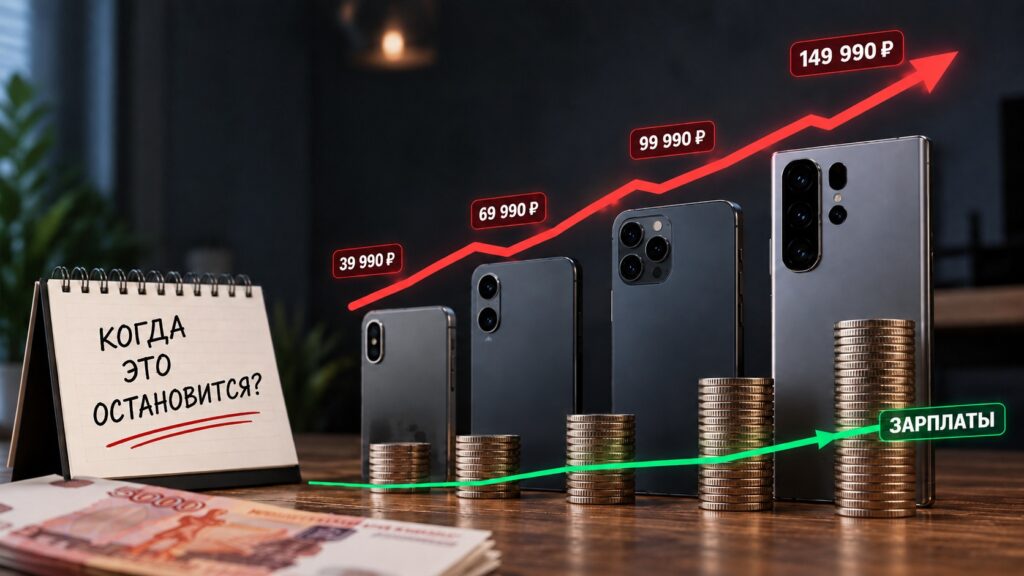
The cost of smartphones really is growing faster than wages
What you need to know
- The source says memory chip prices rose by 40–80% over the past year, driven by AI data-center demand, limited fab capacity, US export restrictions on China and supply disruptions.
- Only a handful of companies make RAM and storage — Samsung, SK Hynix, Micron and several Chinese producers — so shortages hit every phone maker at once.
- The author cites POCO’s announced September price increase, higher Galaxy Z series pricing from Samsung and a higher launch price for the OnePlus 15 versus the OnePlus 13.
- New memory factories take 3–5 years to build, so the source expects relief no earlier than 2027–2028.
The memory crisis: the main driver in 2026
Every smartphone relies on two kinds of memory: RAM for running apps and flash storage for holding data. According to the source, both are produced by a very small group of companies — Samsung, SK Hynix, Micron and a few Chinese manufacturers — and in 2025–2026 this supply chain ran into serious trouble.
The analysis lists four contributing factors:

- Demand for memory surged because of AI: data centers run by OpenAI, Google and others are buying enormous volumes of memory chips.
- Manufacturing capacity cannot keep up, since building new fabs takes years.
- US export restrictions on advanced chips to China forced supply chains to reorganize, creating shortages and logistics delays.
- Natural disasters and accidents at individual factories added further disruptions.
The result, the source states, is that memory prices climbed 40–80% in a year. A phone with 8 GB of RAM and 256 GB of storage now costs a manufacturer noticeably more to build than it did twelve months ago, and that difference is passed on to the buyer. The source does not cite a specific market report for the 40–80% figure, so it should be read as the author’s summary of the market rather than an independently verified statistic.
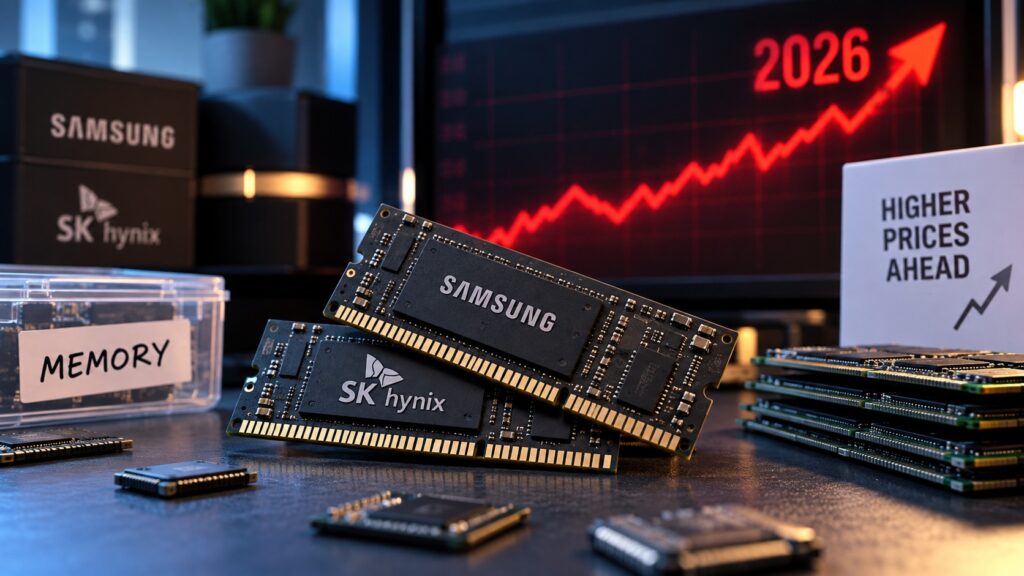
In 2026 the main problems stem from the memory shortage
This, the author argues, explains an odd pattern in 2026: new phones cost more than last year’s models despite similar or only slightly better specifications. The source points to POCO announcing price increases in September, Samsung raising prices on its Galaxy Z lineup, and the OnePlus 15 launching at a higher price than the OnePlus 13. The author also expects the OnePlus 16 to be worse in this respect, though that is a forecast rather than an announced fact.
Exchange rates: a second blow for local prices
The second factor is specific to markets with weakening currencies. Smartphones are manufactured in Asia and traded globally in dollars or euros, so when a local currency falls against the dollar, local prices rise automatically even if the dollar price is unchanged. In Russia, the source notes, the ruble has gone through several waves of weakening over the past two years; within this year alone the rate moved from about 70 rubles per dollar in spring to close to 90 at the time of writing, and sellers price that volatility into the final cost.

On top of exchange rates, the author adds customs duties, logistics costs and distributor margins. For phones arriving through parallel import — which the source says accounts for a significant share of the Russian market — extra routing through third countries adds roughly 10–20% to the price. Readers in other markets will face different local factors, but the underlying mechanism of dollar-denominated component costs applies broadly.
Inflation and higher manufacturing costs
Even setting aside memory and currencies, the source argues that phones are getting more expensive for more fundamental reasons. Wage growth in China over the past decade has made Chinese manufacturing noticeably more costly, so “cheap to make in China” is no longer as cheap as it once was.
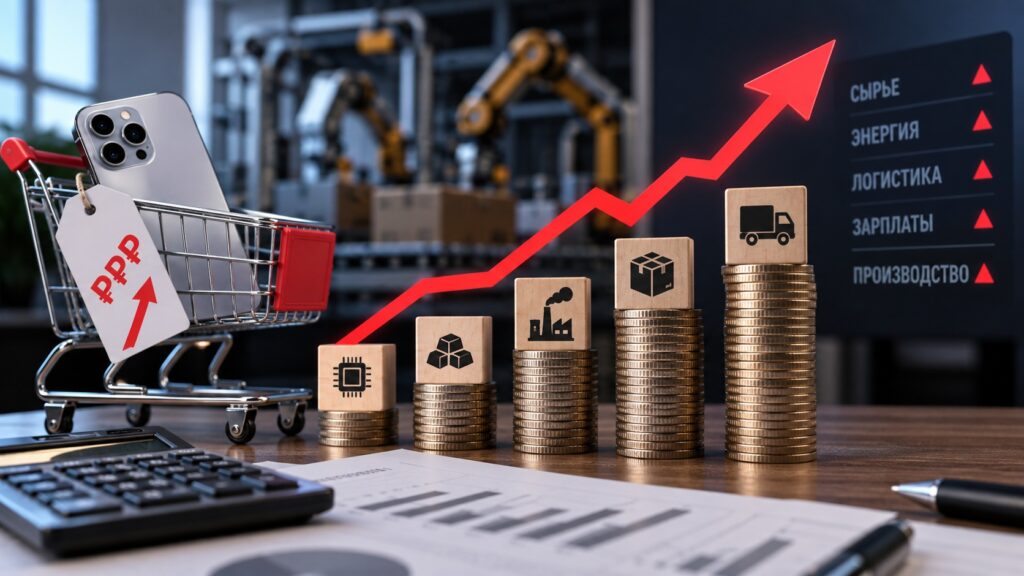
Beyond memory, other smartphone components are getting more expensive too
Energy, transport and raw materials are all rising in price globally, and inflation in the US and Europe feeds into components made there or priced in dollars and euros. Phones have also become technically more complex: periscope cameras, silicon-carbon batteries and 3 nm chips cost significantly more to produce than the solutions of five years ago. Buyers get better devices, the author notes, but they pay for them.

When will it stop? The source’s answer
The author does not expect a quick turnaround. New memory fabs take three to five years to build. Samsung has announced production expansion and Chinese manufacturers are adding capacity, but the source expects this to bear fruit no earlier than 2027–2028. Until then, it argues, shortages and high memory prices will persist.
For the Russian market specifically, the author adds that structural pressure on the ruble is likely to continue in the medium term, and that sanctions and limited market access are a long-term factor with no obvious end point. The conclusion is that prices in rubles will keep rising, and that consumers who bought a mid-range phone such as the POCO X8 Pro in spring got the best price available.
What the author recommends
The source offers three pieces of practical advice, presented here as the author’s opinion rather than a guarantee about future prices:
- If you need a phone, buy it now rather than waiting for the market to come down.
- Look at last year’s models that have dropped in price since launch; the author considers these the best value right now.
- Watch for sales events, where the gap between current promotional prices and expected future prices is most visible.
These recommendations rest on the author’s forecast that the memory shortage will last for years; readers should treat the outlook as one analyst’s assessment rather than a certainty.