Vanga, the blind Bulgarian clairvoyant, is one of the most famous names associated with prophecy, and every year new “predictions” attributed to her about crises and the fate of the world circulate online. Yet historians who have studied the phenomenon point to a fundamental problem: Vanga left no personal diaries, and every well-known quote attributed to her has reached us only through the accounts of people who claimed to have heard it in person. That makes independent verification impossible. The famous “fulfilled” prophecies about the Soviet collapse, the Kursk submarine, and the September 11 attacks all surfaced publicly only after the events they supposedly foretold.

Vanga against a mystical background
What you need to know
- Vanga (Vangelia Pandeva Gushterova) was born in 1911 in the Ottoman Empire and spent most of her life in the small Bulgarian town of Petrich; she left no diaries or written records.
- No reliable transcript of her supposed prediction of the Soviet Union’s collapse exists from before 1991, and the Kursk quote spread only after the 2000 disaster.
- The “44th US president” prophecy is usually quoted without its second half, which claimed he would be America’s last leader.
- Verifying any prediction requires a dated pre-event record, specific details, and a complete list of all forecasts made; none of these conditions is met in Vanga’s case.
Who the Bulgarian clairvoyant was
Vanga’s real name was Vangelia Pandeva Gushterova. She was born in 1911 on the territory of the Ottoman Empire and spent most of her life in Petrich, a small town in Bulgaria. She lost her sight in childhood; the details of that event became embellished with legends much later.
In adulthood, people began travelling to her in large numbers for advice. Visitors ranged from ordinary peasants searching for missing relatives to high-ranking officials and celebrities. An audience with Vanga became a genuine social phenomenon, and she was nicknamed the Balkan Nostradamus.
The core problem is that Vanga kept no personal diaries. Every phrase attributed to her has come down exclusively through the stories of people who claimed to have heard the words themselves, which makes any verification impossible.

Photograph of Vanga
A perfect moment for mysticism in the late Soviet Union
Attitudes toward Vanga in the Soviet Union were paradoxical. Official ideology firmly rejected all mysticism, yet in the late Soviet period there was enormous demand for the supernatural: readers devoured articles about UFOs, psychics, and faith healers.
The Bulgarian clairvoyant fitted this historical moment perfectly. She lived in a friendly socialist country, Soviet journalists visited her regularly, and her image as a mysterious woman was broadcast in the official press. Given the shortage of outside information and the absence of the internet, checking old quotations was impossible.
For many Soviet citizens, publication in a newspaper automatically implied credibility. Instead of a critical approach, people looked for simple answers to complex questions.
Vanga’s most famous prophecies
Vanga is credited with a huge number of forecasts that supposedly came true with frightening accuracy. Under close examination, however, each one falls apart because there are no primary sources.
Her supporters claim she foresaw the disappearance of the Soviet Union. The problem is that there is not a single reliable transcript with such wording recorded before 1991. All the confirmations appeared only after the country had already ceased to exist.
A similar story surrounds the Kursk submarine. The well-known quote about Kursk going under water and the whole world mourning it began circulating widely only after the tragedy of 2000. Researchers have found no reliable evidence that these words were published in advance.
The legend about the attack on the Twin Towers in the United States rests on a phrase about steel birds and falling American brothers. Once again, the same error applies: the text was linked to the events of September 11 only after the attack. As for the prediction about the 44th US president being Black, those who spread the myth often omit the second half of the phrase, which held that Barack Obama would be the last American leader, a claim that proved plainly false.
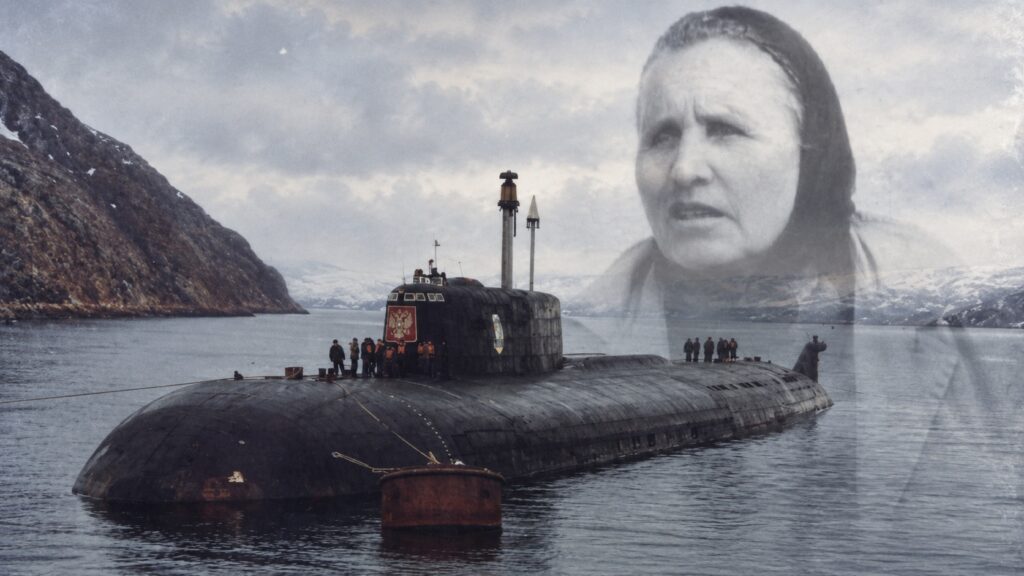
The Kursk submarine and Vanga
Why people believe predictions
People tend to exaggerate some facts and ignore others, a tendency rooted in how the human mind works. The brain is highly susceptible to cognitive biases.
- People remember only the hits. If someone made a thousand forecasts and 950 of them came to nothing, history will recall only the 50 coincidences.
- Most predictions are extremely vague. A phrase about hard times ahead can be applied to any crisis, war, or epidemic.
- We interpret the past through the lens of the present. This mechanism is known as hindsight bias.
How to test whether a prediction is genuine
To evaluate any prediction objectively, three strict conditions must be met, and none of them is satisfied in Vanga’s case.
First, there must be a documented record made before the event. The statement needs a precise date of utterance and a reliable source, to rule out fabrication after the fact.
Second, the prediction must be as specific as possible. Talk of great changes has no value. A meaningful forecast includes exact dates, places, and the scale of the event, for example an earthquake of a given magnitude in a particular city.
Third, a complete list of all forecasts made is required. Only then can the real hit rate be calculated and random guesses filtered out. Assembling such an archive of Vanga’s statements is physically impossible.
Why we crave predictions
The world feels overwhelming and frightening when conflicts, epidemics, or economic shocks suddenly erupt against the backdrop of ordinary life. In such moments people need a simple explanation for what is happening.
Belief in predictions provides a false sense of control: if someone knew about an approaching catastrophe in advance, then there must be a hidden order within the chaos. Uncertainty frightens the brain far more than even the most negative but comprehensible answer.
Social media has amplified this effect many times over. Where myths once took years to form through published books, a short post about a “fulfilled” prophecy now reaches millions of screens within a couple of hours. As a result, Vanga has been transformed from a real person into a universal cultural symbol of wisdom, whose name is invoked for dramatic headlines after every global upheaval.