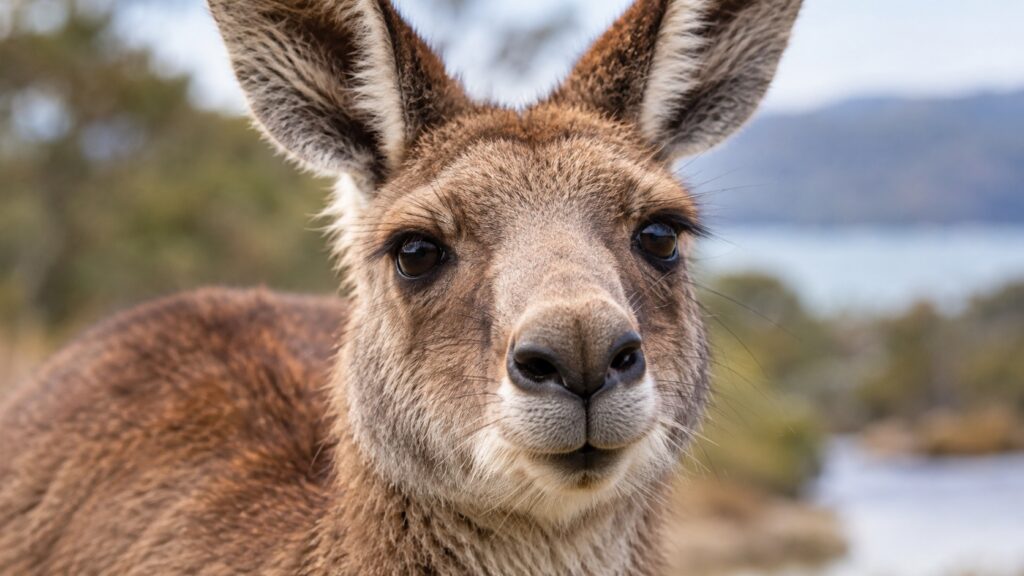
A close-up of a kangaroo
Wild kangaroos live only in Australia and on New Guinea. There are none in Asia, Africa or the Americas. According to scientists, this limited range is explained by the history of the planet itself: marsupials originated elsewhere, but Australia’s long isolation and the scarcity of competitors allowed kangaroos and their relatives to flourish there. Ancient kangaroos also looked quite different from the animals we know today.
What you need to know
- Some of the oldest known marsupial fossils come from North America, not Australia.
- According to University of Salford biology lecturer Robin Beck, marsupials lived in the Americas for at least 70 million years before reaching Australia.
- After the supercontinent Pangaea broke apart, Australia was cut off, and its marsupials had to compete with placental mammals far less often.
- Kangaroo ancestors were small tree-dwellers weighing less than a couple of kilograms; some modern kangaroos weigh up to 90 kg.
Kangaroos: marsupials with “big feet”
Kangaroos are marsupials. In these mammals, the young are born extremely small and continue developing in a pouch on the mother’s belly. The pouch contains teats, so the young animal also feeds on milk there.
A kangaroo’s pouch opens forward, toward the head. A baby kangaroo is called a joey. Kangaroos belong to the family Macropodidae, whose scientific name translates as “big foot” — a name that makes obvious sense once you look at their hind legs.
The best-known species are the red kangaroo, the eastern grey kangaroo and the western grey kangaroo. Their close relatives include wallabies, tree kangaroos and quokkas.
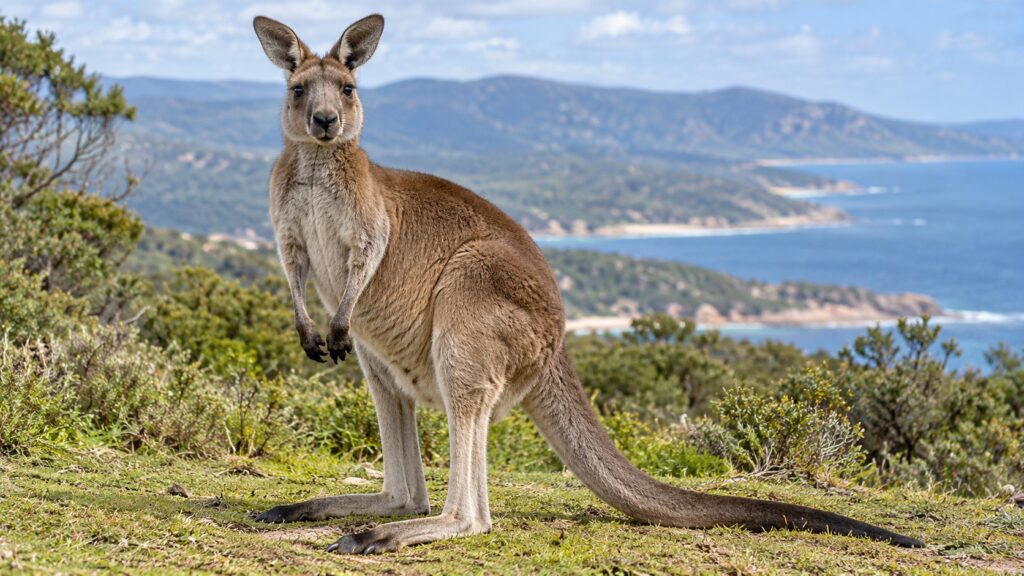
A kangaroo at full height
Where different kangaroo species live
Outside Australia and Papua New Guinea, kangaroos can be seen only in zoos. Even within Australia, each species has its own preferred habitat:
- tree kangaroos live in trees in tropical forests, for example in Queensland;
- red kangaroos prefer arid areas, mostly flat plains;
- eastern and western grey kangaroos stay in areas with plenty of scrub;
- rat kangaroos build nests directly on the ground in tropical forest and hide in the foliage.
In other words, kangaroos are not tied to a single type of landscape. They have colonised almost every corner of the continent, from deserts to rainforests. To understand why all this diversity exists only in Australia, it is necessary to look back tens of millions of years.
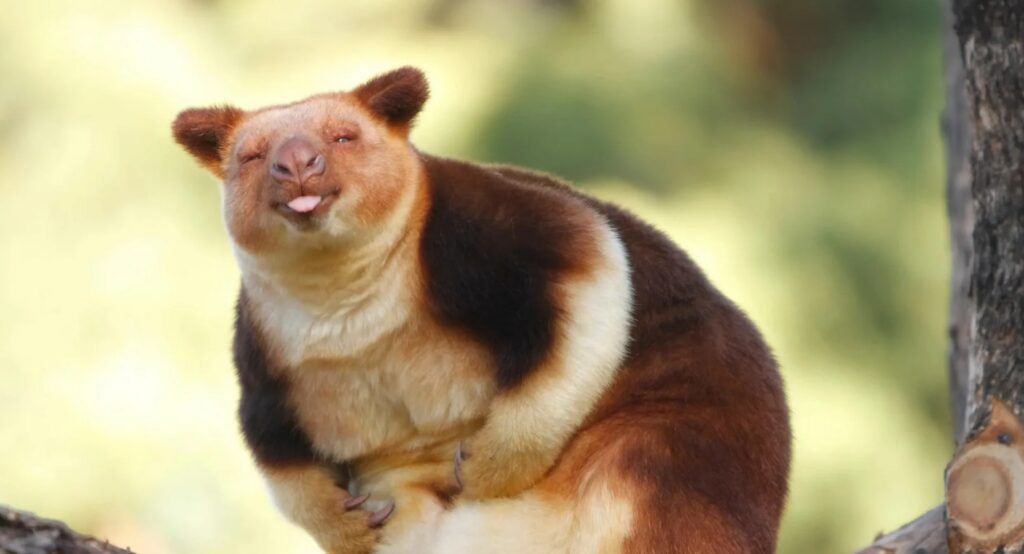
A tree kangaroo
The first marsupials appeared in the Americas
Marsupials are often thought of as “Australian” animals, but they did not originate there. Some of the oldest marsupial fossils have been found in North America.
From there, marsupials moved into South America. Scientists do not yet know exactly how. There are two hypotheses: the animals “hopped” from island to island, or they crossed a narrow land bridge that later disappeared.
In South America, marsupials multiplied and occupied a wide range of habitats, from sabre-toothed predators to small, shrew-like opossums. Over time, some of these species made their way to Australia. Scientists have confirmed the relationship between Australian and South American marsupials through both fossils and genetic analysis. According to Robin Beck, a biology lecturer at the University of Salford, marsupials lived in the Americas for at least 70 million years before reaching Australia.
The breakup of Pangaea cut Australia off
At one time, almost all of Earth’s land was gathered into a single giant landmass, which scientists call Pangaea. The Earth’s crust is made up of large plates that move slowly. Over millions of years, they pulled Pangaea apart into the pieces that became today’s continents.
As the continents drifted apart, Australia became isolated from the rest of the world’s land. Elsewhere, animals could move across land bridges or between nearby islands. Australian plants and animals, by contrast, evolved on their own, separately from the rest of the world.
Without competitors, marsupials took over the continent
Australia’s key difference was that it had few competitors. In most places on Earth, placental mammals dominate — animals whose young develop for a long time in the mother’s womb, such as cats, dogs, deer and humans. Marsupials in Australia had to compete with them far less often.
As a result, marsupials were able to fill a wide variety of ecological “niches”: some became predators, some herbivores, others tree climbers. Over millions of years, this produced Tasmanian devils, possums, thylacines (marsupial wolves), wallabies and, of course, kangaroos.
From small tree-dwellers to 90-kilogram hoppers
Modern kangaroos can be very large: some weigh up to 90 kg. Their ancient ancestors, however, were tiny, weighing less than a couple of kilograms.
Judging by fossil finds, the kangaroo’s ancestor resembled today’s musky rat-kangaroo. It lived in the trees that then covered much of Australia and later came down to the ground. Its descendants grew larger and spread into new habitats. Among them was the giant Procoptodon goliath, which was much heavier than modern kangaroos.
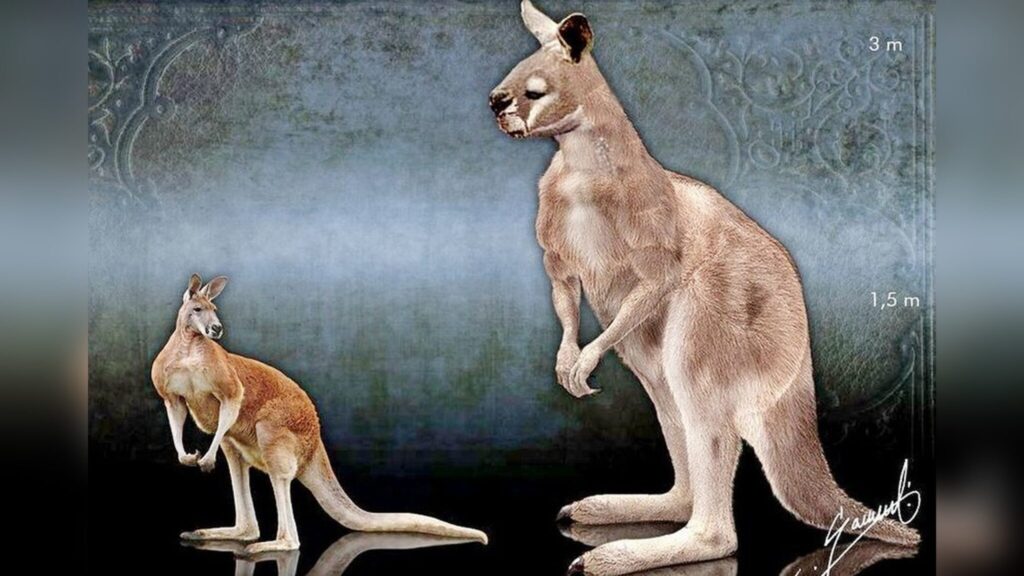
A modern kangaroo compared with Procoptodon
Why red and grey kangaroos survived
The giants died out, while red and grey kangaroos survived. There are two likely explanations. First, they were probably faster than their larger relatives, making them harder for hunters to catch. Second, they developed specialised teeth that allowed them to chew the tough grasses of Australia’s plains all day long.
Had Australia separated from the other continents later, the story might have turned out differently. Placental mammals would probably have reached the continent, and it is unclear whether there would have been room for kangaroos at all.