If you’re buying a smartphone in 2026 to last several years, the amount of RAM, which also affects Android performance, has become a much more important spec than before. 8 GB of RAM is no longer enough for the latest OS features, and the reason isn’t marketing — it’s how modern software running on our devices actually works. Let’s break down why the bar has risen to 12 GB and who this really matters for.

Don’t buy smartphones with 8 GB of RAM. That’s decidedly too little in 2026
Why Smartphones Need a Lot of RAM
The main reason for growing RAM requirements in modern smartphones is the shift to next-generation neural networks, which are already built into most models and run locally rather than on a remote server. For the neural network to respond quickly, it needs to be constantly loaded into RAM. Without this, each request would take several seconds to process.
Local AI has clear advantages: it works faster, better protects personal data, and often functions without an internet connection. Google tools like the eraser that removes unwanted objects from photos, as well as text recognition in images, are designed to eliminate routine from everyday tasks, and request processing starts immediately without sending data to a server and back. The trade-off is several gigabytes of memory constantly occupied by the neural network.
If you want to understand the basics, we separately explained why an Android smartphone needs a lot of RAM and what it actually affects in daily use.
How Much Space Neural Networks for Android Take Up
To see the scale of the problem, just look at the latest Pixel models and new versions of the Gemini Nano AI model. The Gemma 4 E2B and E4B language models used by Google weigh 4.2 GB and 5.9 GB — meaning just one model takes up almost as much memory as the entire system with a couple of apps used to need.
To still have room for other apps, you need a smartphone with 12 GB of RAM or more. For comparison: the previous version, Nano 3, needed less than 4 GB — meaning the most powerful on-device models are getting larger. And the set of features under the umbrella name Gemini Intelligence explicitly states a minimum of 12 GB of RAM. As a result, last year’s mid-rangers and even some expensive models with 8 GB are already excluded from the latest AI capabilities.
Google isn’t abandoning budget device buyers: for low-end devices on Android Go, they’re preparing a stripped-down feature set called Gemini Go. But even that needs at least 2 GB of free memory, and such phones often carry only 4 GB total.
Why 8 GB of RAM Is Not Enough for Android in 2026
Not long ago, 8 GB was considered more than sufficient — it was enough to keep two or three games in memory simultaneously without closing apps. If you remove AI from the equation, 8 GB still more than covers everyday tasks. The problem is that smartphone development now revolves around AI features, and they’re memory-hungry.
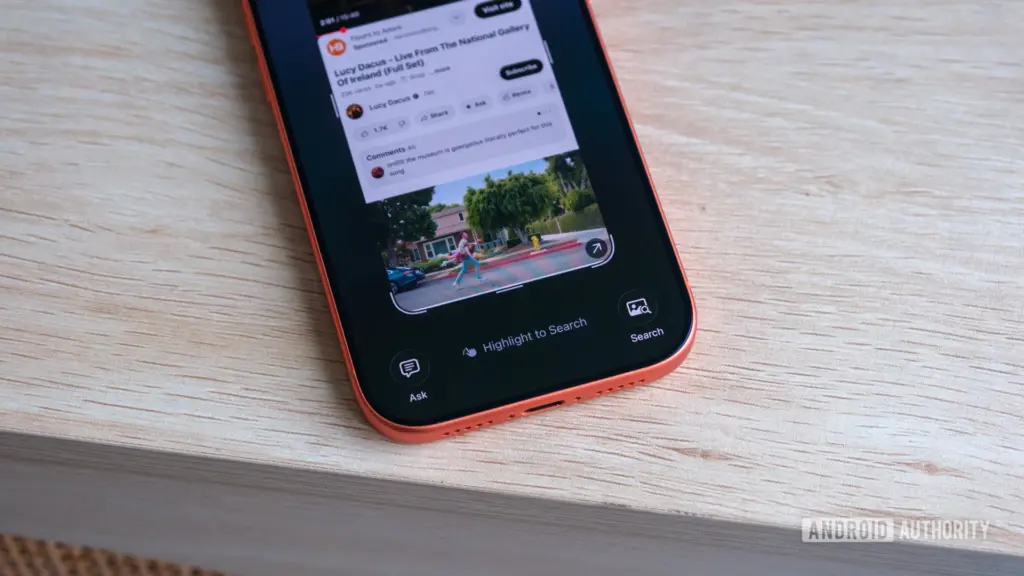
Samsung Galaxy S25 Ultra RAM use
There’s also an unpleasant nuance for those who don’t plan to use AI at all. Since the model constantly sits in memory, a smartphone with 12 GB has closer to 7 GB of actually free memory for apps and games. In other words, part of the memory is essentially reserved for features you may not need.
This trend isn’t limited to Android. Apple Intelligence initially required 8 GB of RAM, and with iOS 27 the bar for on-device AI features jumped to the same 12 GB. As a result, the latest Apple AI capabilities are only supported on iPhone 17 Pro, iPhone 17 Pro Max, and iPhone Air — the long-standing tradition of extensive backward compatibility in the iPhone lineup has essentially been broken.
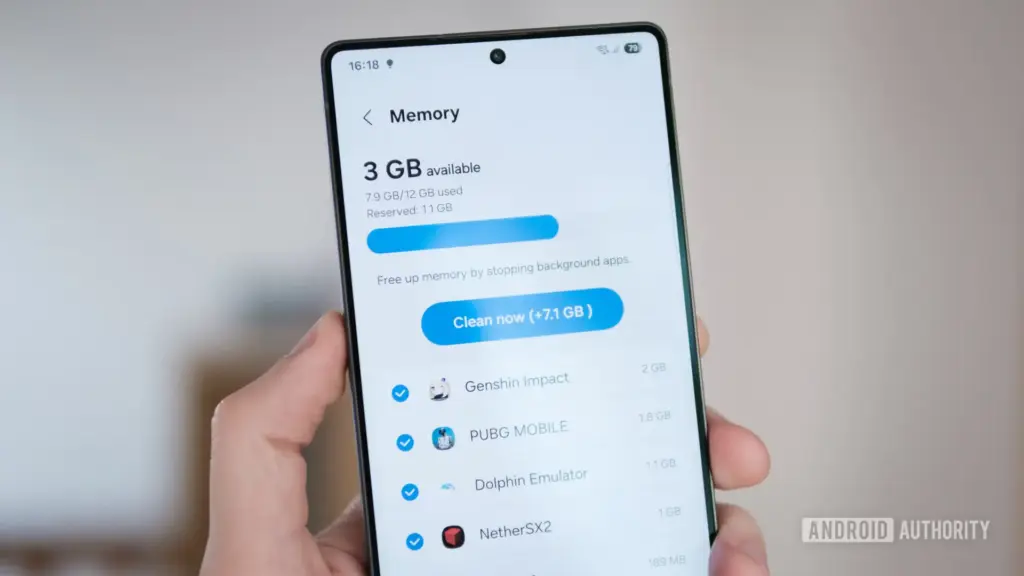
Part of the memory in an AI smartphone is effectively occupied by the model and unavailable to apps.
How Much RAM to Get in an Android Smartphone in 2026
The conclusion is simple: buying a smartphone with 8 GB in 2026 means you’re cutting yourself off from current and future AI features on Android and iOS in advance. Moreover, even 12 GB could become outdated in two to three years given the pace of change — what was excess yesterday risks falling below minimum requirements.
That’s why when buying, you should get as much memory as possible, whether you’re spending roughly $600 on a mid-ranger or over $1,000 on a flagship. At the top of the market, there are plenty of flagships with 16 GB, although for that amount you sometimes have to pay extra by choosing versions with larger storage of 512 GB or 1 TB. Even more mainstream options — Galaxy S26, S26 Plus, and Z Flip 7 — come with 12 GB, and that’s sufficient for now.
The main downside is that memory isn’t cheap to add right now: due to shortages and rising chip prices, a larger amount noticeably impacts the final price of the smartphone. We already covered how much RAM Android smartphones will have now and why it hits the price.
Who Really Needs More RAM in Android, and Who Doesn’t Need to Worry
If you’re getting a smartphone for five years and want to stay up to date with AI features, the target is clear — 12 GB of RAM as a minimum, and more if the budget allows. This is insurance against your device falling out of updates with new capabilities prematurely.
But if AI tools don’t matter to you and you need a phone for messengers, navigation, camera, and a couple of games, then 8 GB will still handle everyday tasks just fine — just don’t count on the latest neural network features. The key is to clearly understand what exactly you’re paying for, and not overpay for memory you won’t use, but also not skimp if AI is a priority for you.