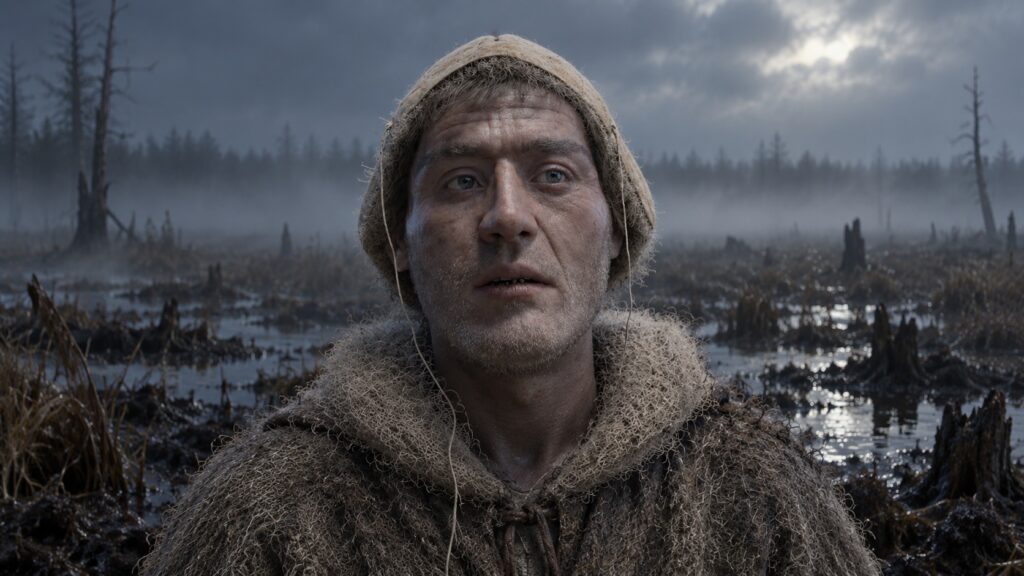
Reconstruction of an ancient person whose body was found in a bog
Peat bogs can keep human bodies recognizable for thousands of years because they are waterlogged, acidic and almost free of oxygen. Without oxygen, the bacteria and fungi that normally break down dead tissue cannot survive, so decay nearly stops. Acidic bog water acts like a pickling brine, and a carbohydrate released by sphagnum moss tans the skin. Scientists know of at least 2,000 such bog bodies, and skin, hair and internal organs can remain intact after centuries.
What you need to know
- At least 2,000 bog bodies have been found in Europe’s peatlands, ranging from the Mesolithic to the Second World War.
- Dense peat layers block air, so oxygen-dependent bacteria and fungi that drive decomposition cannot survive there.
- Sphagnum moss releases a carbohydrate called sphagnan that binds to skin proteins, tanning the skin dark brown, while bog acid leaches calcium from bones.
- Raised bogs preserve bodies best; fens fed by mineral-rich groundwater are less acidic, and soft tissue usually rots.
Lindow Man lay in the peat for nearly 2,000 years
In August 1984, workers cutting peat near the English town of Wilmslow, about half an hour’s drive south of Manchester, found a body. It was a man of about 25 with a neatly trimmed beard and well-kept fingernails. He had been struck hard on the head several times, his throat had been cut and a rib had been broken.
It looked like a recent crime, but he had been in the bog for nearly 2,000 years. Today he is known as Lindow Man, and he is far from unique: at least 2,000 so-called bog bodies have been found in Europe’s peatlands. The oldest date to the Mesolithic, or Middle Stone Age, which in Europe ended between 8,500 and 5,500 years ago. The most recent finds date to the Second World War.
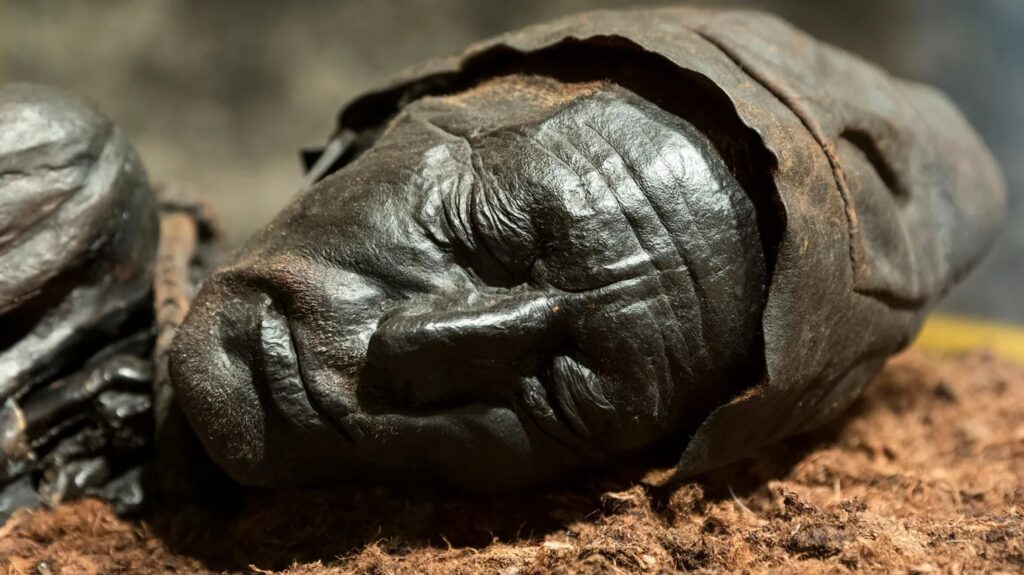
The mummified body of Lindow Man. Image source: popsci.com
Lindow Man is held at the British Museum in London. Journalist Anna North saw him there and later wrote Bog Queen, a bestselling novel about an investigation involving a bog body.
He doesn’t look great, but he is so easily recognizable as a person, she recalls.
To write the book, North first had to understand what a bog actually is.
Peat builds up faster than it can rot
A peat bog is an acidic, nutrient-poor wetland. Its ground is made of peat: a soft, springy mass of plants that have not fully decomposed. This layer accumulates over hundreds and thousands of years.
North explains it simply: peat forms from any organic matter that accumulates faster than it breaks down. Grasses, reeds, roots and shrubs all go into it, but most of it is sphagnum, a shaggy, moisture-loving moss. Sphagnum absorbs large amounts of water and holds it like a sponge, so the bog is soaked through and contains almost no air. According to North, that is exactly why things are preserved so well there.
Bogs exist all over the world but are most common in cool, rainy northern regions. Mist over the mire, unstable ground and stagnant water have long made them a favorite setting for Gothic fiction and detective stories such as Arthur Conan Doyle’s The Hound of the Baskervilles. The real mystery of bogs, however, lies in their chemistry.
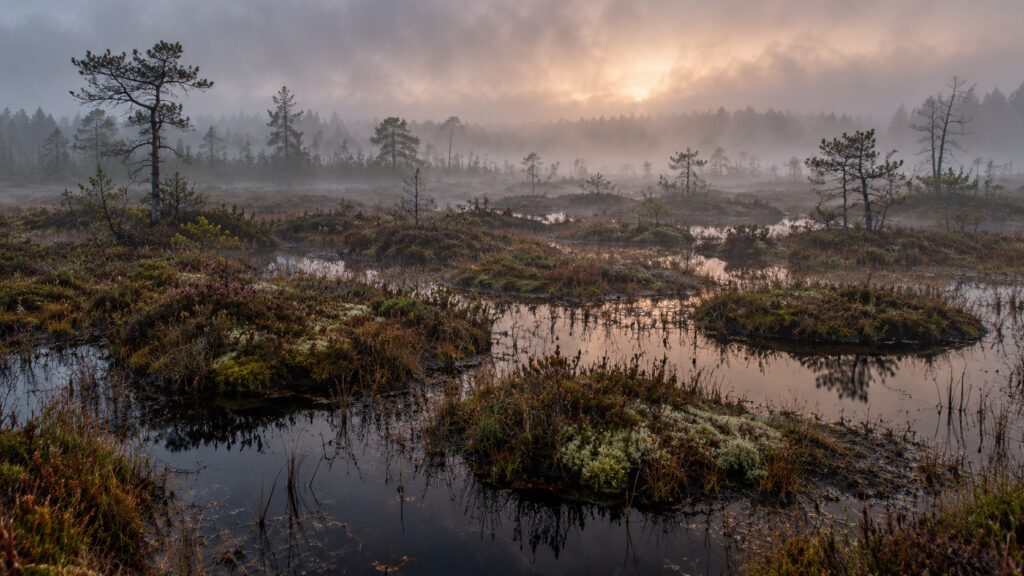
A peat bog
Without oxygen, decomposing microbes cannot survive
A body is preserved because three factors come together in a bog: where the water comes from, the chemistry of the environment and the plants that grow there. Almost all of a bog’s water arrives as rain and snow, so it contains few minerals and nutrients. The moss also holds the water in place, so it barely flows.
Dense layers of peat on top cut off air from whatever lies beneath. Bacteria and fungi that need oxygen cannot survive there, and they are the organisms that normally break down dead plants and bodies. Without them, decomposition almost stops.
Acid and moss tan the skin but dissolve the bones
The next stage is easiest to describe by comparison with pickling cucumbers. Acidic bog water works like brine: harmful bacteria cannot multiply in it, and the body stays largely intact.
Sphagnum itself also helps. It releases a carbohydrate called sphagnan, which binds to proteins in skin and other tissues. As a result, the skin becomes tough, like tanned leather, and turns the dark brown color of strong tea. That same process protects it from rotting.
The acid, however, also leaches calcium out of bones. As North notes, an X-ray of a bog body looks nothing like one of a living person: the bones appear softened and distorted, or are missing altogether.
Raised bogs preserve bodies best
Not every bog preserves bodies equally well. Raised bogs do the best job. These are deep, dome-shaped peatlands that are wetter and higher than the surrounding land, highly acidic and completely lacking in oxygen.
In blanket bogs, the peat layer is thinner, so bodies decompose faster, although finds do occur there too. Fens preserve bodies worst. They are fed not only by rain but also by mineral-rich groundwater, which makes them less acidic, and the body’s soft tissues usually rot.
Worn teeth reveal an ancient body
Finding a body in a bog is only half the task. Investigators also have to determine whether it is ancient or whether the person died recently. Teeth help forensic experts here. While researching her book, North learned that people who lived before refined flour existed experienced tooth damage very differently from people today.
In the past, grain was ground between millstones, and tiny particles of stone ended up in the flour. People ate bread and porridge made from it, chewed those grains of grit, and their teeth gradually wore down. That is why heavily worn teeth identify a person from the distant past more reliably than almost perfectly preserved skin.