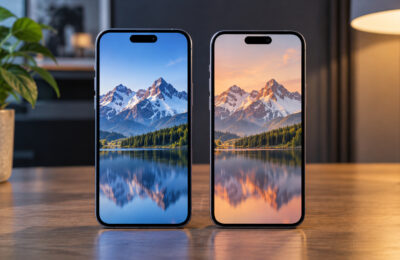
Apple’s Vice President in charge of Apple Music, Oliver Schusser, gave an extensive interview in which he explained the service’s key strategic decisions in detail. Why Apple has deliberately prioritized spatial audio over lossless quality, and why the company is stepping up its fight against AI-generated content. Spatial audio has become the main feature of AirPods Pro 3 and other Apple headphones. Let’s break down what all of this means for the average subscriber.
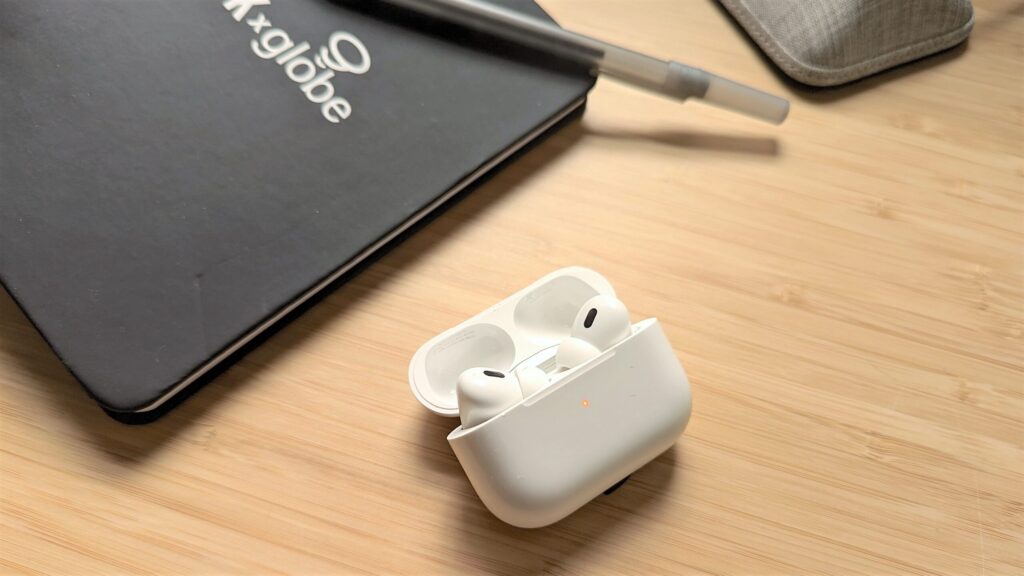
AirPods don’t support lossless via Bluetooth, and now it’s clear why
Why Lossless Doesn’t Work on AirPods via Bluetooth
Apple Music supports both lossless (a format without quality loss) and spatial audio. But the company has prioritized spatial audio, and Schusser explained why.
The first reason is technical. Lossless is impossible over Bluetooth, which means AirPods owners and most wireless headphone users physically cannot hear the difference. Lossless requires a wired connection, which few people use in everyday life.
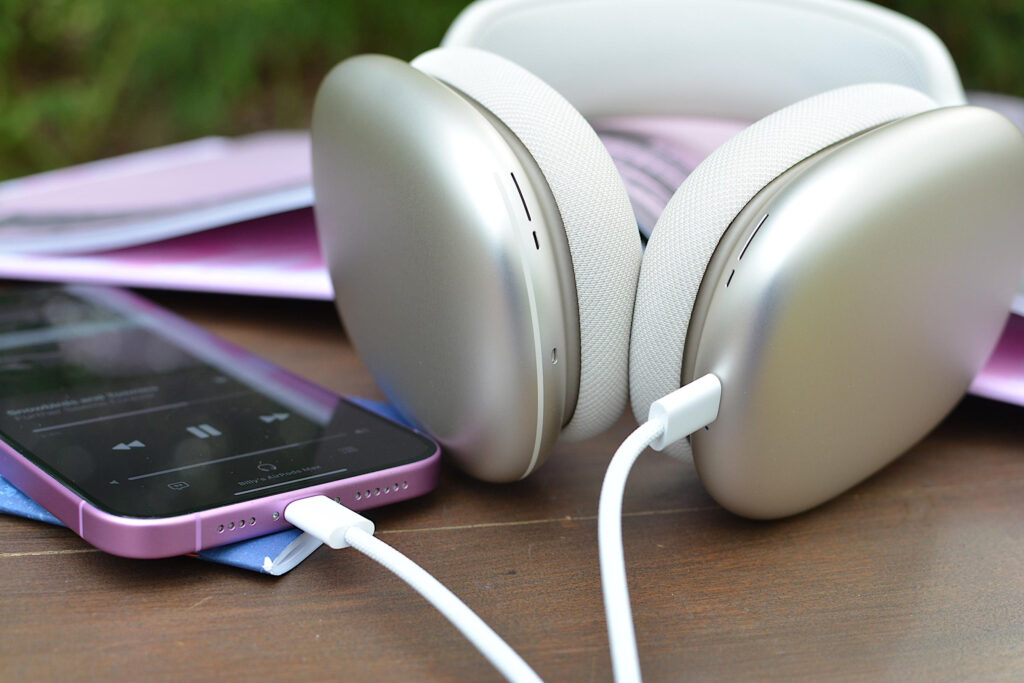
AirPods Max are the only Apple headphones with lossless support, and only via cable
The second reason is perception. Even experts struggle to tell lossless apart from regular compressed audio in blind tests. Meanwhile, spatial audio delivers an effect that everyone notices: sound surrounds you from all sides rather than sounding “flat” from two points.
For this, Apple made serious investments: the company helped re-equip recording studios around the world and trained sound engineers to work with the spatial format. The result, according to Schusser, is impressive: over 90% of popular tracks are already available in spatial audio, and more than 90% of listeners use this format.
For AirPods Pro or AirPods Max owners, this is good news — their headphones showcase spatial audio best of all. However, chasing lossless without wired headphones and a quality DAC (digital-to-analog converter) doesn’t make much sense.
How Apple Music Differs from Spotify in Music Curation
In an era when Spotify actively promotes algorithmic playlists, Apple Music is betting on human editors. Schusser revealed that the company has even stopped using the word “radio” internally — instead, the platform is positioned as a space for artist expression, where curators like renowned music journalist Zane Lowe play a key role.
Apple Music still relies on manual work
Manual lyrics verification is another distinction: unlike competitors who use third-party contractors, Apple maintains its own team that manually checks lyrics and synchronizes them with the music down to every word.
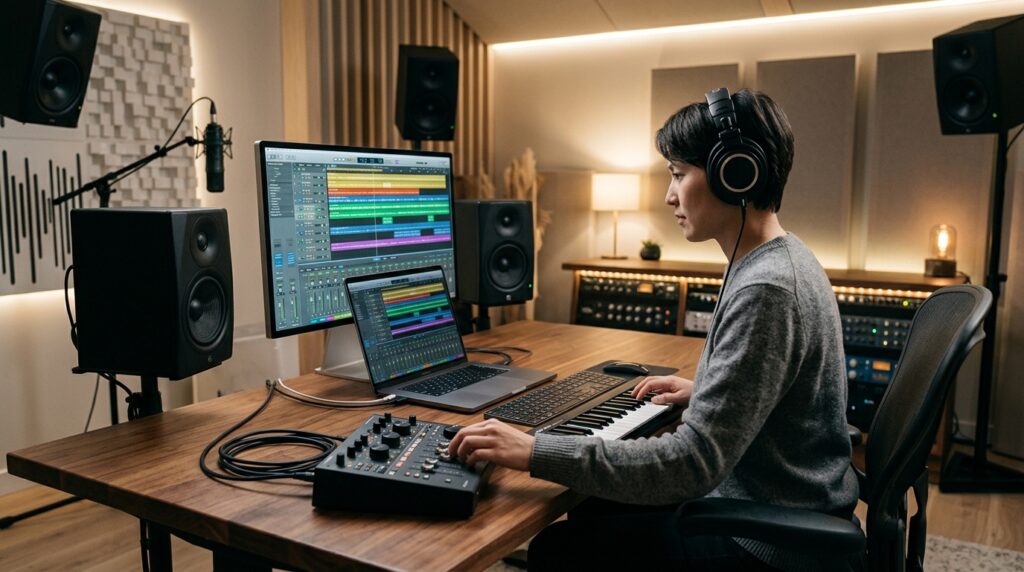
A recording studio with equipment for working with spatial audio
In practice, this shows in the quality of the karaoke lyrics feature (Apple Music Sing) and in the fact that Apple Music playlists often feel more “curated.” Whether you like Apple’s approach or not is a matter of taste, but the difference is noticeable.
AI-Generated Music on Apple Music
One of the most surprising figures from the interview: about a third of all new tracks uploaded to streaming platforms are entirely generated by neural networks. However, the actual share of listens for such music on Apple Music is less than 0.5%.

Neural networks have reached the world of music
The main threat, according to Schusser, isn’t the AI tracks themselves but fraud — bot-driven stream manipulation that takes money away from real musicians. To combat this, Apple has taken concrete measures:
- Since February 2024, penalties for stream manipulation have been doubled
- A mandatory labeling system has been introduced: distributors must disclose whether AI was used in creating the music, artwork, lyrics, or video
Apple doesn’t ban AI music outright but strictly ensures it doesn’t undermine the platform’s economy.
What Makes Apple Music Better Than Other Streaming Services
If you’re already subscribed to Apple Music and listen through AirPods, the main practical takeaway is that spatial audio deserves more attention than lossless. Make sure this feature is enabled in your settings, and try listening to familiar tracks in the new format.
Apple Music bets on quality sound
If you’re choosing between Apple Music and Spotify, the key difference isn’t the catalog (it’s practically identical) but the philosophy: Apple bets on sound quality and editorial curation, while Spotify focuses on algorithms and free access. There will be no free Apple Music — this is a deliberate position, not a temporary decision.
As for those hoping for a revolution in lossless listening through wireless headphones, there’s nothing to wait for yet — the physical limitations of Bluetooth haven’t gone anywhere, and Apple understands this perfectly well.