
Following healthy lifestyle recommendations can increase your chances of a long life
Russia now has an official guide on how to lead a healthy lifestyle. It includes meal schedules, a daily step count, and even a point about keeping a gratitude journal. Formally, the document is addressed to medical organizations, but in practice it concerns everyone who wants to live longer and feel better.
Why the Government Needs Official Healthy Lifestyle Rules
According to RIA Novosti, in April 2026, Russia approved methodological recommendations for lifestyle correction. The document is addressed to medical organizations that host health centers or centers for healthy longevity medicine.
Essentially, it’s a unified standard. Doctors can now rely on a specific list of recommendations rather than giving patients vague advice like “eat less and move more.”
The recommendations themselves cover five areas: nutrition, hydration, physical activity, sleep, and stress management. Each section contains specific numbers, from the number of calories at breakfast to the air temperature in the bedroom. Let’s go through them one by one.
How to Eat Properly According to the New Ministry of Health Recommendations
The main rule is to eat breakfast within an hour of waking up, ideally between 7 and 9 AM. Moreover, the morning meal should be the most substantial: 30–40% of all daily calories should come at breakfast. Dinner is recommended no later than three hours before bedtime, and there should be 4–5 hour intervals between meals.
There’s also a separate blacklist of things that should be removed from the diet or at least seriously reduced:
- semi-finished products, sausages, and hot dogs;
- ready-made sauces;
- white bread;
- added sugar, sweets, and pastries;
- sugary drinks and packaged juices;
- rich meat broths.
The list, frankly, isn’t surprising because most dietitians have been saying this for a long time. But now it’s recorded in an official document, and a doctor at a clinic can reference it when giving recommendations to a patient.
How Much Water You Need to Drink During the Day
The hydration recommendations are laid out almost hour by hour. The morning begins with a glass of room-temperature or slightly warm water, immediately after waking up. Throughout the day, you should take 2–3 sips of water every hour, and drink 100–150 milliliters 20–30 minutes before meals.
A specific daily water intake in liters is not stated in the document. Instead, a water consumption rate tied to the daily routine is proposed. This approach, by the way, is considered more sensible by many specialists than the popular advice to “drink two liters a day”: water needs depend on body weight, climate, physical activity, and many other factors.
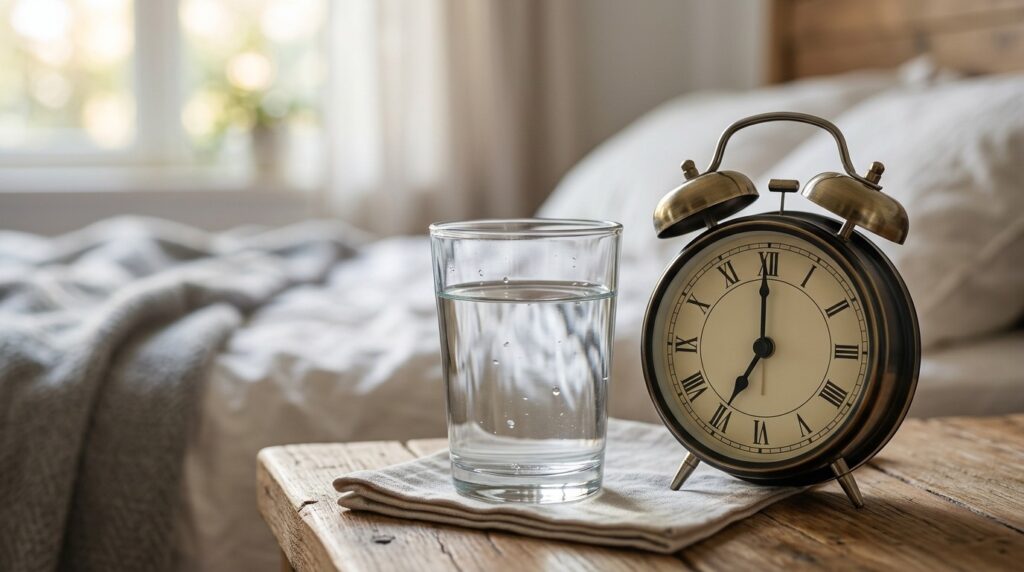
The morning according to new recommendations begins with a glass of room-temperature water
How Many Steps Per Day According to Russian Healthy Lifestyle Rules
The minimum is 7,000 steps per day, which corresponds to approximately 30–50 minutes of walking. This is noticeably less than the famous 10,000 steps, which, incidentally, originally came not from scientific research but from a marketing campaign by a Japanese pedometer manufacturer in the 1960s. Modern studies show that 7,000–8,000 steps already significantly reduce the risk of cardiovascular disease, so the figure in the document is well-founded.
In addition to walking, the recommendations include two simple rules for those who work sitting down:
- use stairs instead of elevators
- stand up or walk around every hour
It sounds obvious, but prolonged continuous sitting is one of the main health risk factors for office workers. Even short movement breaks noticeably improve well-being and reduce strain on the spine.
Why Sleep Should Last 7–9 Hours
The sleep section is perhaps the most detailed. You need to sleep 7–9 hours because it is within this range that the body has time to go through all the necessary sleep phases, including deep sleep and the rapid eye movement phase, when the brain processes information and recovers.
But duration alone isn’t enough — conditions matter:
- complete darkness in the bedroom;
- air temperature of 18–20 degrees Celsius;
- avoiding screens 1–2 hours before bed or using a blue light filter;
- no caffeine after 2:00 PM;
- no alcohol within three hours of bedtime.
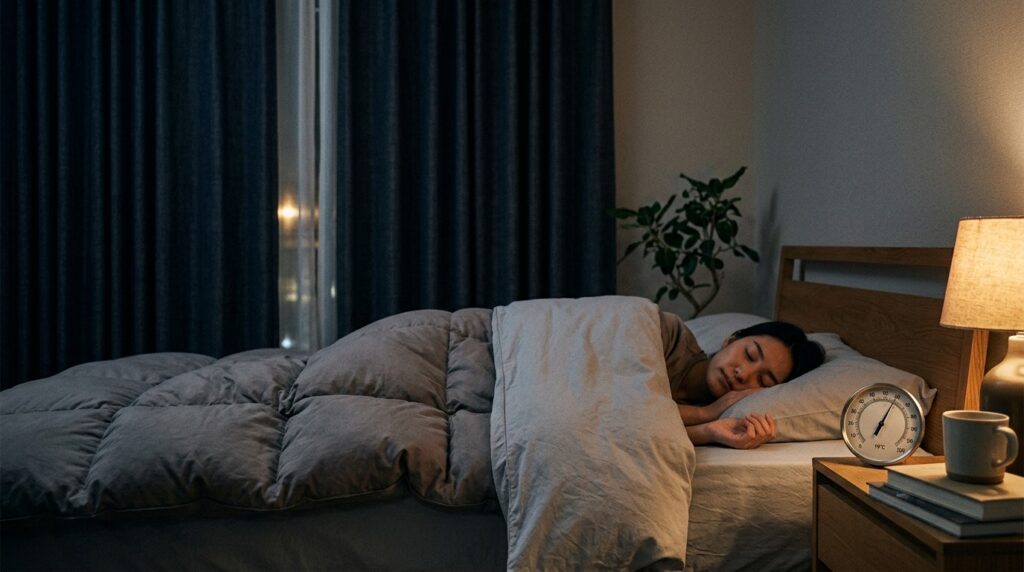
The ideal bedroom according to new standards: darkness, coolness, and no screens
The requirement for complete darkness isn’t a whim: even a faint glow from a charger or streetlight through a gap in the curtains suppresses the production of melatonin — the hormone that regulates sleep-wake cycles. As for temperature, the story is this: to fall asleep, the body needs to cool down slightly, and in a stuffy room this process is noticeably slowed.
How to Manage Stress Without Medication
Perhaps the most unexpected section is about stress. The government document now explicitly prescribes meditation, breathing exercises, and a gratitude journal.
The specific list of stress management methods looks like this:
- 10–15 minutes of meditation or breathing exercises in the morning;
- a five-minute breathing practice during the day;
- an evening walk of 20 minutes;
- a gratitude journal — three entries before bed.
Keeping a gratitude journal is quite easy. Before bed, you write down three things you’re grateful for from the past day. It sounds naive, but a number of psychological studies do indeed link this practice to reduced anxiety levels and improved sleep quality.
Breathing exercises and evening walks, on the other hand, are recommendations with a more solid evidence base. Even short sessions of conscious breathing activate the parasympathetic nervous system, which is responsible for relaxation and recovery.
Will Healthy Lifestyle Rules Actually Help You Live Longer
According to the document, the listed rules directly affect life expectancy. That’s a fairly bold statement, but in substance, each individual recommendation — adequate sleep, moderate activity, avoiding sausages and hot dogs — is indeed supported by numerous studies as a factor in reducing the risks of chronic diseases.
Another matter is feasibility. Having breakfast between 7–9 AM is physically impossible for those who work night shifts. Finding 15 minutes for morning meditation is a challenge for parents with small children. And as for complete darkness in the bedroom during summer in St. Petersburg or Murmansk — white nights take their toll.
But the value of the document isn’t that everyone will start living strictly by schedule tomorrow. What matters is that doctors now have a unified reference point with specific numbers, rather than a set of general phrases. A patient visiting a health center will receive not an abstract “take care of yourself” but a clear list of actions. Choosing from it what actually fits into your life rhythm is already a step in the right direction.