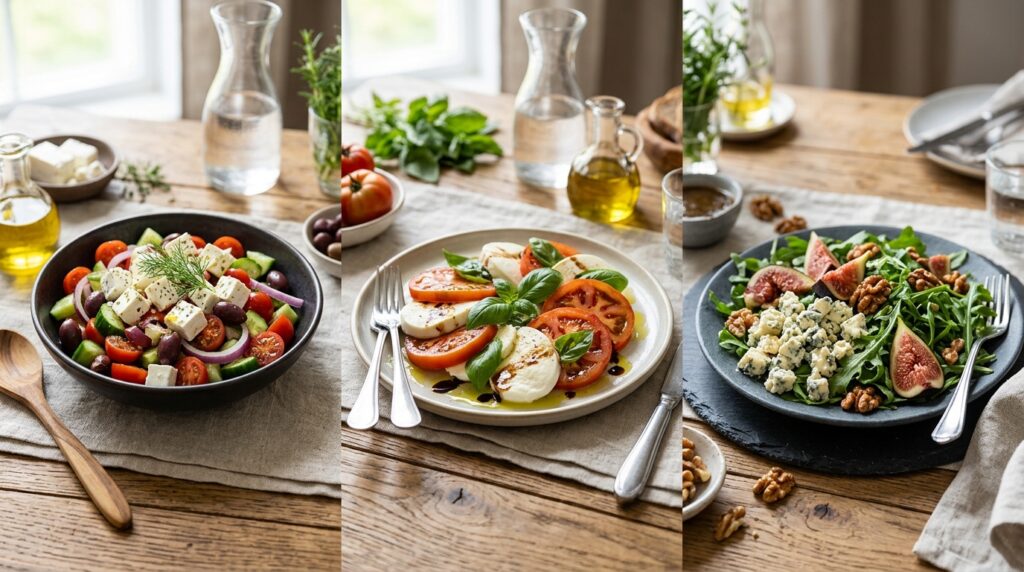
Which cheese for which salad: pairing them right
Choosing the right cheese changes the taste and texture of a salad: one makes vegetables juicier, another adds crunchy salty shavings, and a third becomes the main flavor accent. To avoid mistakes, you need to consider the moisture content, aging, and temperature of the product.
Feta, Brynza, and Mozzarella for Vegetable Salads
Soft and brined cheeses contain a lot of moisture, so they pair well with fresh vegetables. They give the salad a soft, creamy texture and allow you to skip mayonnaise or heavy sauces.
Feta and brynza pair well with cucumbers, tomatoes, and bell peppers. They hold their shape after cutting and add a noticeable salty-tangy note. It’s best to taste such a salad first: additional salt may not be needed.
For a salad with tomatoes and basil, choose small mozzarella balls in brine — perline or ciliegine. Dense pizza mozzarella remains tough when cold and doesn’t reveal its flavor as well.
Ricotta and soft goat cheese pair well with sweeter ingredients:
- roasted beets;
- pear;
- pumpkin.
Their creamy or slightly tangy flavor doesn’t compete with the vegetable and fruit sweetness but delicately complements it.
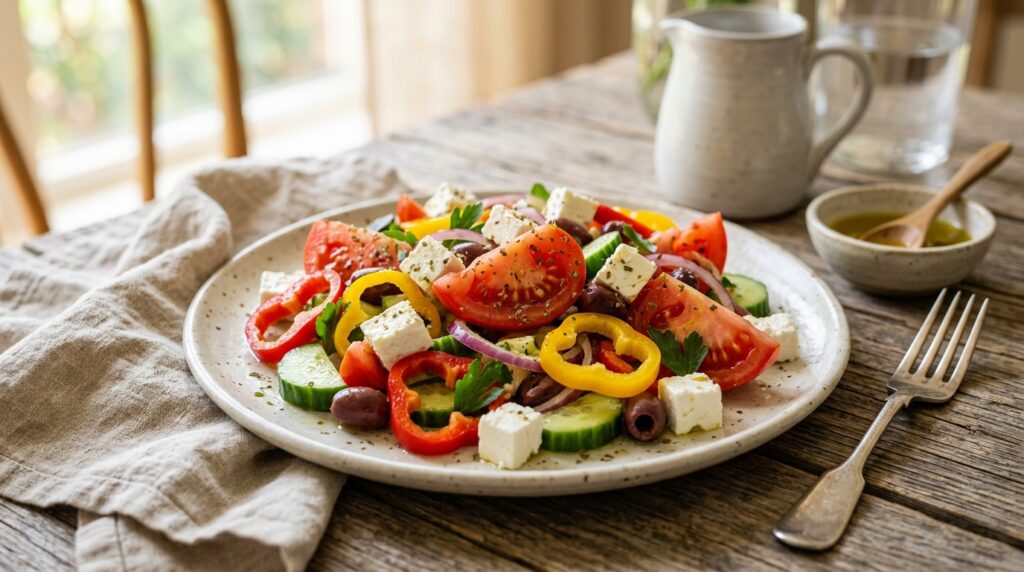
These cheeses are usually not cut with a knife — they are crumbled or broken apart by hand. This way the salad gets a creamy texture without mayonnaise or fatty sauces.
Parmesan for Salads with Chicken, Eggs, and Croutons
Aged hard cheeses work differently. They are not added in large cubes but grated finely or sliced into thin shavings. This way, Parmesan is distributed throughout the entire salad, adds a salty-nutty note, and enhances the umami flavor without weighing down the dish.
It pairs best with salads featuring chicken, eggs, and croutons. Thanks to its low moisture content, the cheese doesn’t get soggy even after contact with dressing.
Parmesan should be added at the very end, when the vegetables and other ingredients have already been mixed with the sauce. If added earlier, the fine shavings may stick to the sides of the bowl or settle at the bottom.
Blue and Smoked Cheese for Bold-Flavored Salads
Blue mold cheeses have a sharp and spicy flavor, so it’s important not to overdo them. Usually, 30–50 grams of blue cheese is enough for it to become a noticeable part of the salad.
The best pairings for Dorblu and Gorgonzola are pear, nuts, and honey dressing. Neutral salad greens don’t overpower the cheese’s flavor. If you add too much, the other ingredients will barely be noticeable.
The mold in such cheese is used intentionally: it is safe, although mold on regular food products is a completely different matter.

Blue cheese complements a salad with pear and nuts
Smoked suluguni or cold-smoked cheddar pairs well with beans, chickpeas, and corn. The smoky aroma of smoked cheese partially replaces the meaty flavor. In a warm salad, such cheese should be added right before serving: when heated, it becomes stretchy.
How to Properly Add Cheese to a Salad
Even good cheese can be ruined by improper preparation. Experts recommend taking the cheese out of the refrigerator half an hour before cooking so it warms to room temperature and reveals its flavor better.
Here are a few simple rules:
- feta and mozzarella pair best with olive oil and lemon juice;
- vinegar-based dressings, including balsamic ones, can make moist cheese drier and grainier;
- Parmesan should be grated or sliced into thin shavings and added last;
- blue and smoked cheeses should be used in small portions.
Gouda, Edam, and Russian cheese are less suitable for cold salads. Their dense texture can feel tough and rubbery without heating. These varieties are better reserved for hot sandwiches and appetizers.
The scheme is simple: soft moist cheese is needed for fresh vegetables, aged hard cheese — for salads with chicken and croutons, and blue or smoked cheese — for dishes that lack a bold accent. The key is to consider the cheese’s texture. Here’s a compact cheat sheet — save it:
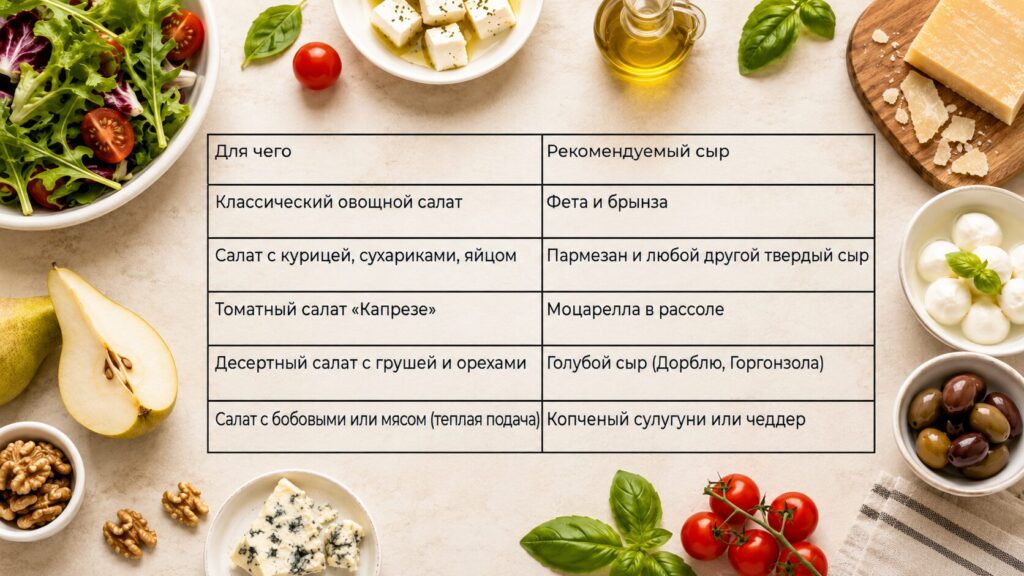
Cheese selection rules. Information source: rskrf.ru