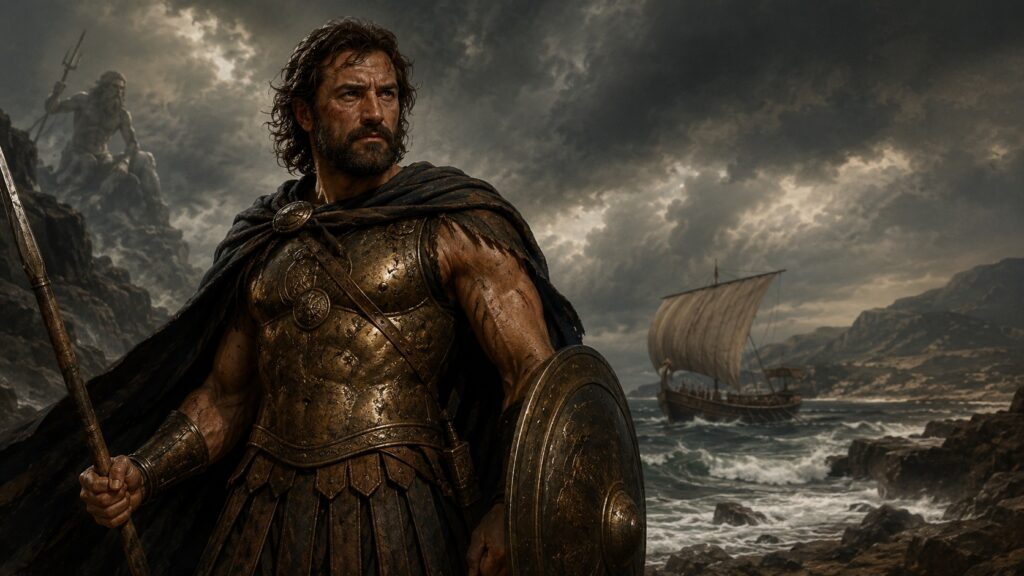
The identity of Odysseus from mythology is shrouded in many mysteries
Odysseus is one of the most famous heroes of antiquity. We know his story from Homer’s poems, but was he a real person? This is a question that has intrigued historians for centuries. Christopher Nolan’s new film has once again raised this topic. Archaeologists are finding more and more circumstantial evidence that Troy existed and its siege was a historical fact. But could its main hero have been real? Here’s what scientists think today.
Who Wrote the “Iliad” and the “Odyssey”
These two ancient works remain the oldest written sources telling of the Trojan War and the hero’s long journey home. However, in the scientific community, the authorship of the poems is debated. Although they are traditionally attributed to the blind poet Homer, some researchers believe that the “Odyssey” was written by an entirely different person.
The situation is further complicated by the fact that long before the written text appeared, these stories were passed down by word of mouth. Like any oral traditions, the myths of Ancient Greece about Odysseus accumulated new details, monsters, and divine interventions over centuries. Because of these layers, finding the real historical prototype of the hero becomes an almost impossible task.
Who Was Odysseus in the Myths of Ancient Greece
If we trust the classical text of the poem, Odysseus was the son of King Laertes and Anticlea. His maternal grandfather was Autolycus — a skilled thief and master of deception, who in turn was considered a son of the god Hermes. Interestingly, this same Autolycus was also the grandfather of Jason, the famous leader of the Argonauts who obtained the Golden Fleece.
However, in later retellings, for example by the ancient Greek playwright Euripides, a completely different version appears. In it, the true father of Odysseus is named as Sisyphus — the king cursed by the gods to eternally roll a boulder up a hill. Literary historians believe that both genealogical versions carry hidden meaning:
- The Autolycus line emphasizes cunning, resourcefulness, and sharp wit, which saved the hero’s life more than once;
- The connection to Sisyphus symbolizes tragedy and fatalism, comparing the endless wanderings at sea to equally arduous and futile labor.
Modern historians agree that if this person did exist, he was unlikely to have had divine origins. Most likely, he was a real local ruler whose sea misadventures were greatly embellished by ancient storytellers.
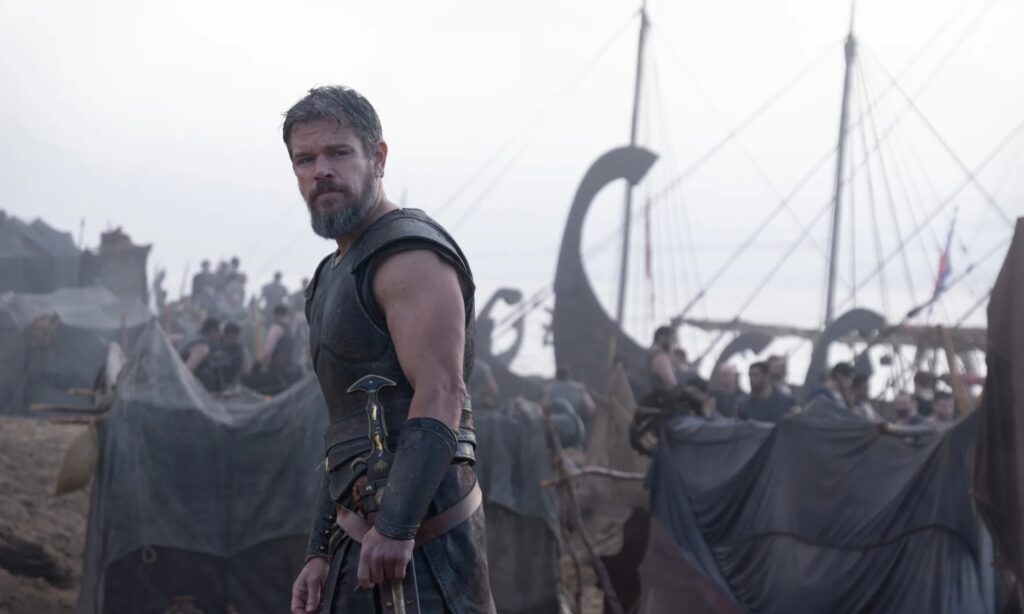
Matt Damon as Odysseus in Christopher Nolan’s new film
Where Was the Real Ithaca Located
Another way to prove the character’s reality is to find his kingdom. Debates about which island is described in the epic have been going on for decades. On one hand, there is the modern Greek island of Ithaca in the Ionian Sea. Important archaeological finds support this location:
- In the 3rd century BC, coins bearing the face of Odysseus were minted on the island;
- Ancient inscriptions were also found there, confirming that the hero was worshipped as a local deity;
- In 2022, Greek archaeologist Thanasis Papadopoulos announced that he had discovered ruins of a Bronze Age palace whose architecture precisely matches the description of the royal house in the poem.
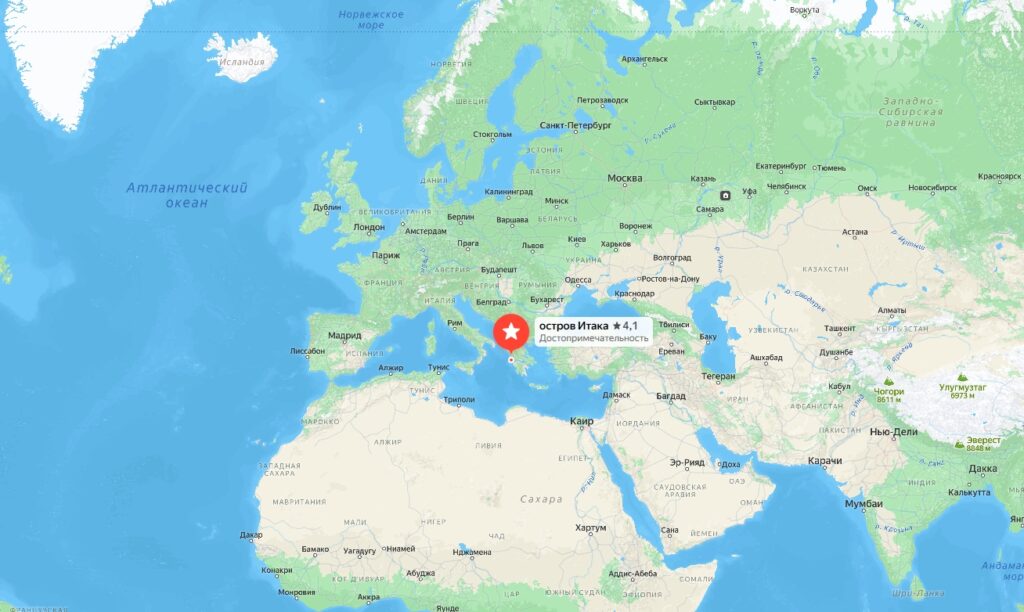
The island of Ithaca on the map
On the other hand, skeptics point to geographical inconsistencies. Homer described Ithaca as a low-lying island located on the westernmost edge of the archipelago. Modern Ithaca is mountainous, and the larger island of Cephalonia lies to its west. Because of this, some scholars suggest that Odysseus’s true homeland was Cephalonia or neighboring Lefkada.
For many years, Troy was also considered merely a beautiful invention from the epic, until Heinrich Schliemann excavated its ruins. Perhaps one day science will also find irrefutable proof of the existence of the cunning king of Ithaca. But even if he forever remains merely a composite character, his influence on world literature and cinema is undeniable.