Stable Android 17 has already reached Google Pixel smartphones, and soon it will be other brands’ turn. For Samsung devices, the update will arrive along with the new One UI 9.0 shell, and according to preliminary data, the release could start as early as next month. But some current Galaxy models won’t receive the update — they’ve already collected all the Android versions promised at the time of purchase. Below, we’ll break down who’s left behind, how to tell if your phone is on the list, and whether it’s worth replacing your device right now.
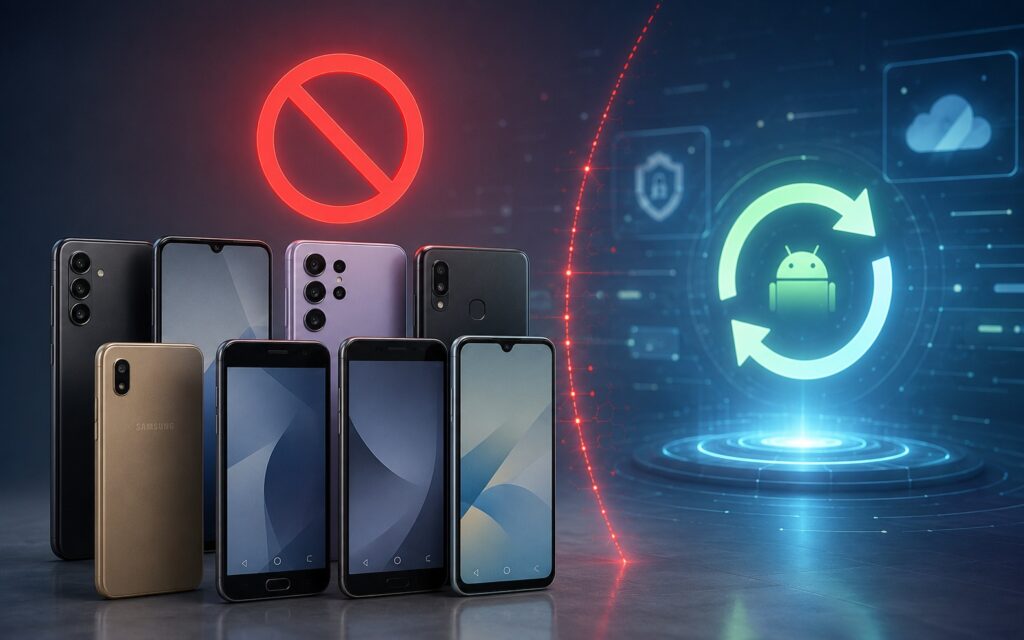
Full list of Samsung devices without the latest update
One UI 9.0 Update on Android 17 — Who Won’t Get It
Samsung traditionally doesn’t publish an official list of models that will miss the next major update. The list is compiled based on the current support policy: the company promises a certain number of Android updates when a device is released, and once that limit is exhausted, new versions no longer come to the smartphone.
It’s important to understand the difference. Even if a phone won’t get Android 17, it will continue to receive security updates for some time — meaning vulnerability fixes. However, it won’t get the new features and redesigned interface of One UI 9.0.
Galaxy Flagships That Will Stay Without Android 17
The most unpleasant thing is that the list includes not only budget devices but also recent expensive models. Galaxy S22, S22+, and S22 Ultra, as well as the Galaxy S21 FE and foldable Galaxy Z Fold 4 and Z Flip 4 will remain on their current shell version.
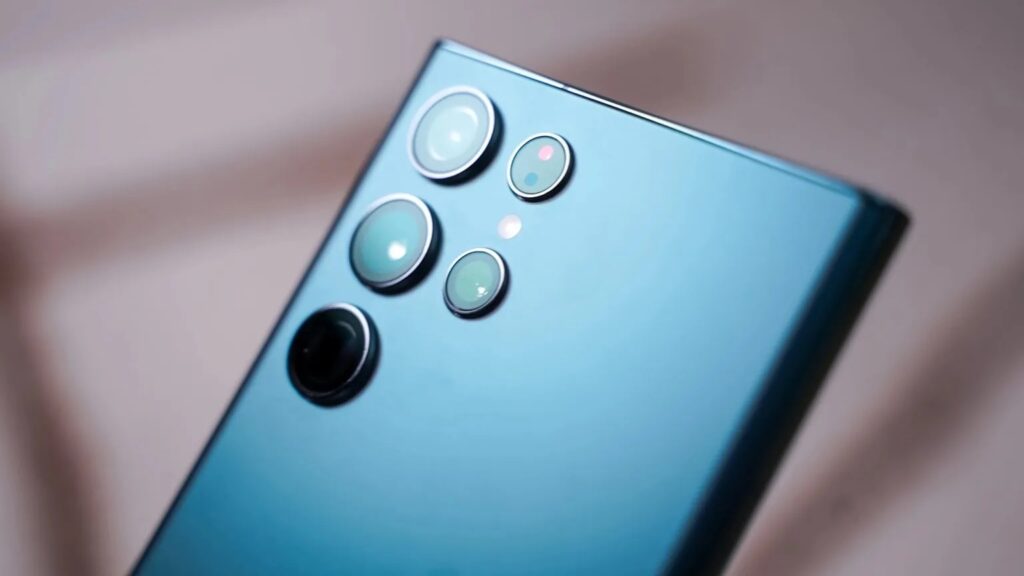
Galaxy S22 didn’t make the support list
Full list of flagships and tablets that won’t get One UI 9.0:
- Galaxy S22, S22+, and S22 Ultra;
- Galaxy S21 FE;
- Galaxy Z Fold 4 and Galaxy Z Flip 4;
- Galaxy Tab S8, Tab S8+, and Tab S8 Ultra.
It’s worth explaining separately why the regular Galaxy S21 isn’t in the list. Only devices that received One UI 8.0 but will miss One UI 9.0 were included — to keep the list short and relevant. The base Galaxy S21 completed its update cycle earlier, so it’s not part of this comparison.
Budget and Mid-Range Galaxy A, M, and F Models Without One UI 9
Among affordable devices, a large group of models will miss the update. This is expected: A-, M-, and F-series smartphones traditionally receive fewer major updates than flagships.
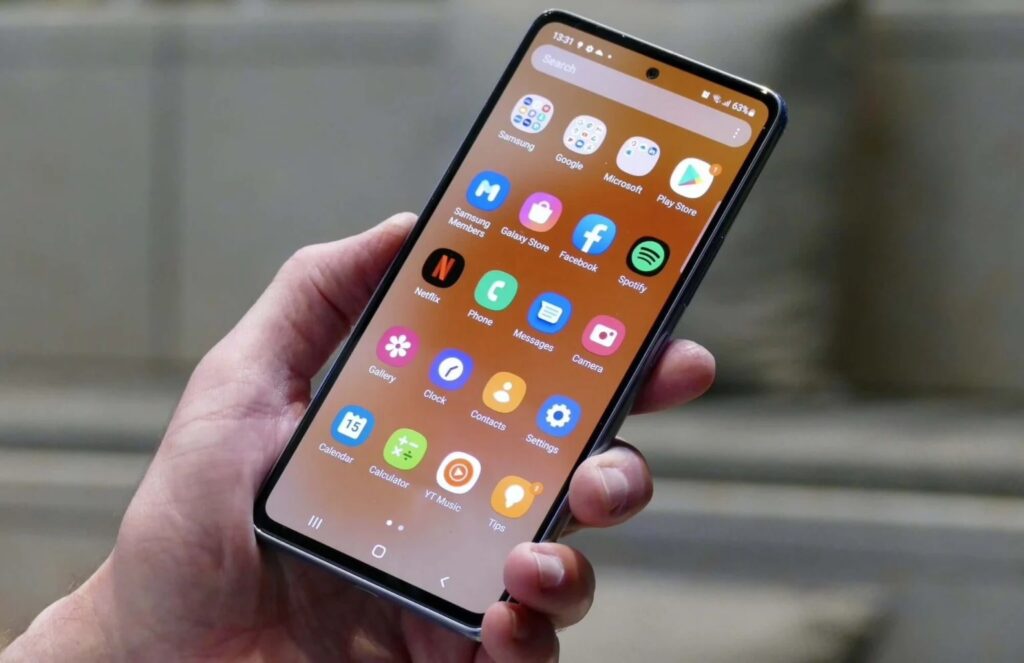
Galaxy A53 also missed out on the update
Budget models that won’t get Android 17:
- Galaxy A73 5G, A53 5G, A33 5G;
- Galaxy A14 (4G/5G), A06 4G, A05, A05s;
- Galaxy M53 5G, M33 5G, M14, M05;
- Galaxy F53 5G, F33 5G, F14, F05;
- Galaxy XCover 6 Pro.
If your model is on this list, don’t count on Android 17. That said, buying a new device just for one shell version isn’t necessary — much depends on how long you’ve been using the phone and how important fresh features are to you.
Can You Still Use a Samsung Without Android 17
Before rushing to the store, assess the situation realistically. The absence of Android 17 alone doesn’t make a phone useless, especially if it runs fast and satisfies you in terms of camera and battery life.
Focus on a few simple points:
- Check if your model is in the lists above.
- Look in settings to see when the device last received a security update.
- Decide whether the new One UI 9.0 features are important to you or if stable performance is enough.
If the phone has become sluggish, loses charge quickly, and hasn’t been updated in a long time, replacement really makes sense.
Is It Worth Buying a New Samsung for Long-Term Support
The main takeaway: when buying, look not only at the price and specs but also at the update timeline. Newer Samsung models receive up to six or seven major Android versions, which extends the actual lifespan of the device for years ahead. The list without One UI 9.0 is unpleasantly wide: it includes both budget devices and relatively recent flagships like the Galaxy S22 and foldable Galaxy Z Fold 4 and Z Flip 4. But there’s no need to panic — devices on the list will still receive security updates for some time and will remain functional.
Missing updates is not yet a reason to replace your smartphone
If it’s important to you that your phone stays relevant for a long time, it makes sense to look at newer devices with extended support. However, you should only replace your smartphone if it truly no longer meets your needs, not because of one missed Android version.