If you’re planning a vacation or business trip this summer, get ready for new procedures at security checkpoints. Russian airports have tightened the rules for checking power banks — security staff are now required to verify the actual capacity of your portable charger against what’s printed on the case. I switched to a magnetic power bank for iPhone a while ago and have no regrets, but even with it, you now need to know the rules. Here’s what changed, why it happened, and which power banks will definitely pass inspection without issues.
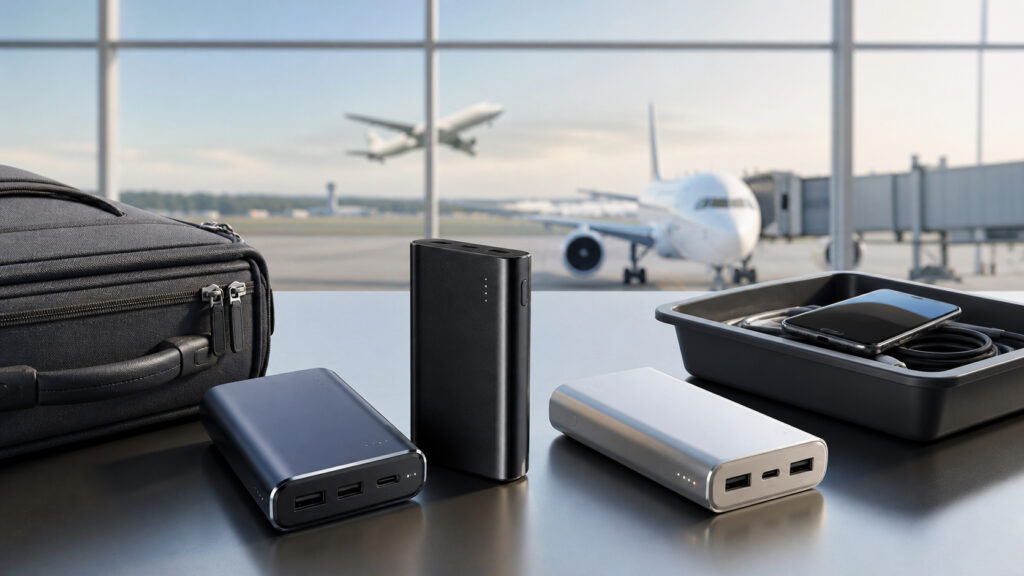
Understanding portable chargers on planes
Why Airports Started Stricter Power Bank Inspections
Starting May 1, Russian airports began actively applying updated international safety standards when inspecting portable chargers.
The essence of the changes is simple: security services are now required to check the actual capacity of lithium batteries and compare it with the specifications stated on the case. Previously, security just checked whether there was a power bank in your carry-on, and that was it. Now the approach has become stricter.
The reason for the tightening was a series of incidents involving portable charger fires on board aircraft. The most high-profile case occurred in February 2026: on a Ural Airlines flight from Yekaterinburg to Istanbul, a passenger’s power bank exploded during the flight. Flight attendants promptly extinguished the device with a fire extinguisher and placed it in a container of water. Fortunately, there were no serious consequences — the passenger only suffered a finger burn, but the seat cushion and seatbelt were damaged.
After this incident, Rosaviatsia (the Russian Federal Air Transport Agency) proposed to the Ministry of Transport to restrict or completely ban the use of power banks on board. A full ban did not follow — Rosaviatsia confirmed that carrying power banks is still allowed. But the rules have become stricter.
Rules for Carrying Power Banks on Planes in 2026
It all started even earlier — on January 1, 2026. That’s when the International Air Transport Association (IATA) updated the rules for transporting devices with lithium-ion batteries. These standards automatically became part of Russian Federal Aviation Rules, since ICAO (International Civil Aviation Organization) updated its technical instructions for transporting dangerous goods.
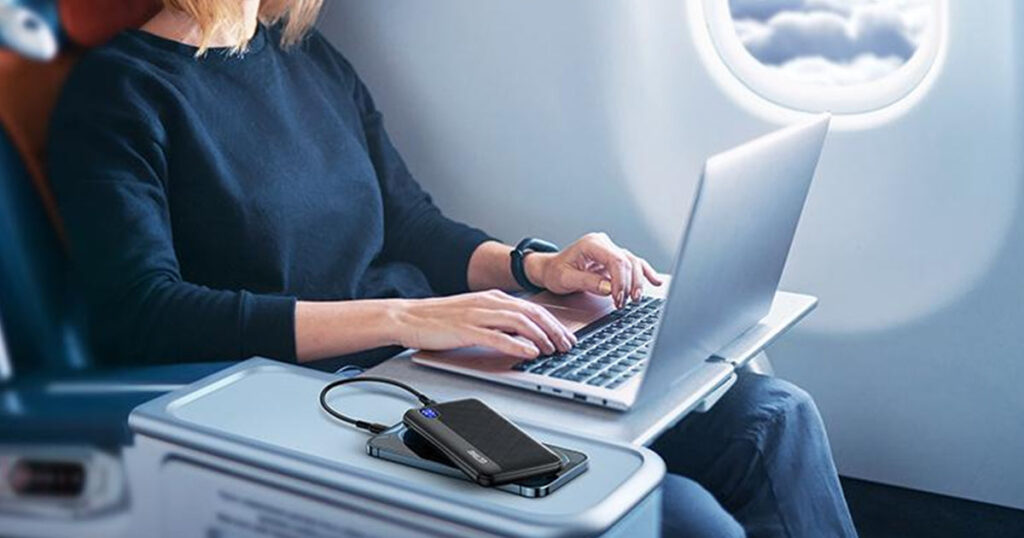
You can take a portable charger with you, but now there are nuances
Here’s what changed:
- Power banks are allowed exclusively in carry-on luggage — checking them in baggage is strictly prohibited.
- Charging a power bank from the plane’s outlets and USB ports is not allowed.
- Using a power bank to charge gadgets during taxiing, takeoff, and landing is prohibited.
- Power banks may only be placed under the seat or in the seat-back pocket of the seat in front of you. Overhead bins are not allowed.
- Each passenger may carry no more than two devices.
- Each battery must be protected against short circuits.
Essentially, power banks are now officially treated as spare batteries, and you’re required to handle them accordingly.
How Many mAh Should a Power Bank Have for Flying
This is where many people get confused. We’re used to rating power banks in milliamp-hours (mAh) — 10,000, 20,000, 30,000. But aviation rules are based on watt-hours (Wh), because this metric reflects the actual amount of stored energy.
The device classification is as follows:
Up to 100 Wh — can be carried freely, without special permission. This includes most regular power banks with capacity up to 20,000–27,000 mAh. This covers the vast majority of devices sold in stores.
From 100 to 160 Wh — can be carried, but only with prior airline approval. No more than two units. This applies to high-capacity power banks of 30,000–40,000 mAh.
Over 160 Wh — prohibited on passenger flights. This is the territory of camping power stations and professional equipment.
To convert mAh to Wh, use a simple formula: Wh = (mAh / 1000) × voltage (V). The standard voltage of lithium-ion batteries is 3.6–3.7 V. So, a 20,000 mAh power bank at 3.6 V equals 72 Wh. That passes without questions.
What Markings Should a Power Bank Have
Security staff now pay attention to several things. First and foremost — markings on the case. The power bank must clearly display its specifications: capacity in mAh or Wh, voltage, and manufacturer information. If the markings have worn off or are missing entirely, the device may be confiscated and disposed of — this isn’t a particular employee’s whim but standard practice.
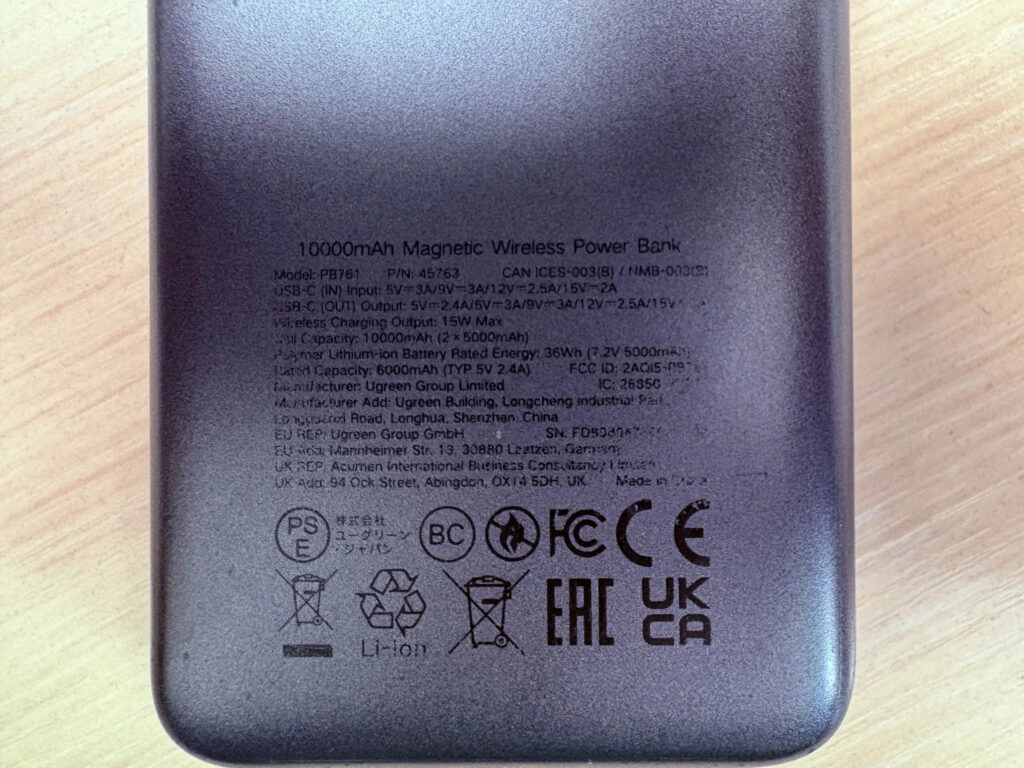
This power bank’s markings have started to wear off, and in theory it might not be allowed on board
Secondly, they check the physical condition of the device. A swollen case, cracks, signs of overheating — all of these are grounds for refusal. Such power banks are dangerous not only on planes but in everyday use as well.
Thirdly, they verify that the stated capacity matches the actual capacity. This is precisely the 2026 novelty. If a security officer has doubts that a cheap no-name device actually has 20,000 mAh and not 50,000 — problems may arise.
How to Choose a Power Bank for Carry-On Luggage
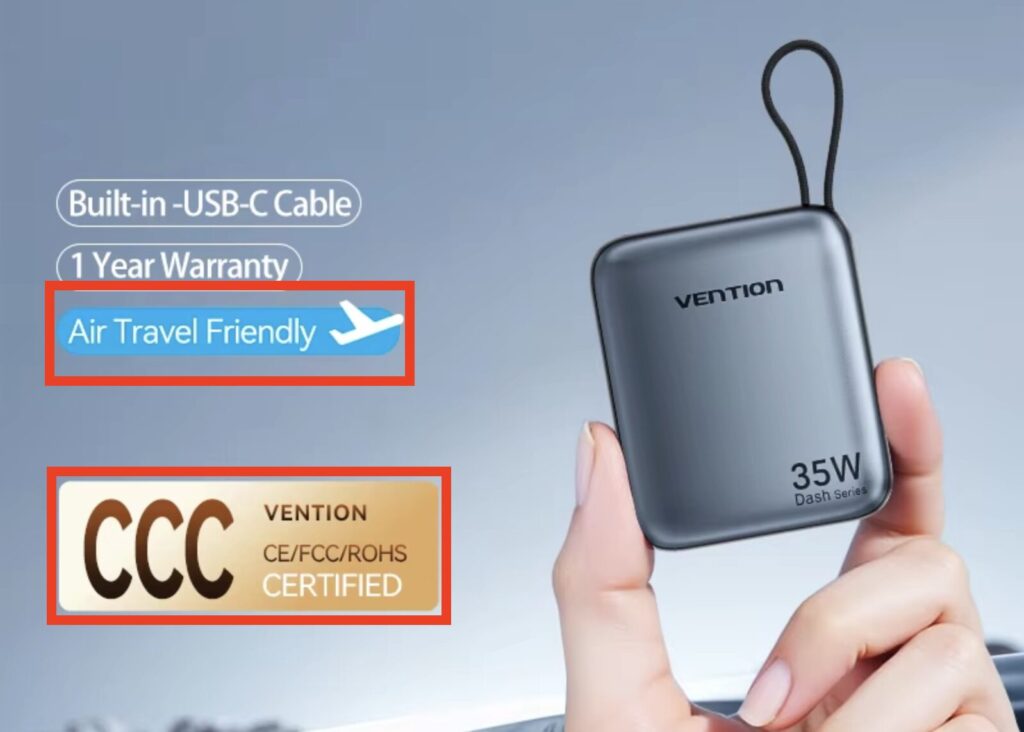
Some manufacturers show directly on their page that their device can be taken on flights
It’s fairly straightforward. You need a power bank that meets three criteria:
- Capacity up to 100 Wh (up to ~27,000 mAh).
- Clear markings on the case with all specifications listed.
- Certification — CE, FCC, or CCC marks on the case. CCC is especially important if you’re flying through China.
Devices from well-known brands — Xiaomi, Baseus, Anker, HOCO, Ugreen — usually meet all requirements. Everything you need is printed on the case, the markings don’t wear off, and the capacity is honest.
Best Power Banks for Flying
If you’re currently choosing a power bank for travel, here’s a selection of models that have Chinese CCC certification. This means they will definitely be allowed not only in Russian airports but also in Chinese ones, where this specific certificate has been required since summer 2025. All of them have capacity well below the 100 Wh threshold, and the markings are all in place.
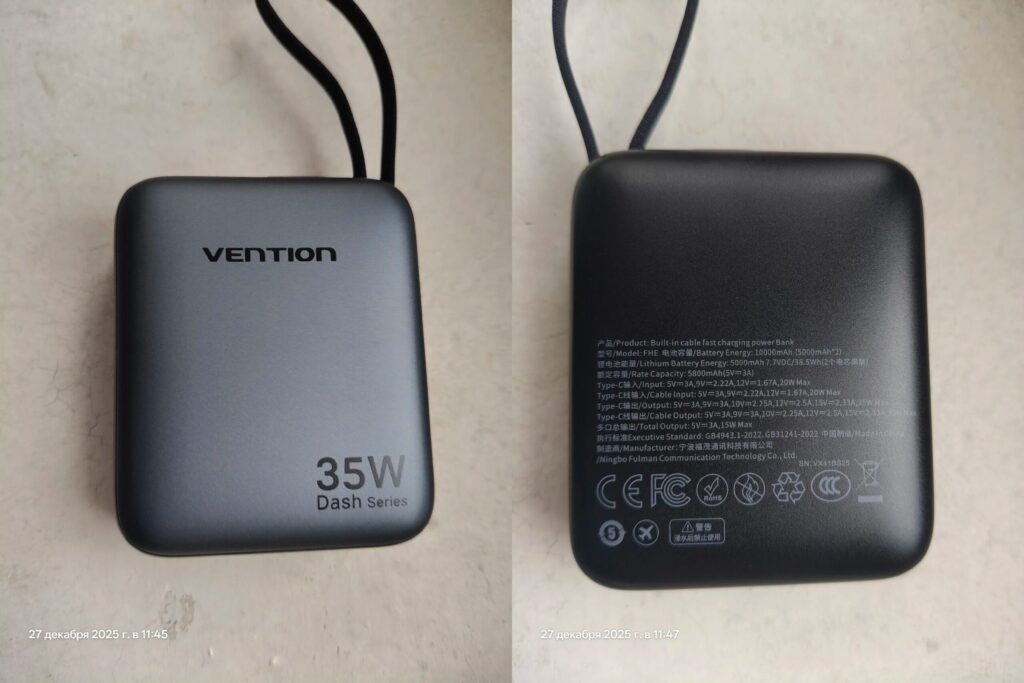
A compact power bank, perfect for flights. There’s even an airplane icon on the back